
Drain Liner Costs in London
No-dig pipe relining, priced by length and pipe diameter. Repair damaged Victorian drains without excavating gardens, paving, or shared access — with a 25–30 year structural guarantee.
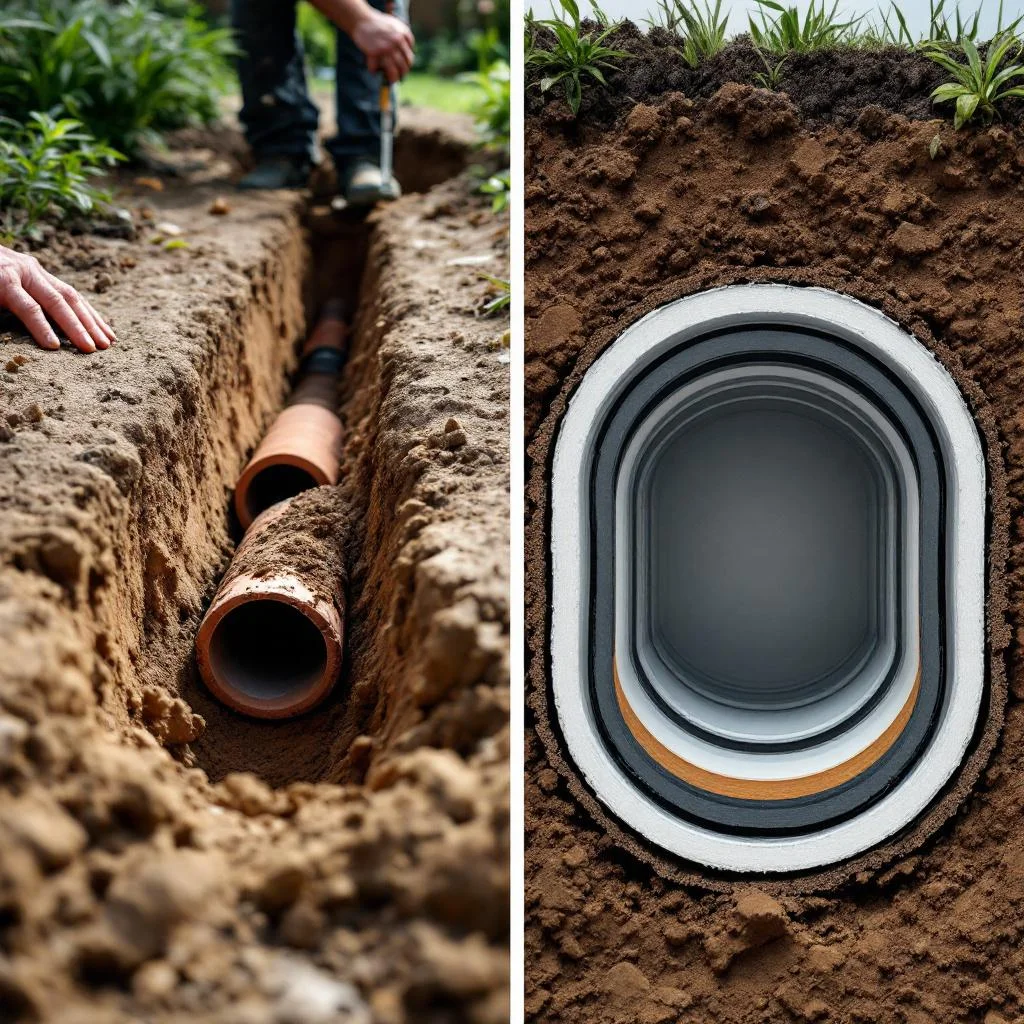
Drain lining — also called pipe relining or CIPP (cured-in-place pipe) relining — is a no-dig repair method that creates a new smooth-bore pipe inside your existing damaged drain. For London's Victorian and Edwardian clay drainage, lining is usually the right repair: faster than excavation, far less disruptive, and structurally permanent. This guide covers drain liner costs in London for residential and commercial properties, when lining is the right choice over excavation, and what affects the price.
Drain Lining London — No-Dig Pipe Repair
Drain lining London is the no-dig solution for damaged clay pipes — a resin liner is cured inside your existing drain, sealing cracks, root entry points, and displaced joints without any excavation of gardens, paving, or shared access routes.
Drain Liner Costs — London Price Guide
| Repair Type | Details |
|---|---|
| Patch liner (single defect) | 500mm–1m liner over a cracked joint or hairline crack |
| Short-run liner (3–6m) | Typical lateral drain section under garden or front path |
| Full residential lateral (6–15m) | Full-length 100mm clay drain, house to sewer connection |
| Residential (100mm) | Standard residential CIPP rate |
| Commercial (150–225mm) | Larger commercial laterals and shared sewer runs |
| Pre-line CCTV survey (included on larger jobs) | Confirms viability + post-line verification |
Request a fast, fixed-price quote online — you will receive it after a CCTV survey, before any lining work begins. No call-out fee.
When Is Drain Lining the Right Repair?
Drain lining is appropriate for the great majority of London drainage damage. The pipe must be structurally present (severe collapses need excavation or patch repair first) and the bends must be within the liner's flex tolerance. Given those two constraints, lining is the right repair for:
- •Root infiltration through displaced clay-pipe joints — the most common London drainage problem, especially in Victorian terrace streets
- •Cracked or hairline-fractured pipe sections — from London Clay shrink-swell movement or steep-gradient flow erosion
- •Joint displacement — where adjacent pipe sections have shifted apart, allowing groundwater ingress or root entry
- •Drains under gardens, paving, conservation areas, or listed buildings — where excavation is disruptive, expensive, or restricted
- •Shared terrace drainage — the Harringay Ladder, Hackney terraces, Fulham streets — where access is via shared rear gardens
- •Pre-emptive repair after a CCTV survey reveals deterioration — cheaper than waiting for a full failure
A CCTV drain survey is the right first step — it confirms whether lining is viable, identifies how much pipe needs to be lined, and produces the WRCm-graded report we use to provide a fixed quote.
What Affects Drain Liner Costs?
The final price for a London drain lining job depends on five factors. Here is what we look at when producing your fixed quote:
Length of pipe to be lined
The single biggest cost driver. A short patch costs less than a full-length lateral relining — we measure precisely from the CCTV survey footage so the quote matches the work.
Pipe diameter
Standard residential 100mm clay laterals are at the lower end of the per-metre rate. Larger 150mm or 225mm pipes — common on shared London terrace drainage or commercial premises — require thicker liners and more resin, increasing the per-metre cost.
Access to the inspection chamber
Liner installation needs a workable insertion point — usually a manhole or rodding eye. Easy front-garden access keeps costs at the lower end. Restricted access through basements, rear gardens reached by side passage, or shared London terrace routes adds set-up time.
Pre-line preparation
The pipe must be clean before lining — any roots, scale, or debris would prevent the liner curing properly. Most jobs include high-pressure jetting as part of the lining quote, but heavily root-infested drains may need additional root-cutting before lining can proceed.
Bends and junctions
Standard liners flex around 45° bends comfortably. Sharper bends, multiple bends in close succession, or active junctions (where another drain joins the run being lined) need a sectional approach — lining each section between bends individually. This adds time and slightly increases cost.
Drain Lining vs Excavation Repair
For nearly all London drainage damage, no-dig lining is cheaper, faster, and far less disruptive than excavation. Here is how the two approaches compare:
| Factor | No-Dig Drain Lining | Excavation Repair |
|---|---|---|
| Cost (typical residential lateral) | Lower — no excavation or reinstatement | Higher — includes excavation and reinstatement |
| Duration on site | 1 day | 2–5 days |
| Disruption | Minimal — no digging | High — excavate, repair, reinstate |
| Reinstatement cost | None | Paving, landscaping, decking, conservatory bases as required |
| Planning consent (conservation areas) | Not normally required | May be required for surface works |
| Design life | 50 years (25–30 year guarantee) | Lifetime of replacement pipe |
Excavation is occasionally unavoidable — severe collapses, drain re-routing, or new connections to the public sewer all need excavation. Our drain repairs service covers both approaches and we will always recommend the cheaper option where viable.
What's Included in Our Drain Lining Service
When you book drain lining with Drain Unblocker London, the quoted price covers everything needed to complete the repair:
- ✓ Pre-line CCTV survey — confirms viability, measures the affected length, and identifies any preparation work needed
- ✓ High-pressure jetting and root removal — cleans the pipe to bare clay so the liner cures correctly
- ✓ Liner installation — resin-impregnated CIPP liner inserted from the inspection chamber and inflated to the pipe wall
- ✓ Curing — hot water, steam, or UV cure depending on the liner specification (typically 2–4 hours)
- ✓ Post-line CCTV inspection — verifies the liner is fully cured, smooth, and structurally complete
- ✓ Written 25–30 year structural guarantee — covers the design life of the liner
If the survey reveals a deeper issue — a section of collapsed pipe, an active junction defect, or damage outside the lineable range — we will explain it clearly and quote any additional work before proceeding. No surprises on completion day.
Frequently Asked Questions
How much does drain lining cost in London?
The cost of drain lining in London depends on the length of pipe affected, the pipe diameter, and access — a short patch repair of a single joint is priced differently from a full-length residential lateral relining from the house to the public sewer connection. We confirm a fixed price after a CCTV survey so you know the cost before work begins.
What is drain lining?
Drain lining (also called pipe relining or CIPP lining) is a no-dig repair method that creates a new smooth-bore pipe inside your existing damaged drain. A resin-impregnated felt or fibreglass liner is inserted from an inspection chamber, inflated to the pipe wall, and cured in place using hot water, steam, or UV light. Once cured, it forms a structurally independent pipe inside the old one — sealing cracks, displaced joints, and root entry points without any excavation.
Is drain lining cheaper than digging up the drain?
In the great majority of London cases, yes — particularly where the drain runs under gardens, paving, conservation areas, listed buildings, or shared-access routes. Excavation repair adds significant cost for site protection, reinstating paving and landscaping, traffic management for any pavement works, and sometimes planning consent for conservation areas. A typical London no-dig liner repair costs significantly less than an equivalent excavation repair once reinstatement is factored in.
How long does drain lining last?
CIPP drain liners carry a 50-year design life. The resin used is structurally independent of the old clay pipe — the liner forms a complete new pipe rather than just patching the old one — and is root-resistant because there are no joints for roots to enter. Most reputable installers (including ourselves) provide a written 25–30 year structural guarantee on residential liner work.
Can any drain be lined?
Most can — but not all. CIPP lining works on pipes from 75mm to 600mm+ diameter, in clay, cast iron, and PVC. The pipe must be structurally intact enough to support the liner during cure (severe collapses need excavation or patch repair first), and bends must not exceed the liner's flex tolerance (most modern liners handle 45° bends comfortably; sharper bends may need a sectional approach). A CCTV survey before quoting confirms whether lining is viable for your specific drain.
What is the difference between patch lining and full-length lining?
A patch liner (sometimes called a localised liner) is typically 500mm to 1m long, used to seal a single defect — a cracked joint, a small root entry point, or a hairline crack — and is priced accordingly. A full-length liner runs the entire length of the affected pipe section between two inspection chambers — typically 6 to 15 metres for a residential lateral drain — and is priced for the extra scope. Where multiple defects exist along a single pipe run, full-length lining is usually more cost-effective than several patches.
Get a Fixed Drain Lining Quote
Every job starts with a CCTV survey so we can quote a fixed price for the lining work. Request a quote online for a no-obligation conversation.