Most London drain emergencies start as minor symptoms that homeowners ignore for weeks. A sink that drains a little slower than usual, a faint smell in the garden, a toilet that gurgles when the bath empties — each of these is a measurable warning that the underground pipework is no longer flowing freely. Working on Victorian and Edwardian properties across the capital, the pattern is consistent: catching the problem at sign one or two is far cheaper than waiting until raw sewage backs into the kitchen, which often involves excavation. This guide lists the ten signs that justify a phone call before the situation escalates, with London-specific context for why each one tends to appear in the city's older housing stock.
1. Water Drains Slowly From One Sink or Bath
A single fixture draining slowly is the most common early indicator of a developing blockage. Water that takes more than 10-15 seconds to clear from a basin, or stands for several minutes in a bath after the plug is pulled, points to a partial obstruction in the trap or branch pipe immediately below the appliance. In bathrooms, hair and soap scum bind together inside the U-bend; in kitchens, congealed fat coats the inside of the 40mm waste pipe and gradually narrows the bore.
In London terraces, branch pipes often run horizontally for several metres before reaching the soil stack, which gives debris plenty of opportunity to settle. Furthermore, properties in Hackney and Islington frequently have waste runs that have been modified during loft conversions or kitchen extensions, leaving long horizontal sections with shallow falls that drain poorly even when clean.
The right first response is mechanical: lift the trap, clean it manually, and flush with hot water. If the slowness returns within a week, the obstruction is further down the run and warrants a professional drain unblocking visit before it becomes a complete blockage.
2. Multiple Fixtures Drain Slowly at the Same Time
When the kitchen sink, bathroom basin, and shower all begin draining poorly within the same week, the problem is no longer at fixture level. It is somewhere in the main soil stack or, more likely, in the underground lateral drain that carries waste from the building to the public sewer. This is a significantly more serious diagnosis because the volume of water involved is much larger and the consequences of complete blockage include internal flooding.
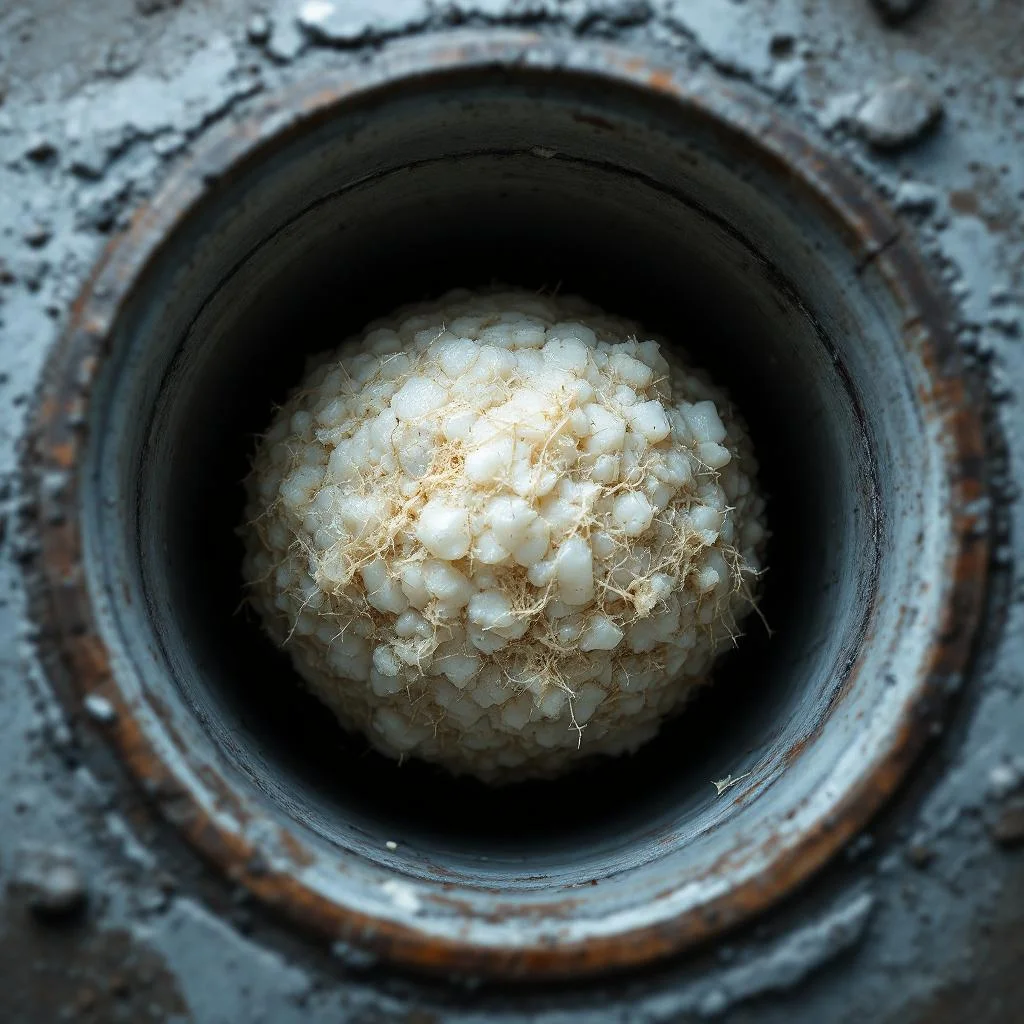
In the typical London terraced house, all internal waste connects to a single 100mm clay or cast-iron lateral that exits the building at the rear. As a result, a single obstruction in that lateral affects every appliance simultaneously. The most common causes are root intrusion through cracked joints, accumulated wet wipes, and fat build-up at points where the pipe changes direction.
Do not attempt chemical drain cleaners at this stage — they rarely reach the obstruction and can damage older clay or cast-iron pipework. A CCTV drain survey is the only reliable way to identify the cause, and many blocked drain jobs at this stage can still be cleared by jetting alone, before excavation becomes necessary.
3. Toilets Gurgle When Other Appliances Drain
A toilet that gurgles or bubbles when the bath empties, the washing machine discharges, or the kitchen sink drains is telling you that air cannot move freely through the system. The gurgling sound is air being pulled back through the water seal in the toilet trap because something downstream is restricting flow. This is a classic indicator of a partial blockage in the lateral drain.
In London properties built before the 1960s, soil and waste systems often share a single stack, and the toilet trap is the lowest-resistance point through which displaced air can escape. Therefore, when the lateral begins to restrict flow, the toilet announces it before any other symptom appears.
Treat gurgling as a definite warning. If the noise persists for more than two or three days, book an inspection. Once the blockage progresses from partial to complete, the next thing the toilet does is overflow — almost always at the worst possible moment. The number to call is our contact form for same-day attendance across all 32 boroughs.
4. Sewage Smells in the Garden, Bathroom, or Kitchen
The smell of sewage where it should not exist is never a minor issue. In a bathroom or kitchen, it usually points to a dried-out trap (the water seal has evaporated, often in a guest bathroom), a damaged toilet wax ring, or air being forced backwards through the system by a downstream blockage. In the garden, the smell typically rises from a cracked underground pipe or from an inspection chamber whose cover is no longer sealed.
London's clay soil is particularly unforgiving here. Greater London sits on London Clay, which expands when wet and shrinks when dry, and the resulting seasonal pipe movement cracks joints in older lateral drains. Once a joint opens up, foul air escapes into the surrounding soil and migrates upwards into gardens — particularly noticeable in summer when the soil is dry.
Investigate immediately. Lift inspection chamber covers in the garden and look for standing waste, debris, or tide marks above the normal flow line. Any of these suggests a blockage downstream and warrants a CCTV survey to locate the defect precisely.
5. Water Backs Up Into a Different Fixture
If running the washing machine causes water to appear in the shower tray, or flushing the toilet pushes water up through a ground-floor sink, the lateral drain is significantly obstructed. Waste water is taking the path of least resistance, which means flowing backwards into the lowest fixtures rather than forwards into the sewer. This is the symptom that immediately precedes internal flooding.
In flat conversions and basement-level properties — common in Camden, Westminster, and Kensington — backflow is particularly serious because the lowest fixtures are often kitchens or shower rooms with no easy way to contain a spill. Furthermore, if the property sits below the level of the public sewer (true for many London basement flats), an obstruction can cause sewage to back up from the street, not just from within the building.
This is an urgent call. Stop using all water in the property until the cause is identified. Our emergency drain service operates 24 hours a day, and same-day attendance for backflow situations is standard. Do not flush or run taps while waiting — every additional litre adds to the volume that has to go somewhere.
6. Standing Water in the Garden After Rain
Persistent puddles that take days to drain, soft patches of lawn over the line of the underground drain, or pooling around an inspection chamber all indicate that water is escaping the pipe and saturating the surrounding ground. In London, this is most commonly caused by a fractured pipe or a displaced joint allowing surface water in and foul water out — sometimes simultaneously.
Mature London plane trees, common across boroughs like Southwark, Lambeth, and Wandsworth, are a frequent culprit. Their roots travel surprising distances in search of moisture and nutrients, and a 100mm clay lateral with even a hairline crack at a joint is an obvious target. Once the root enters, it expands with growth and can fully block the pipe within a few years.
A standing-water complaint usually requires both jetting and a CCTV inspection. Jetting clears the immediate obstruction; the camera survey identifies whether the pipe needs structural repair. Where root damage is severe, drain repair or relining avoids the cost and disruption of full excavation.
7. Recurring Blockages in the Same Drain
A drain that blocks once, gets cleared, and then blocks again within a few months is not a behavioural problem — it is a structural problem. The repeat blockage means there is something in the pipe that catches debris every time waste passes through it: a misaligned joint, a partial root intrusion, an old patch of scale, or a bellied (sagged) section where solids settle out.
Recurrence is particularly common in Victorian terraced housing across Islington, Hackney, and Greenwich, where shared drainage runs beneath gardens and pavements have been in continuous service for over a century. As a result, even after a thorough clearance, the underlying defect remains and the drain returns to its previous behaviour.
The right response is diagnostic rather than reactive. A CCTV drain survey costs significantly less than three repeat callouts and identifies the root cause precisely. From there, targeted repairs — patching, relining, or in extreme cases excavation — eliminate the recurrence permanently rather than treating the symptom every six months.
8. Unusually Lush or Sunken Patches Above the Drain Line
Two contradictory signs both point to the same problem: a section of lawn that is significantly greener and faster-growing than the rest, or a soft, sunken depression following the line of the underground drain. The first means foul water is leaking out and fertilising the soil from beneath; the second means soil is being washed into the pipe through a fracture, leaving a void that gradually collapses.
Both are common in inner-London gardens where the lateral runs only 600-900mm below the surface. London Clay's shrink-swell cycle of 10-20mm per year at pipe depth (and considerably more near mature trees) routinely cracks joints in older clay laterals. Furthermore, many gardens have been re-landscaped without the owners knowing the drain runs beneath, and patio paving installed directly over a fragile clay pipe accelerates the damage.
Do not delay investigation. A sunken garden pipe will eventually collapse fully, at which point the only fix is excavation and replacement. Caught early, the same length of pipe can often be relined from within. See our guide to outdoor drain blockages for what to look for in your own garden.
9. The Toilet Will Not Flush, or Flushes Only Partially
A toilet that fills, swirls, and refuses to clear is reporting either a blockage in the toilet trap itself or — more commonly — an obstruction in the soil pipe immediately downstream. If only one toilet is affected and other appliances drain normally, the problem is local. If multiple toilets in the same property are affected, the lateral is obstructed.
Wet wipes are the dominant cause of toilet blockages in London. Despite "flushable" labelling, they do not disintegrate in the way toilet paper does — they simply travel a short distance into the soil pipe and accumulate at the first bend or restriction. This is the same process that produces fatbergs in the public sewer, and Thames Water consistently identifies wet wipes as the leading cause of residential blockages.
Do not flush repeatedly — each flush adds to the volume of water that has nowhere to go. Our blocked toilets service includes same-day attendance, and the emergency guide explains the immediate steps to take while you wait for help to arrive.
10. Visible Sewage at an Inspection Chamber or Drain Cover
The clearest possible sign that a drain needs unblocking is visible foul water sitting above the normal flow level inside an inspection chamber, or — worse — overflowing onto the surface from a drain cover. By the time waste is visible at ground level, the blockage downstream is total or near-total, and continued water use in the property will lead to internal backflow within hours.
In many London properties, particularly in Bromley, Greenwich, and the outer boroughs, the homeowner's first inspection chamber sits in the garden or driveway and is easy to lift with a screwdriver. Inside, you should see a clean half-channel with water flowing freely from inlet to outlet. If you see standing water above the channel, the obstruction is downstream of that chamber. If the chamber is dry but the next one downstream is full, the obstruction is between them.
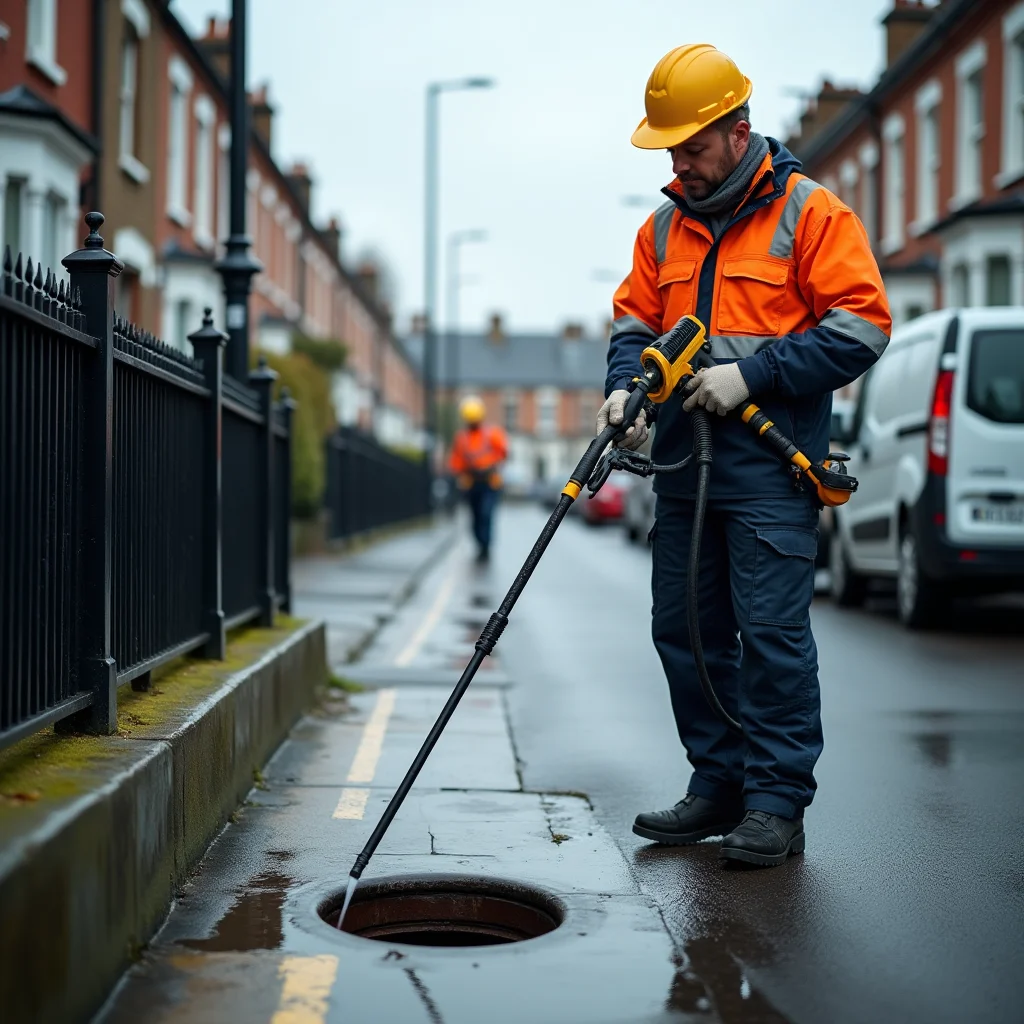
This is a same-day or same-hour problem. Stop all water use immediately and request a quote online via our contact form. High-pressure drain jetting clears the vast majority of these obstructions within an hour of arrival, often without any need for excavation.
When To Call Versus When To Wait
Not every slow drain is an emergency, and not every gurgle warrants an immediate callout. The correct response depends on which sign is present and how many of them appear together. A single slow basin, with no other symptoms, can reasonably be addressed by cleaning the trap and waiting to see whether the slowness returns. A faint kitchen smell that disappears after running the tap for a minute is almost certainly a dried trap rather than a structural problem.
The threshold for calling shifts sharply once two or more signs appear simultaneously. Multiple slow fixtures, gurgling toilets combined with garden smells, or any sign of backflow into a fixture all indicate the lateral drain is involved. At that point, waiting costs money: a partial blockage cleared by jetting typically runs to the lower end of the drain unblocking cost range, while an internal flood involves repeat hygiene cleaning, possible flooring replacement, and insurance excess.
London-specific factors raise the urgency further. The capital's housing stock is overwhelmingly Victorian and Edwardian, with drainage built before 1900 in many central boroughs. The underlying London Clay accelerates structural decay. Furthermore, since the October 2011 private sewer transfer, many shared drains are Thames Water's responsibility. The company is often slow to attend non-emergency calls, however, which is why most homeowners use a private contractor first and pursue recovery afterwards. Our guide to Thames Water responsibility explains the boundary in detail.
If you are unsure which category your symptoms fall into, the safest course is to describe them through our contact form. We will tell you whether same-day attendance is necessary or whether the problem can wait for a routine slot. Diagnosis costs nothing.
Frequently Asked Questions
How quickly does a slow drain become a blocked drain in London?
A slow drain typically becomes a complete blockage within one to four weeks, depending on what is causing the slowness and how heavily the drain is used. Fat-based blockages in kitchens accelerate fastest because each pour of warm liquid solidifies on the existing build-up. Hair-and-soap blockages in bathrooms tend to progress more slowly. Either way, addressing the slowness early costs a fraction of dealing with full blockage and any associated flooding.
Can I use chemical drain cleaners on Victorian London pipes?
We do not recommend it. Caustic chemical cleaners can corrode older cast-iron pipework and damage the joints in glazed clay drains, both of which are the dominant pipe materials in London properties built before 1960. They also rarely reach lateral blockages, which sit metres beyond the trap. Mechanical clearance and jetting are safer and significantly more effective.
How much does drain unblocking cost in London?
The cost of standard residential drain unblocking depends on severity and access. Jetting and CCTV combined is priced for the extra scope. We provide a fixed price before starting work, with no call-out fee. Full pricing is published at our drain unblocking cost and drain jetting cost pages.
Is the blockage my responsibility or Thames Water's?
If the drain serves only your property, it is your responsibility. If it serves more than one property — common in London terraces — Thames Water has been responsible since the October 2011 private sewer transfer. The boundary is not always obvious, which is why a CCTV survey often resolves disputes about who should pay.
Do I need a CCTV survey, or just a clearance?
If the blockage is a one-off and the symptoms resolve cleanly after clearance, no survey is necessary. If blockages recur, if the property is over 80 years old, or if you are buying a London home, a CCTV survey identifies underlying structural defects that simple clearance will not fix and prevents repeat callouts.