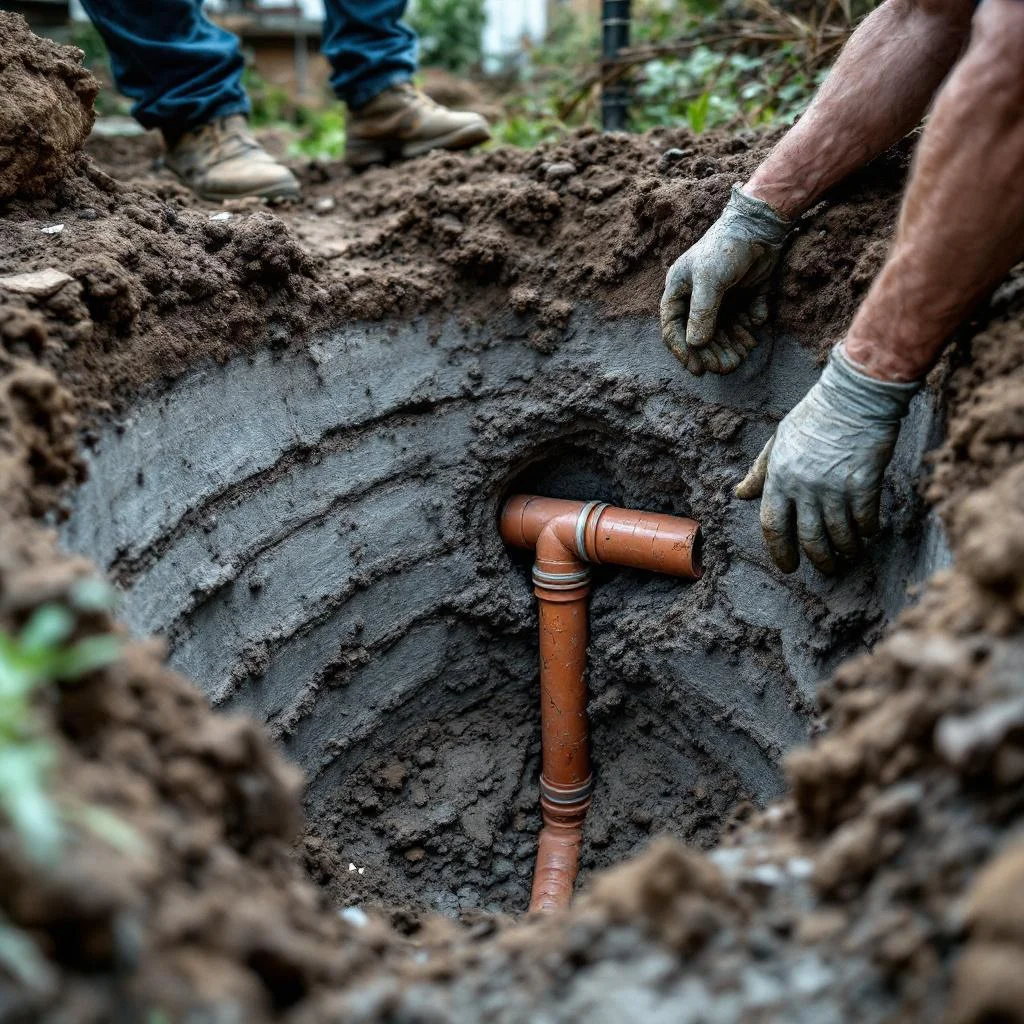

London Clay lies beneath most of Greater London. It swells when wet and shrinks when dry, and because of this the cycle moves the soil around buried pipes. The movement cracks clay pipes, opens joints for roots and pulls pipe sections out of line. You cannot see this damage from the surface, so only a CCTV survey can confirm it.
Drain engineers across the UK know that London is a hard place for drains. However, the reason is not only the age of the pipes or the density of buildings. It is the ground itself.
What Is London Clay?
London Clay is a stiff marine clay laid down around 50 million years ago, when a shallow sea covered the Thames basin. It lies under most of Greater London. It runs north through Islington, Hackney and Haringey. It also reaches west to Ealing and Brent, and south into parts of Lewisham and Bromley.
What matters for drains is how much this clay changes size with moisture. In a drought, or near tree roots that drink from the soil, it shrinks a lot. While it swells back when wet, the cycle never stops. The cycle never stops, and it is hard on buried pipes.
The Shrink-Swell Problem
A buried pipe feels pushes from the soil that change through the year, since the clay never rests. The clay is wet and swollen in winter and spring. By late summer and autumn it is drier and tighter.
Rigid clay pipes cannot follow this movement for ever, because they do not bend. Their joints open as the soil under one section settles differently from the next. Victorian joints, made from sand and mortar or rubber rings, are especially weak. Once a joint opens, groundwater comes in and roots follow, so the damage speeds up.
Tree Root Damage
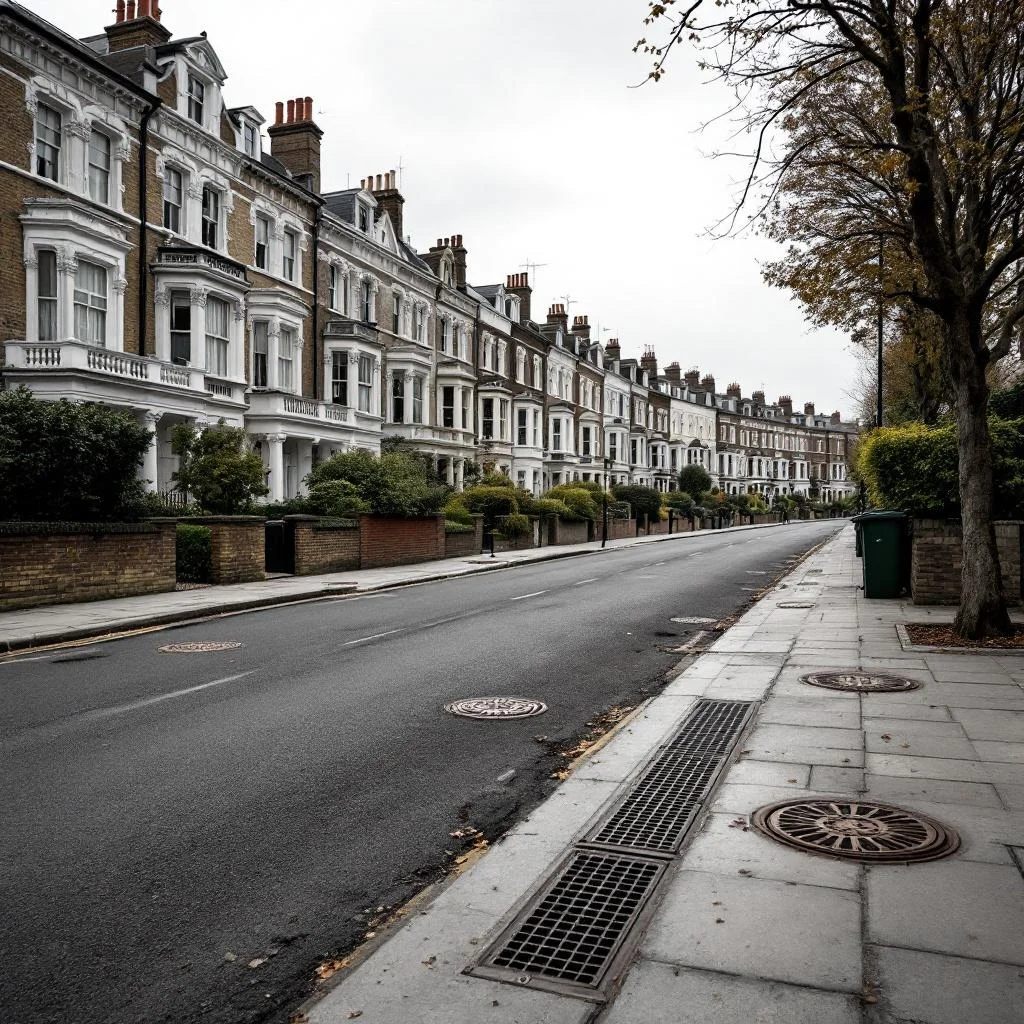
London has a huge number of street trees, and they add to the problem. Since trees on clay need a lot of water, so their roots travel far to find it. A cracked pipe full of warm water is hard for a root to resist. Roots slip in through any gap and then fill the space.
Even a small root mass causes blockages, because it traps debris. In time, roots can deform the pipe, crack it or collapse it. Plane trees are common in London streets, and their roots are strong. They are a frequent cause of drain damage in inner boroughs.
Subsidence and Drain Damage
Shrink-swell is also the main cause of subsidence. Foundations settle as the clay below them dries out. Trees are the usual trigger, because their roots pull moisture from under the house.
Where a house has subsided, the drains almost always suffer too, since the same ground moves. Cracked foundations and displaced pipes often go together. For this reason, a CCTV drain survey is standard in a subsidence investigation.
What You Can Do
CCTV survey. If you own a Victorian terrace with mature trees nearby, a survey every few years is sensible, because roots hide well. Catching roots early lets you deal with them by jetting or root cutting, not excavation.
Pipe relining. If a survey finds open joints or cracks, relining can avoid digging. A flexible liner goes into the old pipe and is inflated. It seals cracks and joints from inside and leaves a smooth bore that resists roots. This suits London well, since digging up gardens and pavements is costly and disruptive.
Tree management. Pruning a mature tree near your drains can cut its water demand, and as a result that slows the shrink-swell cycle. Planning permission may be needed to remove trees in Conservation Areas, so check first.
Root barriers. Since roots seek new pipes, when new drains go in near trees, a root barrier alongside the pipe protects it and extends its life.
Frequently Asked Questions
How do I know if London Clay has damaged my drains?
Common signs are repeat blockages with no clear cause, drains that slow down over time, and odd patches of lush or sunken ground over a drain run. A CCTV survey is the only sure way to diagnose clay damage, because you cannot see inside the pipe from above.
Does London Clay affect all parts of London equally?
No, because the impact is greatest where the clay is thickest, moisture changes most and trees are common. Inner north and west boroughs such as Islington, Hackney, Haringey, Ealing and Hammersmith often see the worst clay-related drain problems. Parts of south London sit on different ground that moves less.
Can cracked pipes caused by London Clay movement be repaired without digging?
In many cases, yes, because relining seals cracks and open joints without excavation. That helps a lot in London, where digging through a garden or pavement is costly. A CCTV survey confirms whether relining suits the damage.
How much does subsidence-related drain damage cost to repair?
Small repairs, such as relining a crack or jetting out roots, cost less. However, if a pipe has collapsed, excavation and replacement cost much more, depending on depth and location. If you have subsidence cover, check whether drain repairs are part of the claim.
Will removing a tree near my drain stop further damage?
Removing a tree cuts the water loss that drives shrink-swell, so the soil moves less. However, the clay can swell afterwards and push upward, which may affect pipes too. Conservation Area rules may apply. Get both a structural and a drainage opinion before you remove a large tree.
Because every property is different, start with our guides to drain repairs & relining and commercial drain jetting advice. We also cover drain repairs & relining in Kensington and drain repairs & relining in Kingston upon Thames, so you can see how the work runs near you.