The cost of clearing a blocked drain outside the house in London depends heavily on drain type — because "outside drain" covers several different types of drainage infrastructure, from a simple surface-water gully at the base of a downpipe to a shared lateral drain running beneath your front garden and connecting to the public sewer. This guide breaks down the cost drivers by drain type, explains what pushes prices up or down, and tells you when the blockage might not be your responsibility to fix at all.
For the underlying London 2026 fixed pricing that applies to all external blockages — gullies, inspection chambers, lateral runs — see our dedicated drain unblocking cost page.
What counts as a drain "outside the house"?
Before talking money, it helps to know exactly what you are dealing with. Drains outside residential properties in London generally fall into one of the following categories:
Surface-water gullies. The cast-iron or plastic-grid covers set into the ground at the base of your downpipes, along driveways, and at the edges of patios. Gullies collect rainwater and channel it away. They block frequently because leaves, silt, moss, and debris wash into them with every shower of rain. Most gully blockages are simple to clear.
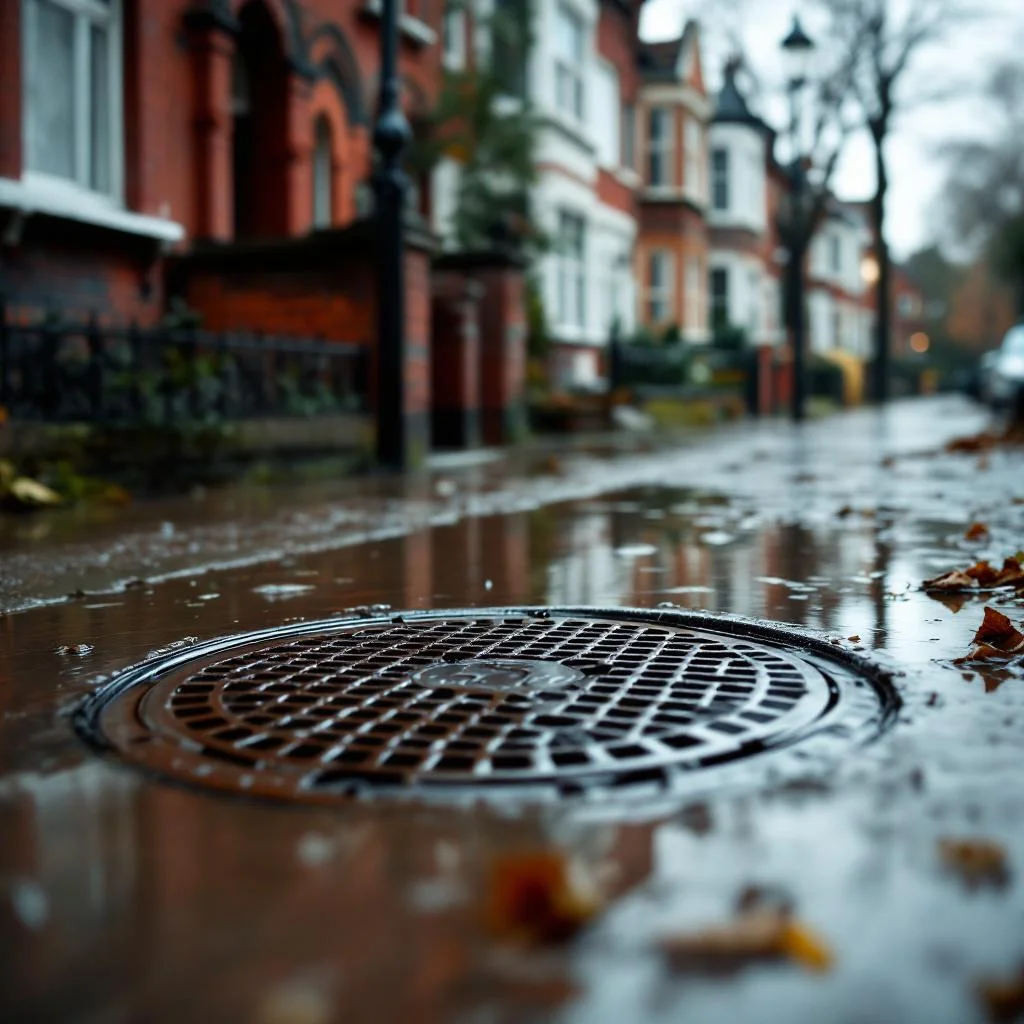
Inspection chambers (manholes). Access points in the drain run — usually the lidded chambers visible in gardens, driveways, or just outside the front of the property. These are the starting point for rodding or jetting work on the underground pipe system. Blockages at or near an inspection chamber tend to be more serious than gully blockages.
Main lateral drain. The underground pipe that runs from your property boundary to the public sewer in the street. Under changes made in 2011, this section is usually the responsibility of your water company (Thames Water in London) once it extends beyond your boundary and is shared with a neighbour — but the section on your own land remains your problem.
Shared sewer runs. Where two or more properties connect to a single lateral before reaching the public sewer main, that shared run is classed as a public sewer and maintained by the water company.
Soakaways. Gravel- or rubble-filled pits that allow surface water to percolate into the ground rather than flow to a sewer. Soakaways can become saturated or collapse over time, causing surface flooding that looks like a blocked drain.
What drives the price for blocked drains outside the house
Prices assume a standard residential property with reasonable access; the table below shows what changes the scope of work for each drain type.
| Drain type | Notes |
|---|---|
| Surface-water gully (rodding/hand clearance) | Most straightforward call-out; often cleared in under an hour |
| Gully with heavy silt (high-pressure jet) | Jetting equipment needed; includes a flush-through |
| Inspection chamber clearance | May need jetting if blockage is downstream of the chamber |
| Main lateral drain (with accessible chamber) | Chamber gives the engineer a clear entry point |
| Main lateral drain (no accessible chamber) | Additional work to locate and access the pipe |
| Soakaway investigation/partial reinstatement | Costs vary widely; may need excavation or replacement |
For a full breakdown of what drives drain unblocking prices, including emergency rates, see our drain unblocking cost guide.
What affects the price?
Accessibility
The single biggest variable. A gully with a clear grid cover at ground level takes minutes to access. A lateral drain running under a concrete driveway with no inspection chamber means the engineer must locate the pipe by CCTV or excavation before any clearing work can begin. Poor access adds time and therefore cost.
The cause of the blockage
Leaves, silt, and moss in a surface gully are trivial to clear. A root intrusion from a nearby tree, a build-up of fat and grease in a shared run, or a collapsed pipe section all require more specialist work — and potentially a CCTV survey before the right fix can be determined.
Pipe condition
If the drain is old — clay or vitrified clay piping is common in pre-1970s London properties — the engineer may find hairline cracks, displaced joints, or root ingress alongside the blockage. In those cases a simple unblocking may be a short-term fix, and a liner or dig-and-replace may follow.
Time of call
Standard working-hours rates are typically 30–50% lower than emergency out-of-hours rates. If the blockage is causing flooding or sewage overflow, emergency attendance is usually justified. If water is draining slowly rather than not at all, booking a same-day or next-morning slot at standard rates can save a significant amount.
Property type
Terraced houses in inner London often share a single lateral drain with several neighbours. When blockages occur in a shared run, the cost can sometimes be split between households — though reaching that agreement quickly is not always straightforward.
Blocked drain outside the house vs inside
Indoor blockages — a sink, bath, or toilet that drains slowly — are usually within the soil and waste pipe system that runs inside your property walls. These are often DIY-accessible with a plunger or sink unblocker. Outside blockages are almost always underground and require professional equipment: rods, a high-pressure jetter, or a CCTV camera. Attempting to clear an underground lateral drain without professional kit typically pushes the blockage further along or breaks old clay pipework rather than resolving it.
If water is backing up inside the property and also flooding around an outside inspection chamber simultaneously, this strongly suggests the blockage is on the lateral drain downstream of the last internal connection — which is nearly always a job for a drainage professional.
Is it Thames Water's problem?
Under legislation that came into force in October 2011, Thames Water (and all other English and Welsh water companies) took on responsibility for shared sewers and lateral drains that were previously privately owned. In practice, this means:
- The underground pipe on your own land serving only your property is your responsibility.
- The pipe beyond your property boundary, or any pipe shared with one or more neighbours, is Thames Water's responsibility to maintain and repair.
If you believe the blockage is in a shared section, call Thames Water on 0800 316 9800 before booking a private contractor. They have a legal obligation to investigate and clear shared public sewers at no cost to you.
Be aware that Thames Water response times for non-emergency reports are not always fast. If sewage is overflowing at the surface, that qualifies as an emergency under their own standards and should prompt a faster response. For blockages that are causing internal backing-up rather than external flooding, you may find it quicker to engage a private specialist and seek a contribution from neighbours after the fact.
When to book a CCTV survey instead of just a clear
A straightforward jetting or rodding clearance resolves most one-off blocked drains permanently. However, if the same outside drain blocks repeatedly — say, twice or more in a 12-month period — that is a strong indication of an underlying structural fault rather than a simple accumulation of debris.
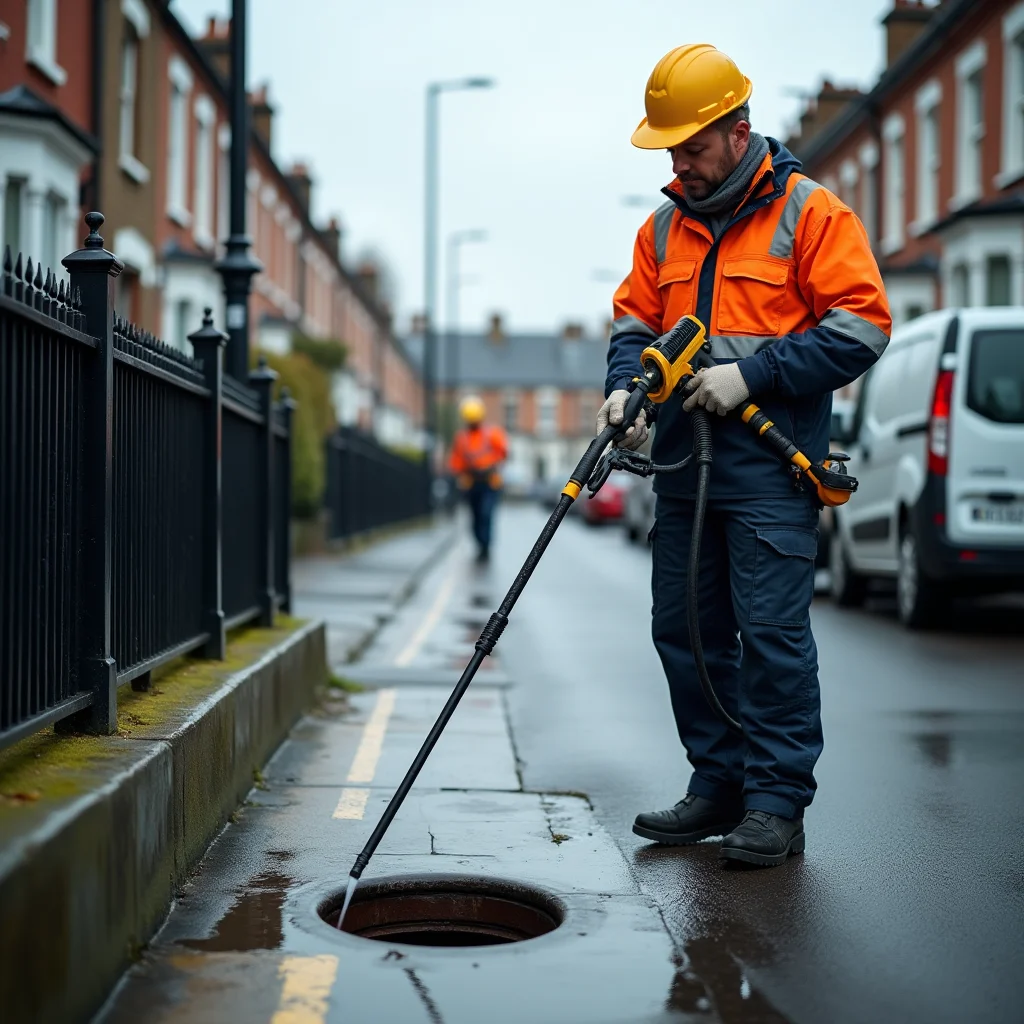
A CCTV drain survey sends a remote-controlled camera along the drain run and records the full condition of the pipe in high definition. Engineers can identify root intrusion, cracked joints, displaced pipe sections, collapsed sections, and build-up at bends that would otherwise be invisible. The cost depends on scope and includes a written report with timestamped footage.
Catching a structural fault early — before it causes a full collapse or sewage flooding — saves a significant amount compared with emergency excavation and pipe replacement.
What to do if your outside drain is blocked right now
- Check whether the blockage is in a shared sewer run. Lift the nearest inspection chamber cover and look at the water level. If it is high and flowing back, the blockage is likely downstream of that chamber.
- Check whether the blockage qualifies as a Thames Water responsibility. If the chamber on your property serves more than one household, call Thames Water on 0800 316 9800.
- Do not pour chemicals into an underground drain. Drain chemicals are effective in domestic waste traps but have little impact on a blocked lateral drain and can damage older clay pipes.
- Do not attempt to jet the drain yourself with a domestic pressure washer. Domestic pressure washers operate at far too low a pressure to clear compacted silt or a root mass in a 4-inch or 6-inch lateral drain.
- Call a professional drainage specialist. A trained engineer with rodding equipment or a towable high-pressure jetter will clear most outside blocked drains in a single visit.
For immediate help with a blocked drain outside your house anywhere in London, contact us via our contact form. We operate 24 hours a day, seven days a week, with engineers across all London boroughs. Same-day appointments are available at standard rates during working hours.