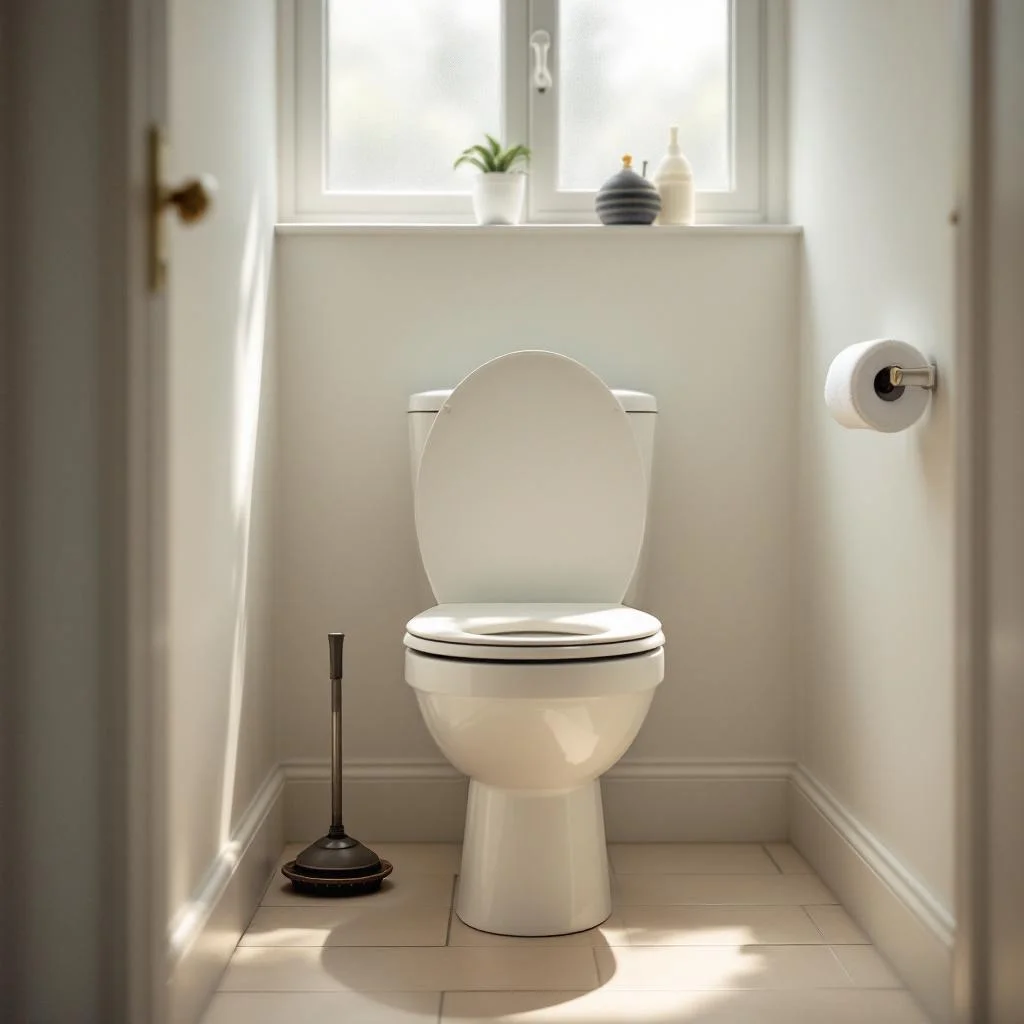

Toilet paper is engineered to break down in water within seconds. Yet every week we attend toilets where too much paper has caused a blockage — sometimes a minor backup that clears with a plunger, sometimes a full drain blockage requiring rods or jetting. After 26 years of clearing London toilets, the pattern is consistent: toilet paper rarely blocks a healthy drain on its own. When a toilet blocks "from toilet paper", the paper is almost always combining with one of three underlying issues: a low-flush cistern, a narrow or partially obstructed drain, or a non-flushable item further down the line that the paper has caught against.
This guide explains why a blocked toilet from toilet paper happens, how to clear it yourself, when to call a blocked toilet specialist, and how to stop it happening again.
Can toilet paper really block a toilet?
Yes — but it is almost always a symptom, not the cause. Modern toilet paper is designed to disintegrate quickly in water. Within 30–60 seconds in a cistern flush, a normal handful of toilet paper will have broken into small fragments that flow easily through a 100mm drain pipe.
A toilet blocks from toilet paper when one of the following is true:
- Too much paper in a single flush. A wad rather than a sheet. Common in family households with young children, and in shared houses where flushing habits vary.
- Insufficient flush volume. Older cisterns (pre-1993) used 9 litres per flush. Modern dual-flush cisterns use 4–6 litres. If the cistern fills incompletely, or if the dual-flush short-flush is used for solid waste, there may not be enough water to clear the pan.
- Narrow or partially obstructed drain. Limescale build-up in the pan trap or U-bend reduces the bore. A previous blockage has left a partial obstruction. The drain run beyond the toilet has accumulated scale or grease.
- A non-flushable item already in the drain. Wet wipes, cotton buds, sanitary products, or kitchen roll caught somewhere in the soil pipe. Toilet paper catches on these items and rapidly forms a full blockage.
- Poor drain fall. If the section of pipe from the toilet to the soil stack has insufficient gradient, water moves slowly and waste accumulates rather than washing through.
In short: if your toilet blocks repeatedly from "normal" amounts of paper, the toilet or the drain has an underlying problem — not the paper.
How to clear a toilet paper blockage yourself
For a single blockage that has just happened, try these steps in order:
1. Stop flushing. Each additional flush adds more water to a pan that cannot drain it. Two or three flushes is enough to overflow the pan and flood the bathroom floor.
2. Wait 15–20 minutes. Toilet paper continues to break down in water. A blockage that looks solid often partially disintegrates while you wait, and a single careful flush after 20 minutes will sometimes clear it on its own.
3. Use a plunger. A toilet plunger (the bell-shaped type with a flange) creates the right seal in a toilet pan. Push down firmly and pull up sharply — the pull is what dislodges the blockage. Repeat 6–10 times before testing with a flush.
4. Try hot (not boiling) water. Pour a kettle of hot — not boiling — water from waist height into the pan. The combination of heat and the impact of the falling water often loosens a toilet paper blockage. Boiling water can crack ceramic, so let the kettle cool for 2–3 minutes before pouring.
5. Use a toilet auger or drain snake. A toilet auger is a flexible rod with a corkscrew tip designed to navigate the pan trap. Available cheaply from any DIY shop, it is the most effective DIY tool for a toilet paper blockage that has gone beyond the immediate pan.
Avoid chemical drain cleaners. Caustic cleaners damage older Victorian pipework, are dangerous to handle, and rarely clear a physical blockage. They are designed for grease and biofilm, not paper or solids.
When to call a professional
Contact us — or any drain specialist — if:
- The blockage returns within hours or days of clearing
- Multiple fixtures are affected (toilet plus bath, plus sink)
- Water backs up at the external drain or manhole when you flush
- The blockage is in a flat above ground floor and you have heard reports from neighbours below
- DIY clearance attempts have failed after 20–30 minutes of effort
- You smell sewage either inside the property or near external drain gullies
Any of these signs points to the blockage being further down the drain run than the toilet pan — beyond the reach of a plunger or domestic auger. Our blocked toilets London team attends 24/7 with the right equipment to diagnose and clear toilet blockages on the first visit, and our emergency drain service handles the cases where sewage is already backing up.
Why does this keep happening to my toilet?
If your toilet has blocked from toilet paper more than twice in the last six months, the issue is not the paper. The three most common underlying causes:
Limescale build-up in the pan trap. London has some of the hardest water in the UK. Over 10–15 years, limescale narrows the internal bore of ceramic pan traps. The pan looks fine externally but is functionally narrower. A descale or replacement pan is the right fix.
Old or low-flush cistern. Older cisterns lose their seal and refill incompletely. Modern eco-flush cisterns with a 4-litre short flush are sometimes inadequate for solid waste. Request a quote for a cistern service or upgrade.
Wet wipes elsewhere in the drain run. Even if you never flush wipes, other household members or previous occupants may have. A wad of wipes lodged 5–10 metres downstream creates a partial obstruction that toilet paper catches against. A CCTV camera inspection will identify the exact location, and a single jetting clearance resolves the issue permanently.
How to prevent blocked toilets from toilet paper
- One flush per use for solid waste. Use the full flush on a dual-flush cistern.
- Use fewer sheets, more flushes. Two short flushes of a normal amount of paper is better than one flush of double the paper.
- Never flush anything other than human waste and toilet paper. Not wipes (even "flushable"), not cotton buds, not sanitary products, not kitchen roll, not dental floss. If it was not designed to disintegrate in water within 60 seconds, the bin is the right place for it.
- Descale your toilet pan annually. Pour 250ml of white vinegar into the pan, leave overnight, scrub and flush in the morning. This removes limescale from the visible pan and the upper trap.
- Book a CCTV survey every 7–10 years on older properties. A clean drain run with a CCTV-confirmed condition assessment is the single best insurance against recurring blockages.
For a one-off toilet clearance or to discuss recurring blockages, reach our 24/7 team via our contact form, or read our blocked toilet emergency guide for next-step advice while you wait.