Three words — drain, lateral drain, sewer — appear constantly in conversations about London drainage, often used interchangeably when they shouldn't be. The distinction matters for a specific practical reason: it determines who is responsible when something goes wrong and who pays to fix it. Thames Water and the Water Industry Act 1991 (as amended by the 2011 private sewer transfer regulations) define these terms precisely. Here's what they mean for a London homeowner.
A Drain
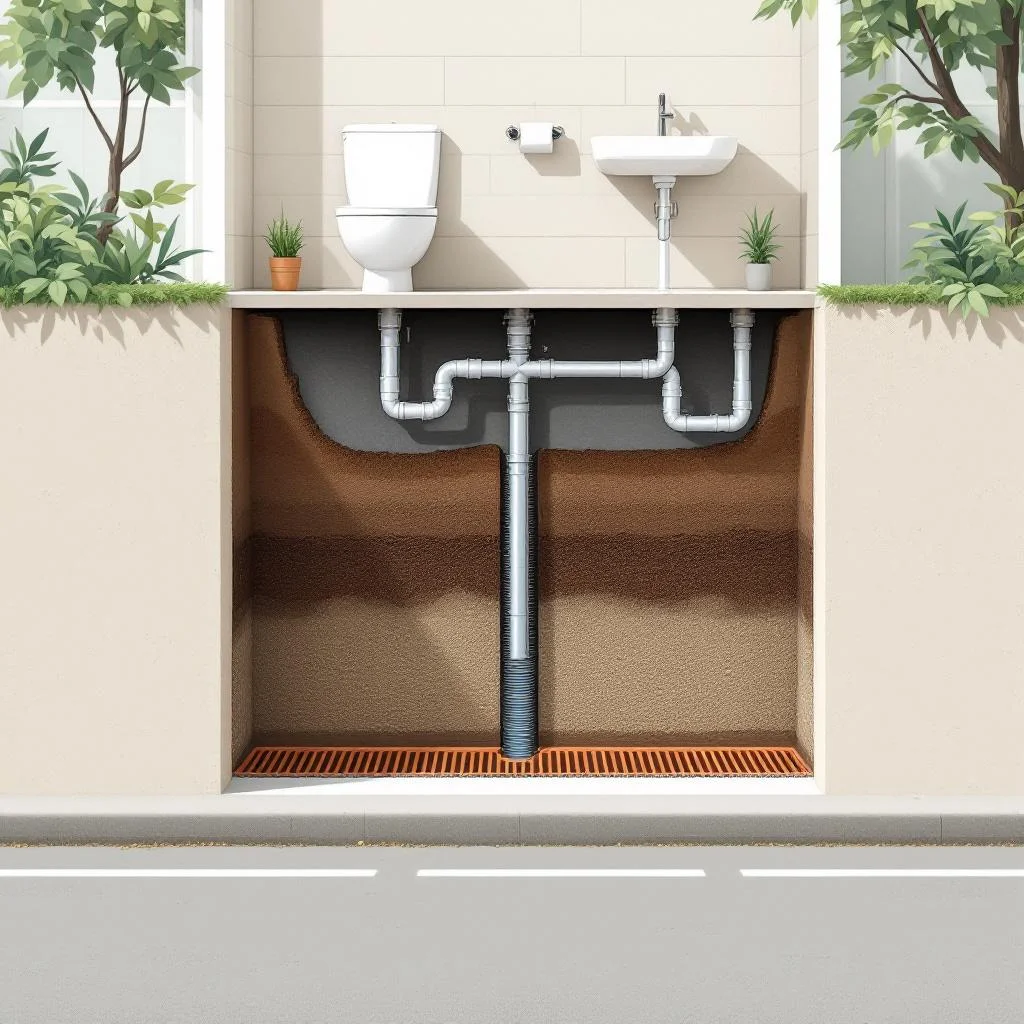
A drain is a pipe that serves a single property. It carries wastewater from a single house or flat — from the toilets, sinks, showers, baths, and kitchen — to the point where it either connects to a lateral drain (shared pipe) or directly to a public sewer.
A drain is always private. The homeowner is responsible for its maintenance and repair, from the first pipe fitting inside the property to the point where the pipe leaves the property's curtilage or joins a shared pipe.
In a detached house with its own connection to the road sewer, the entire drainage run — including the section that crosses under the front garden — is a private drain. The homeowner is responsible for all of it.
A Lateral Drain
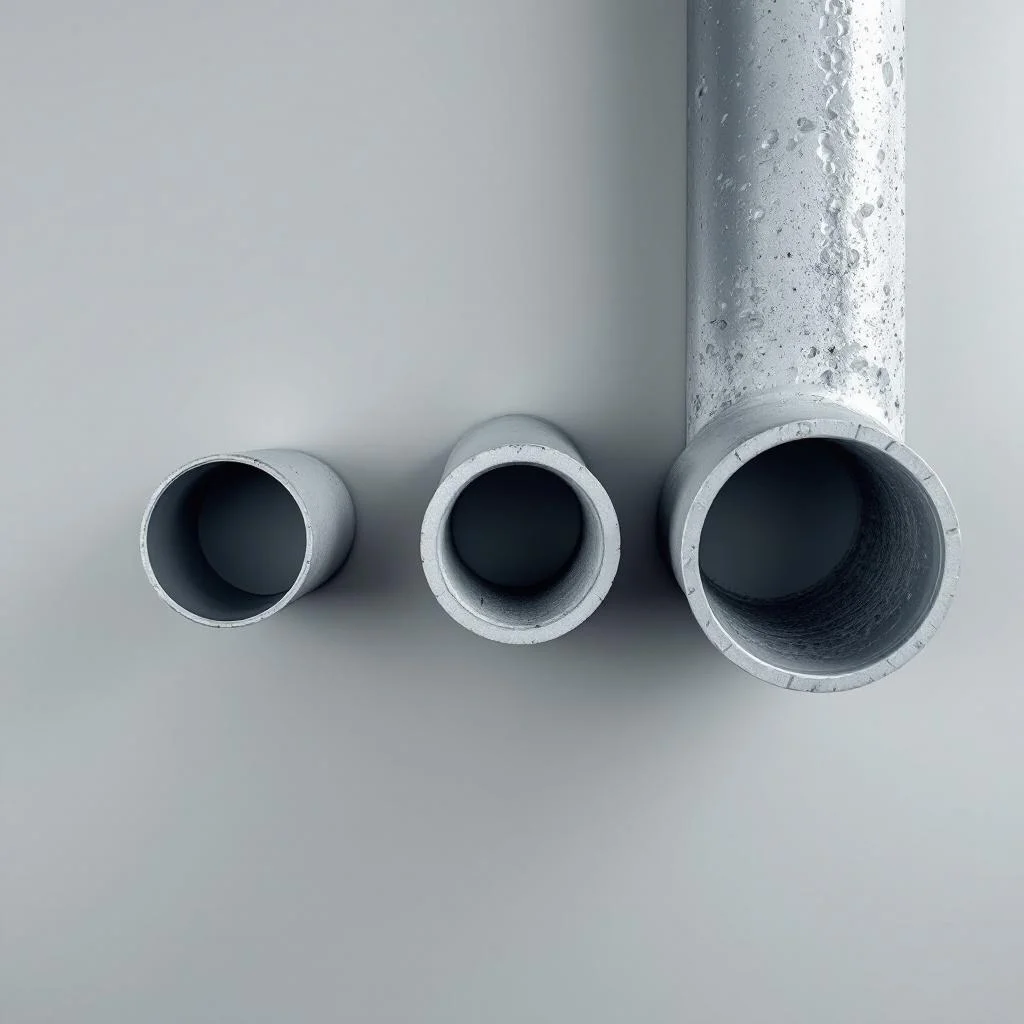
A lateral drain is a pipe that carries wastewater from a single property but runs beyond the property boundary — typically under the pavement or road — to connect to a public sewer.
Before the Water Industry Act 2011, lateral drains were private. Homeowners were responsible for their maintenance all the way to the public sewer connection, even where the pipe ran beneath a public highway. This caused significant problems — a cracked pipe under the pavement was the homeowner's repair bill even though they had no reasonable access to it.
The 2011 Act changed this. Since October 2011, lateral drains have been automatically adopted by sewerage undertakers (Thames Water in London) and are now public sewers for maintenance and repair purposes. This means:
- Thames Water is responsible for maintaining the section of drain that runs beneath the pavement and road, up to the point where it connects to the main sewer
- If the lateral drain under your pavement is blocked or collapses, Thames Water repairs it at no cost to you
- The private drain within your property boundary remains your responsibility
This is one of the most important drainage rule changes in recent history and one that still catches homeowners out — particularly those who received a quote for lateral drain repair before 2011 and assume the rules are the same.
Our post on drain ownership for flats and terraces covers the 2011 changes in more detail, with specific guidance for leasehold and shared properties.
A Public Sewer
A public sewer is a pipe that carries wastewater from more than one property. Thames Water owns and maintains it. Public sewers typically run beneath roads and pavements, collecting flow from lateral drains and other public sewers until the wastewater reaches a sewage treatment works.
Thames Water is responsible for all maintenance and repair of public sewers. If a public sewer blocks and causes a backup into your property, Thames Water's emergency team responds and clears it. If a public sewer collapses beneath your road, Thames Water repairs it.
You cannot build over or close to a public sewer without a build-over agreement from Thames Water. This applies even if the sewer runs beneath your garden or within your property boundary — the public sewer is Thames Water's asset regardless of where it sits.
Shared Private Sewers: The In-Between Case
Before the 2011 Act, pipes that served more than one property but hadn't been formally adopted as public sewers were called shared private sewers. They were the joint responsibility of the connected properties — an arrangement that caused enormous disputes and practical difficulties when blockages or repairs arose.
The 2011 Act adopted most shared private sewers into the public sewer network. However, some shared private sewers remain private — typically those built after 1937 under specific arrangements, or those within the curtilage of private developments. If you're unsure whether a shared pipe is private or public, a CON29DW drainage search will tell you.
Why This Matters When Something Blocks
The practical consequence of these definitions is clear in a blockage scenario:
| Location of blockage | Responsibility | Who pays |
|---|---|---|
| Internal drain (within property) | Homeowner | You |
| Private drain under garden | Homeowner | You |
| Lateral drain under pavement | Thames Water | Thames Water |
| Public sewer | Thames Water | Thames Water |
| Shared private sewer | Joint homeowners | Split between connected properties |
The difficulty arises when you don't know where the blockage is. A camera survey — ideally from an accessible inspection chamber — can locate the blockage precisely. If it's in your private drain, that's our work; if it's in the lateral drain or public sewer, Thames Water takes over.
Our drain repair service covers private drain assessment and blockage location. We coordinate with Thames Water when the problem lies in the public network.
How to Check Which Pipes Are Public and Which Are Private
CON29DW search. Your solicitor can order a drainage search as part of conveyancing. This shows the positions of public sewers (and adopted lateral drains) registered with Thames Water relative to your property.
Thames Water sewer maps. Thames Water publishes sewer maps that show public sewer positions. These are not always perfectly accurate for older pipes, but give a useful starting point.
CCTV survey. For active problems, a CCTV survey from your accessible inspection chamber will show the drainage layout and allow blockage location. Combined with the drainage search, this gives a complete picture.
Worked Examples: Three Common London Property Types
The rules above are clearer when applied to the property types we see most often across London. Here is how the same blockage scenario plays out in three typical situations.
A Victorian mid-terrace in Walthamstow (E17). The drainage runs under the rear yard, exits through a shared party drain that connects three or four houses, then crosses under the front pavement to the public sewer in the road. Blockage in the kitchen branch inside your yard: your drain, your bill. Blockage in the shared party drain that backs up into both your house and your neighbour's: this is now an adopted public sewer following the 2011 Act, and Thames Water will clear it free of charge. Blockage under the front pavement before the road sewer: this is the lateral drain — also adopted, also Thames Water. Most Walthamstow terrace owners are surprised to learn that two-thirds of "their" drainage is actually Thames Water's responsibility.
A 1930s semi in Chiswick (W4). The detached drainage runs from the rear bathroom, around the side return, under the front garden, and meets the public sewer roughly at the kerb. Because nothing is shared with neighbours, the entire run from house to highway boundary is a private drain. Anything from the kerb onwards is the lateral drain (Thames Water). Many Chiswick semis were built with a single inspection chamber halfway down the side return — a useful access point that often helps locate exactly where private ends and public begins.
A two-bed flat in a converted Hackney house (E8). The flat shares an internal soil stack with three other flats, which discharges into a single drain serving the whole conversion. Responsibility is determined by the lease, not the 2011 Act — typically the freeholder or management company maintains the shared drainage as part of the service charge. The leaseholder's responsibility usually ends at the wall of their own demise. A pre-purchase CCTV drain survey and a careful read of the lease are the only reliable way to confirm where each party's liability sits.
FAQ
Has the 2011 Act been fully implemented — are all lateral drains now adopted?
The vast majority of lateral drains were adopted by October 2011 when the Act came into force. However, a small number of cases have been disputed or delayed. A drainage search will confirm the status of the lateral drain serving your property.
If Thames Water is responsible for the lateral drain, why do I need my own drain survey?
Your private drain — from the property to the boundary — remains your responsibility. A survey of your private drain doesn't include the Thames Water lateral or public sewer. You need your own survey to assess your private drain; Thames Water's records cover the adopted lateral and public sewer.
What if a public sewer blockage causes damage to my property?
If Thames Water's public sewer blocks and causes sewage backup into your property, Thames Water has liability. Keep records of all damage and contact Thames Water's claims team. You should also contact your home insurer.
Is a soakaway drain a public or private drain?
Soakaways — drains that discharge surface water to ground rather than to the sewer — are always private. They are not adopted by Thames Water and are the homeowner's responsibility.
How do I find out who is responsible for the drain under my garden?
A CON29DW drainage search combined with a CCTV survey is the most reliable approach. Request a quote online via our contact form to arrange a survey, or contact your solicitor for a drainage search.