The rule is simple. If a drain serves only your property, it is yours to look after. If it serves more than one property, it belongs to Thames Water. The October 2011 private sewer transfer set that rule, and it settles most London drain disputes. Yet applying it to your own pipe and your own blockage is where things get tricky.
This guide covers the 2026 position on drain and sewer responsibility in London. Since the rules confuse many owners, it explains what changed in 2011. It also shows how to find where your duty ends, and what to do if the boundary is disputed.
The Core Distinction: Private Drain vs Public Sewer
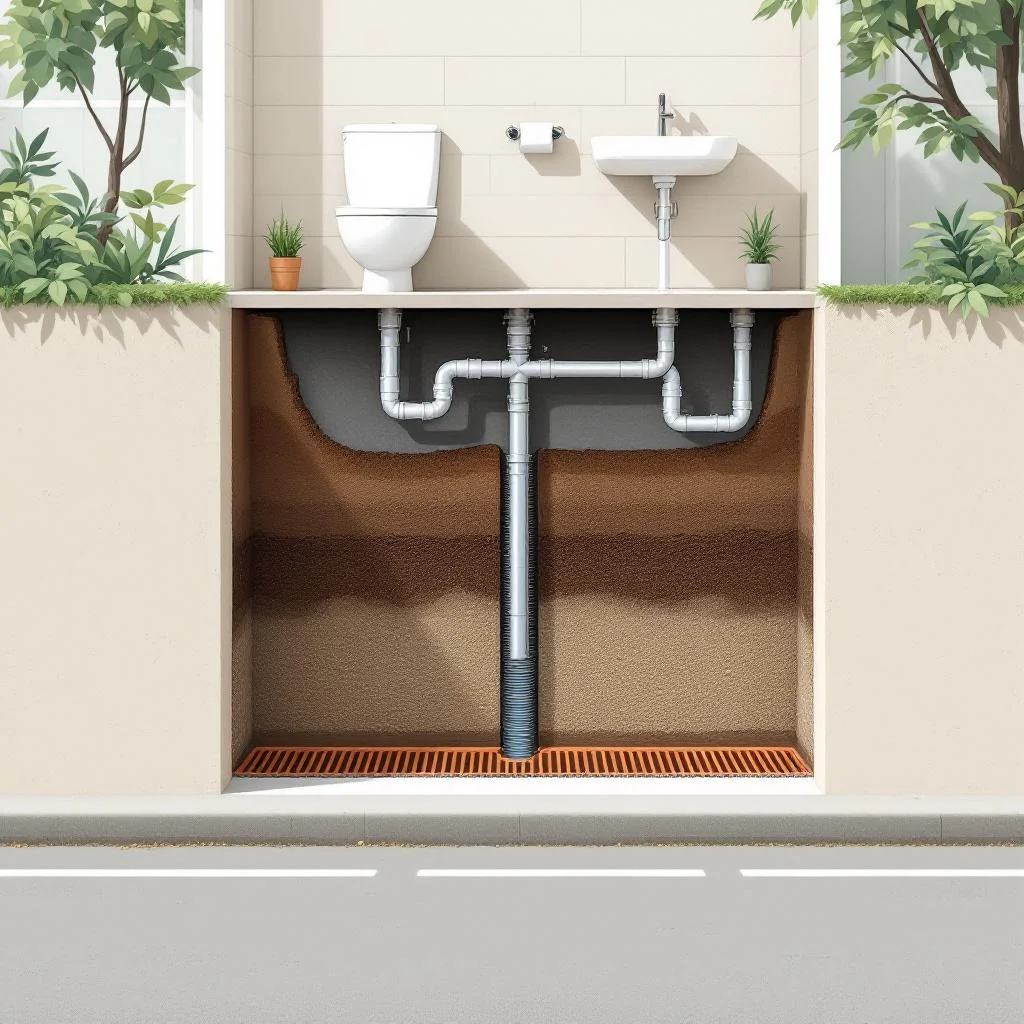
Your private drain runs from where wastewater leaves your home to the first shared pipe or the public sewer. Because it serves you alone, you maintain and repair this section.
The public sewer, or an adopted lateral drain, is any pipe that serves more than one property and that Thames Water has adopted. Thames Water deals with faults in adopted pipes. That holds even when they run under your garden, since the pipe is public.
The catch is that one pipe run can have both kinds of section. So the boundary is not always at your property line.
What Changed in October 2011
Before October 2011, neighbours who shared a drain were jointly responsible for it. That led to costly disputes, because nobody agreed who should pay.
The 2011 private sewer transfer moved shared private sewers to the water companies. It also moved lateral drains, the pipes that run from your property to the public sewer. In London, that means Thames Water.
As a result, many homeowners gained the right to have Thames Water maintain pipes they once paid to fix. Yet we still meet owners who pay for repairs to pipes that are Thames Water's job.
The key point is simple, because the test is easy. If a pipe serves more than one property, it is Thames Water's problem, even under your garden.

How to Identify the Boundary at Your Property
Check Thames Water's sewer records
Thames Water offers a sewer records search, since the records show where adopted sewers run near your property. If the pipe under your garden shows as an adopted public sewer, Thames Water is responsible for it.
However, sewer records are not always right for older homes. In inner London, drains have often been changed over the decades without telling the water company.
Commission an independent CCTV survey with a drainage plan
For a firm answer, a CCTV drain survey with a measured plan shows where your drain runs. It also shows where it joins the shared system. It confirms the physical boundary between private and adopted pipes. Because it is independent evidence, it is the usual approach when Thames Water disputes responsibility.
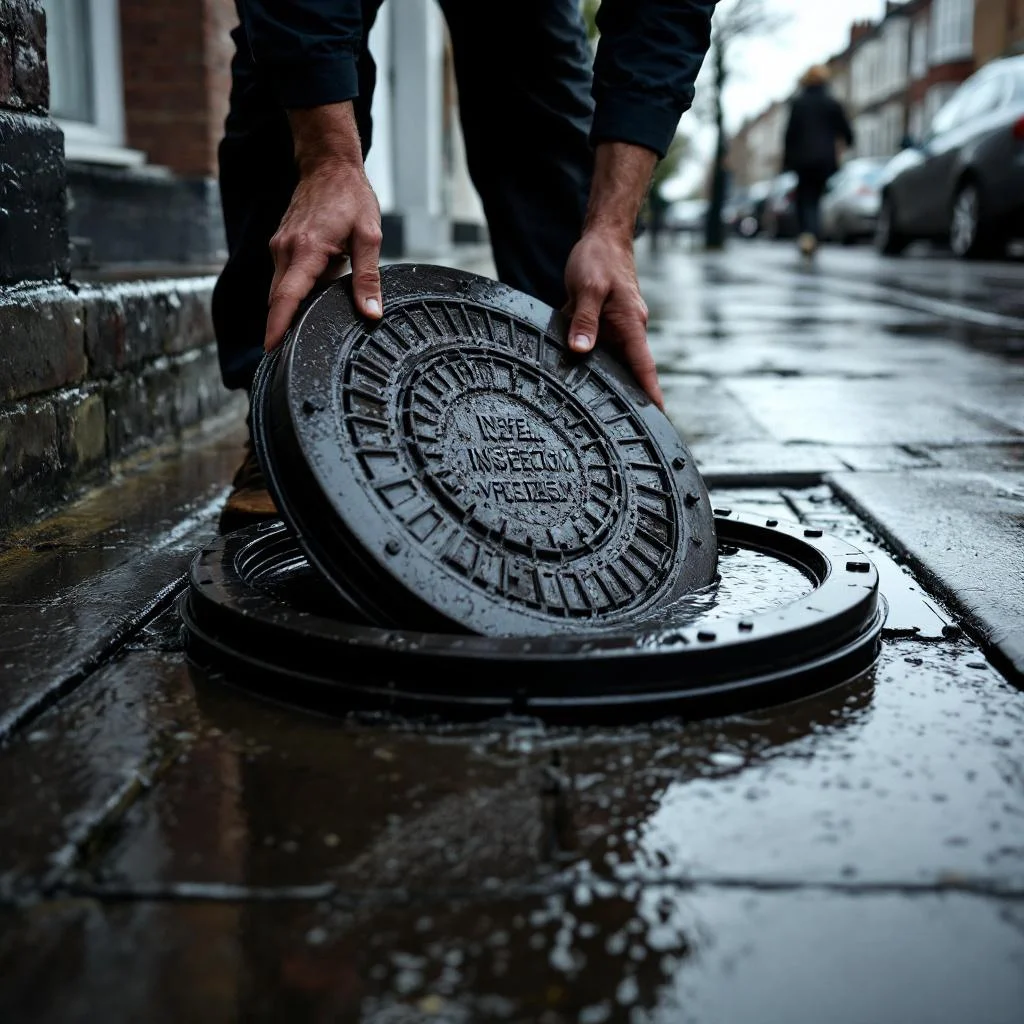
Check inspection chamber covers
In many London homes, the last chamber before the public sewer marks the practical end of your duty. This boundary chamber is the last private point, since the pipe beyond it is shared. Blockages beyond it are usually Thames Water's concern.
What Happens When You Report a Blockage to Thames Water
Because the process has several steps, a report of a blockage in adopted pipes usually goes like this.
- You report it through the Thames Water website or helpline.
- Thames Water arranges an inspection, which can take several days for non-urgent reports.
- An inspector confirms where the blockage is and whether the pipe is adopted.
- If it is adopted, Thames Water books the clearance work.
For non-urgent blockages, the whole process can take weeks. However, if sewage is backing up, Thames Water treats it as urgent. Report by phone, not online.
Because of the wait, many owners hire a private firm to clear the blockage straight away. They then ask Thames Water for the cost if the fault turns out to be in adopted pipes. Keep every receipt, and ask the drain firm to confirm in writing where the blockage was.
Lateral Drains: The Most Common Source of Confusion
A lateral drain runs from your property, under the pavement and sometimes the road, to the public sewer. Before 2011, it was your duty even though it ran outside your boundary. Since 2011, it has been Thames Water's.
Since the history is confusing, this catches owners out in two ways:
They pay for repairs they should not. Although the rule changed, some owners kept paying. If you paid to fix a lateral drain outside your boundary after October 2011, you may be able to ask for a refund. Contact them with evidence of the repair.
They expect fast action. Thames Water must maintain adopted pipes, yet its response to non-urgent faults can be slow. If the fault is damaging your home, you may ask for faster action under the Guaranteed Standards Scheme. You may also be able to claim compensation if Thames Water misses its response commitments.
Borough-Level Context
While disputes can arise anywhere, they are common in boroughs with old, complex drains. Homes in Islington, Hackney, Tower Hamlets, Southwark, Lambeth, Westminster, Camden and Kensington and Chelsea often share Victorian drains. Sewer records are often incomplete there, so an independent survey is the most reliable way to learn the layout.

What to Do Right Now
Because a wrong guess can be costly, use these steps if you are unsure who is responsible.
- Do not assume it is your problem. Check whether the pipe could serve neighbouring homes.
- Report to Thames Water first if the blockage is in a shared or outside-boundary pipe, since this creates a record.
- Call a private drainage company if the blockage is flooding the property or you cannot wait.
- Get a CCTV survey if the boundary is disputed, because an independent drainage plan is the strongest evidence.
Since our blocked drain service covers all 32 London boroughs, we can clear the blockage. We can also produce a CCTV report that shows where it sits. We can also advise whether Thames Water should bear the cost. Request a quote online via our contact form.
Frequently Asked Questions
The blockage is in a pipe under my garden. Is it my responsibility?
Not necessarily, because the answer depends on the pipe. If it serves more than one property, or it is a lateral drain outside your boundary, it became Thames Water's in October 2011. Check the sewer records to confirm, or commission a CCTV survey with a drainage plan.
Thames Water says the blockage is on my side. How do I verify this?
Ask Thames Water to share its CCTV footage. Ask it to confirm in writing where the blockage sits. However, if you disagree, commission an independent CCTV survey. A report with a measured plan carries real weight.
My neighbour and I share a drain that keeps blocking. Who pays?
Since 2011, a drain shared by two or more properties has been Thames Water's job. Report it to Thames Water, because neither you nor your neighbour should pay to maintain shared pipes.
Can I get a refund if I paid for lateral drain repairs since 2011?
Possibly, although only if the drain was later confirmed as adopted by Thames Water. Contact its customer services with proof of the repair and the drain's location. Each case is judged on its own facts.
Can I request help with a blocked drain in London?
Because we cover all 32 London boroughs, you can request a quote online via our contact form.
Because every property is different, start with our guides to blocked drains and external drain unblocking advice. We also cover blocked drains in London and blocked drains in Sidcup, so you can see how the work runs near you.