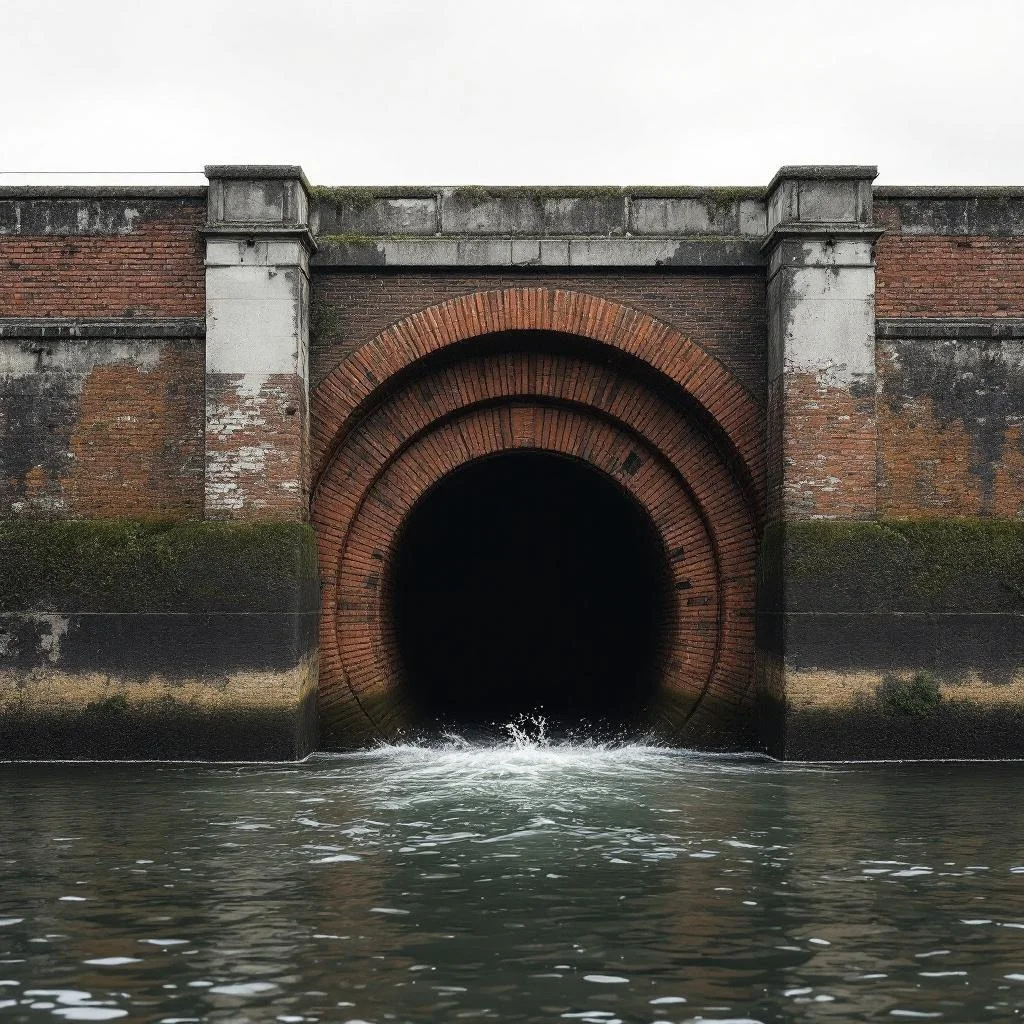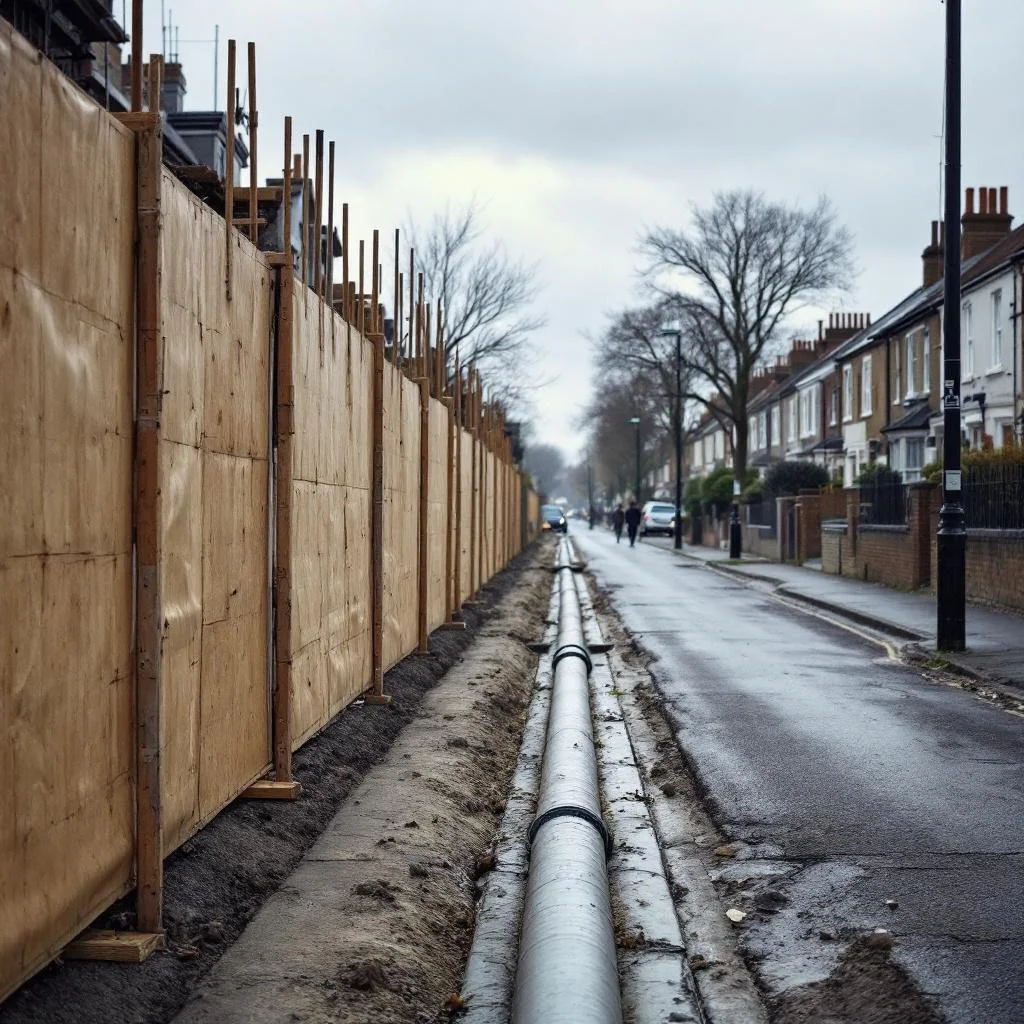

Canary Wharf is one of the few parts of London where the Victorian drainage problem does not apply. The entire estate was built from 1987 onwards on the site of the former West India Docks, and its drainage infrastructure is modern — post-Bazalgette, post-clay, post-shared-lateral. You would think that means fewer problems. In practice, it means different problems: pumped basement drainage, tidal Thames surcharge, the highest restaurant density per square metre in London, and shared high-rise stacks that turn a single blocked toilet into a building-wide issue. After years of attending callouts across Canary Wharf and E14, these are the patterns we see consistently.
Why Canary Wharf Drainage Is Nothing Like the Rest of London
In Victorian terrace boroughs — Camden, Hackney, Islington — the drainage problem is structural age: clay pipes laid in the 1880s that have cracked, root-infiltrated, and narrowed with a century of grease accumulation. In Canary Wharf, none of that applies.
The estate's drainage was designed for modern load from the start. Pipe materials are MDPE, uPVC, and ABS rather than clay. Pipe diameters are larger. Gradients are engineered. But the site creates its own specific challenges.
The Isle of Dogs is a peninsula of reclaimed Thames marshland. The ground is alluvial gravel and river terrace deposits — not London Clay — with a water table that sits close to the surface, particularly in the south and west of the peninsula. The tidal Thames bounds the estate on three sides. Every one of these geographical facts affects how drainage behaves, and most generic drain companies do not account for any of them.
The High-Rise Stack Problem
Canary Wharf's residential towers — Landmark Pinnacle, South Quay Plaza, Wood Wharf, and the older 1990s blocks around Heron Quays — handle drainage very differently from a terrace or a Victorian flat conversion.
Each tower runs drainage from individual apartments down a shared soil stack — a vertical pipe, typically 100mm, serving multiple flats on the same riser. These stacks connect to a horizontal drain run at ground or basement level, which feeds either into a pumped drainage system or directly to the adopted sewer.
The consequence: a blockage anywhere in the stack does not just affect one flat. It affects every flat above and below the blockage point, and the fault — a build-up of wet wipes, sanitary products, or FOG (fat, oil, and grease) — is almost never in the flat that first notices the problem. Identifying who is responsible and where exactly the blockage sits requires a CCTV survey of the stack and the horizontal run beneath it.
In a managed building, the freeholder or managing agent is typically responsible for shared stacks and horizontal drain runs. Individual leaseholders are responsible for waste pipes within their own flat as far as the stack. When a stack blocks, the managing agent should commission the investigation — but in practice, the leaseholder who cannot use their bathroom calls us first.
A CCTV drain survey with a written report identifying the blockage location is the most useful document you can provide to a managing agent or freeholder to confirm responsibility and obtain reimbursement.
Restaurant Density and Fatbergs
Canary Wharf has one of the highest concentrations of food outlets in any part of London: restaurants, cafés, and fast-food units across the shopping mall, Jubilee Place, and the ground-floor retail levels of almost every commercial tower. Many of these kitchens feed into shared commercial drain runs that predate the current level of trading.
Fat, oil, and grease from commercial kitchens does not flush cleanly through drainage pipes. It cools as it travels and solidifies on the pipe wall. In a high-density commercial environment where multiple kitchens share the same drain run, FOG accumulates faster than any single operator realises. The result is a fatberg — a consolidated mass of solidified cooking fat, wet wipes, and food waste that can completely block a commercial drain run.
The 2017 Whitechapel fatberg — 130 tonnes, 250 metres long — was discovered in the adjacent Tower Hamlets sewer network. The density of restaurant kitchens in E14 creates the same conditions on a smaller scale in private drain runs throughout the estate.
High-pressure drain jetting with a heated-water option is the standard treatment for FOG blockages in commercial drain runs. For food businesses in Canary Wharf, a quarterly preventive jetting contract is consistently cheaper than the combination of emergency callouts and environmental health enforcement action.

Tidal Thames and Basement Drainage
The Isle of Dogs sits at or near the Thames tidal flood level. This has two direct consequences for drainage.
First, gravity drainage alone is insufficient for basement plant rooms, lower-ground commercial units, and any drain connection below the local tidal limit. These systems rely on sump pumps and ejector pumps to lift waste to a level where it can flow by gravity to the sewer. A pump failure means sewage backs up in the basement rather than draining. This is not a blocked drain in the conventional sense — it is an electromechanical failure that requires pump service or replacement.
Second, during spring high tides combined with heavy rainfall, the combined sewer system serving the Isle of Dogs can surcharge — the pressure in the sewer rises and reverses flow in any connection that lacks a working non-return (check) valve. A property without a functioning check valve in its drainage can experience sewage backup from the sewer during high tide events, even with no blockage present in the private drain at all.
We routinely fit and service check valves across Canary Wharf and the wider E14 postcode. If you have experienced sewage backup during a tidal or rainfall event, check valve failure is the most likely explanation. Annual function testing is strongly recommended for any basement or lower-ground drainage connection in E14.
Wood Wharf and Newer Developments
The Wood Wharf development — the eastern extension of the Canary Wharf estate — added significant new residential capacity in the early 2020s. These are among the newest residential buildings in London, yet they generate drainage callouts at rates comparable to older stock.
The cause is not the pipes or the construction quality — it is occupant behaviour in high-density multi-occupancy buildings. Wet wipes flushed by a handful of residents in a 40-storey block accumulate at the base of the stack in volumes that no stack was designed to handle. In a single-family house, wet wipes occasionally cause a blockage. In a 200-unit tower, they cause one every few weeks.
The only effective management is a combination of resident communication (building managers circulating "only flush toilet paper" guidance), regular jetting of shared stacks on a preventive schedule, and rapid response to callouts before one flat's blocked stack becomes a building-wide sewage problem.
For urgent blocked drain issues across Canary Wharf, Docklands, and the wider E14 postcode, our 24/7 emergency drain service prioritises urgent jobs for the fastest possible attendance. We carry CCTV camera equipment and jetting equipment on every van, so diagnosis and clearance happen in a single visit.
Frequently Asked Questions
Who is responsible for my blocked drain in a Canary Wharf high-rise?
Waste pipes within your flat, up to the point where they join the shared stack, are your responsibility as leaseholder. The shared soil stack, horizontal drain runs, and anything beyond the building boundary are the freeholder or managing agent's responsibility. For blockages in the shared section, request the managing agent to commission investigation and repair — and ask for a written copy of the CCTV report so you have documentation of the cause.
Does the Canary Wharf Group manage drainage on the estate?
Canary Wharf Group manages the public realm and private estate roads within the Canary Wharf estate. Drainage in public highway areas is a Tower Hamlets Council responsibility. Drainage within individual buildings — stacks, drain runs, and connections — is the responsibility of the building's freeholder or managing agent, and beyond the site boundary, Thames Water's adopted sewers take over.
Can a tidal surge block my drain?
Not exactly — a tidal surge causes surcharge in the sewer, which pushes back through any drain connection without a check valve. The drain is not blocked in the usual sense; the sewer pressure is temporarily higher than the drainage pressure inside the building, forcing flow to reverse. Once the tide recedes, normal drainage resumes. The fix is a working check valve, not unblocking.
How often should a Canary Wharf restaurant drain be jetted?
For busy kitchen operations, high-pressure jetting every three months is the industry standard in high-density commercial areas. Some operators with lower kitchen volumes manage with twice-yearly jetting. An annual CCTV check confirms whether the interval is appropriate. If you are having blockages between scheduled jettings, either the interval is too long or there is a structural issue in the drain that jetting alone cannot resolve.
How quickly can you attend in E14?
We cover all E14 postcodes — Canary Wharf, Isle of Dogs, Poplar, Limehouse, Cubitt Town, and Millwall — and prioritise urgent jobs for the fastest possible emergency response, 24 hours a day. Request a quote online via our contact form.