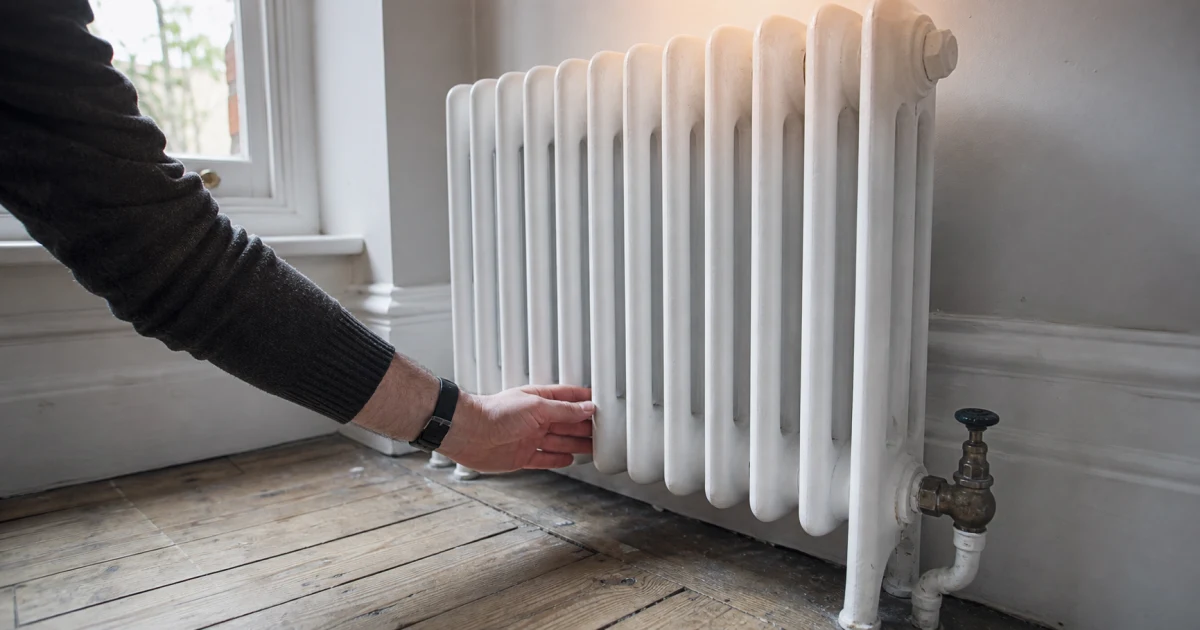
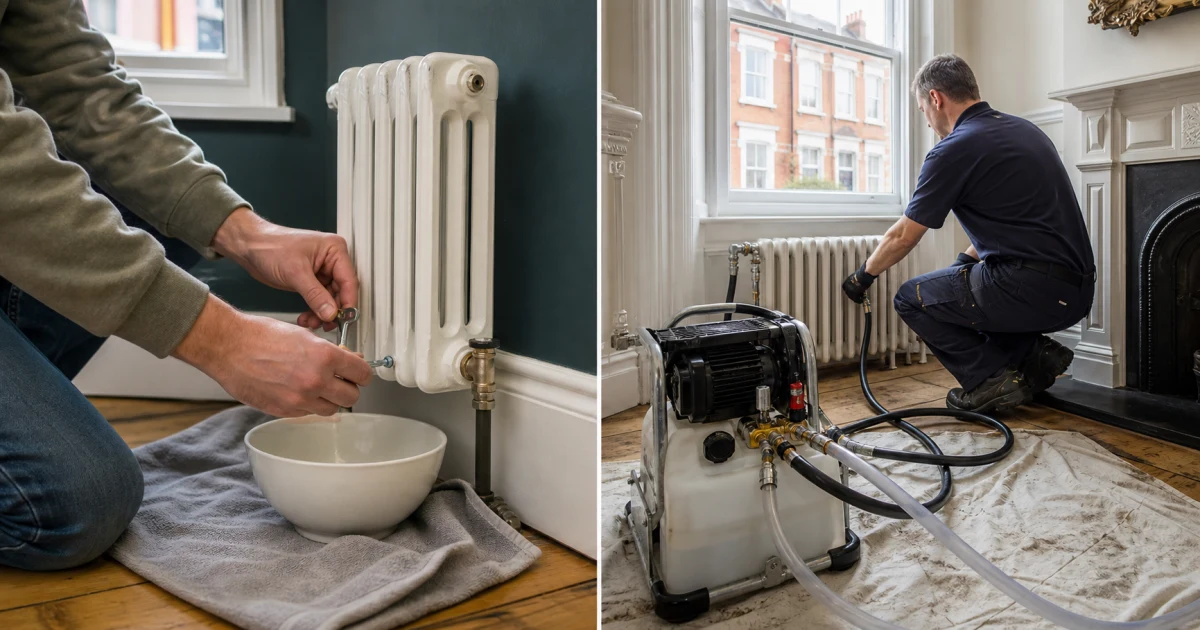
Flushing a central heating system in a London home can mean two very different things: a basic DIY drain-and-refill, or a professional radiator power flush using a machine and chemicals. A careful homeowner can do limited maintenance, such as bleeding radiators, draining dirty water from a drain point, and refilling with inhibitor. What DIY cannot do well is force sludge out of every radiator, pipe bend, and boiler pathway. That is where professional equipment becomes useful.
This guide explains how to drain a radiator system safely, what to check before you start, and when to stop. It is written for domestic London homes with standard wet central heating, not commercial plant rooms or specialist communal systems. If your system is shared, sealed behind access panels, losing pressure, or connected to a vulnerable boiler, book an engineer instead of experimenting.
Before you start
Turn the heating off and let the system cool fully. Hot heating water can scald. Check your boiler manual so you understand whether your system is sealed, open-vented, or part of a more complex setup. If you have a sealed combi or system boiler, you will need to repressurise afterwards. If you are unsure how to repressurise safely, do not drain the system.
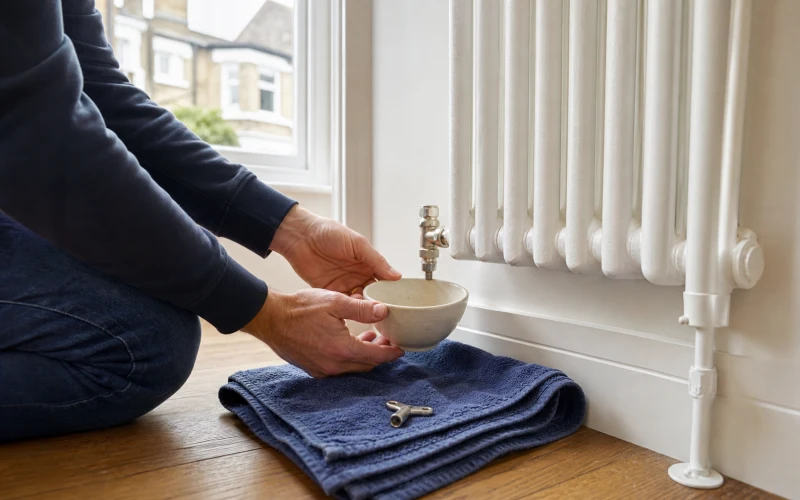
You will need a hose that fits the drain cock, radiator key, towels, bucket, adjustable spanner, gloves, and central heating inhibitor. Protect floors carefully. Many London flats and terraces have finished timber floors, narrow hallways, and radiators close to decorated skirting boards, so a small leak can create unnecessary damage.
Eight DIY steps to drain and refill a radiator system
- Switch off the boiler and heating controls. Let the system cool completely before opening any radiator valve or drain point.
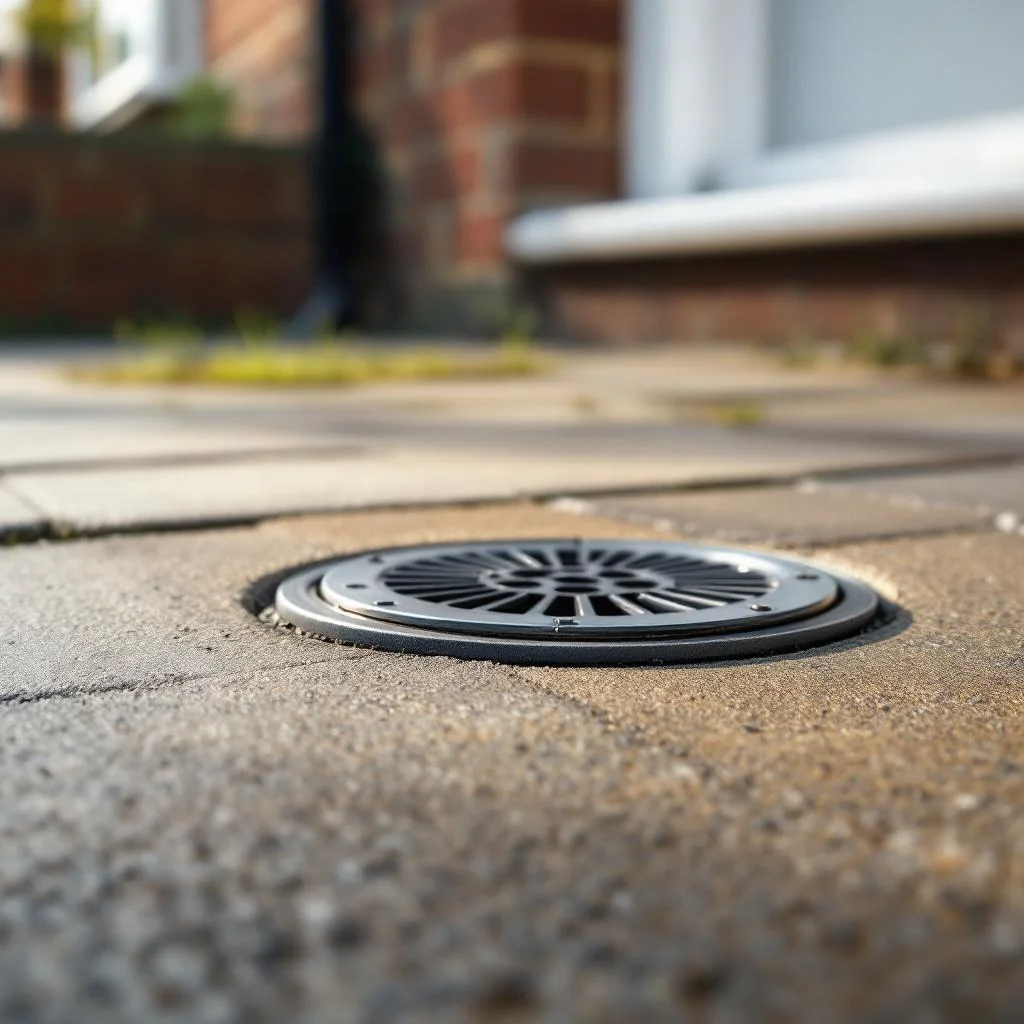
- Find the drain point. It is usually on a low radiator pipe, near a back door, kitchen, utility space, or hallway radiator. Attach the hose securely and run it to a suitable outside drain.
- Open the drain point slowly. Use towels under the fitting and check for leaks around the hose connection. Do not leave it unattended.
- Open radiator bleed valves upstairs. This lets air into the system so water can drain more freely. Start with upper-floor radiators and work down.
- Close the drain point once water stops running. Tighten it carefully, then close all bleed valves before refilling.
- Refill the system. For a sealed system, use the filling loop to bring pressure back to the boiler manufacturer's normal cold-pressure range, often around 1.0-1.5 bar.
- Add inhibitor if you have a suitable dosing point. Inhibitor slows corrosion and helps reduce future sludge. Use a product compatible with your boiler and system.
- Bleed, repressurise, and test. Run the heating, bleed radiators again, top up pressure if needed, and check every valve and drain point for leaks.
These steps are a basic drain-down and refill. They can remove some dirty water, especially from the lowest part of the system, but they are not the same as a professional central heating flush. Most sludge sits inside radiator channels and low-flow areas, and gravity draining will not pull all of it out.
What DIY flushing can fix
DIY work can help after a small radiator replacement, when the water is only lightly dirty, or when you need to refresh inhibitor. It can also solve trapped air if the main problem is radiators cold at the top. If you simply need to bleed a radiator, do that first and retest the heating before draining the whole system.
A DIY drain can also tell you something useful. If the water runs black for a long time, if thick debris appears, or if radiators still have cold bottoms after refilling, the system probably contains more sludge than a hose drain can remove.
What DIY flushing cannot fix
DIY flushing cannot properly clean a blocked plate heat exchanger, force sludge out of every radiator, balance a badly altered system, or correct failing valves. It also cannot safely resolve pressure loss, leaks, boiler faults, or unknown pipework defects. In older London homes, those risks matter because valves may not have been touched for years and old drain cocks can start weeping once disturbed.
If you are planning a boiler replacement, do not rely on a quick DIY drain-down as system cleaning. Most installers want evidence that the heating water is clean and inhibited. A professional clean protects the new boiler more reliably.
London-specific risks
Converted flats create access problems. The lowest drain point may sit inside a neighbour's flat, behind kitchen units, or above finished flooring. Some buildings have communal pipework that an individual leaseholder should not drain without permission.
Older terraced houses often have mixed pipework from several upgrades. You may find old radiator valves, hidden microbore, redundant tanks, or pipe runs that trap air. Draining the system can expose weak parts that were not leaking before.
Hard water is another factor. Limescale around valves and heat exchangers can restrict flow and make sludge symptoms worse. If the system has never had inhibitor checked, the water quality may be poor enough that a basic refill gives only temporary improvement.
When to book a professional power flush
Book professional help when several radiators are cold at the bottom, bleed water is black, the pump is noisy, a boiler engineer has warned about dirty system water, or a new boiler is being fitted to old radiators. A professional machine flush circulates cleaning chemicals at controlled velocity, works through each radiator individually, and removes much more debris than gravity draining.
The engineer should inspect first, confirm the fixed price, protect floors, connect the flushing machine, clean each radiator, discharge dirty water safely, add inhibitor, test heat-up, and provide aftercare notes. Our radiator power flush London service covers all 32 boroughs with no separate call-out fee.
Cost and decision guide
If the system is only lightly dirty, DIY maintenance plus inhibitor may be enough. If you have repeated cold spots, dirty water, noisy circulation, or boiler faults, a professional clean is usually better value than repeated small fixes. See our radiator power flush cost guide for current London pricing and our cold radiators guide for symptom checks.
For a fixed quote, use our radiator power flush London page or request a quote online via our contact form.