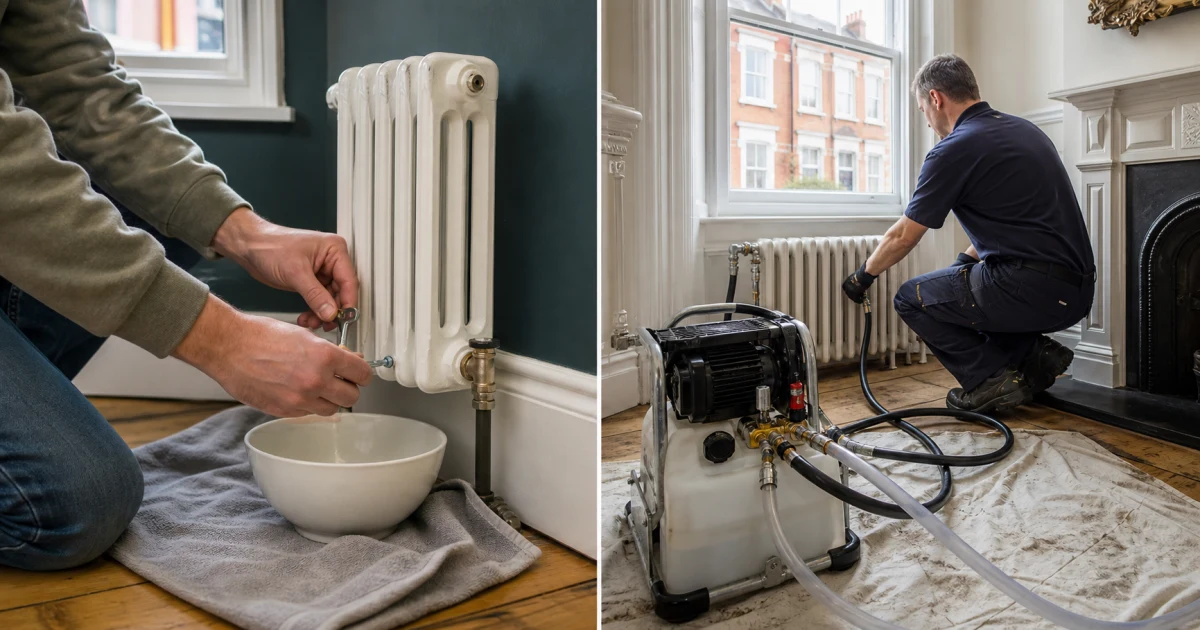

A radiator power flush price in London is based on the radiator count first, then adjusted if the system is unusually dirty, split over several floors, or difficult to isolate. Our radiator power flush London service uses fixed pricing confirmed before work starts, so you know the cost before an engineer connects equipment to your central heating system.
The short version is simple: a one-bedroom or small two-bedroom flat is usually the least expensive, a typical London terrace sits in the middle, and a larger townhouse or extended family home costs more because the engineer spends longer flushing each radiator and balancing the system afterwards. The long version matters because the cheapest quote is not always the best value. A proper central heating power flush includes diagnosis, chemicals, machine circulation, dirty-water removal, inhibitor, checks, and reporting. A rushed wash-through can leave enough sludge behind for the same cold spots to return in a few weeks.
What drives radiator power flush prices in London
| System size | Common property type |
|---|---|
| 1-5 radiators | Flat or small maisonette |
| 6-10 radiators | Two or three-bedroom house |
| 11-15 radiators | Larger terrace or townhouse |
| Extra radiators | Extensions and loft rooms — priced per radiator |
Every quote includes chemical inhibitor treatment and a written report. There is no separate call-out fee. The fixed price is confirmed after the engineer asks about the radiator count, boiler type, property layout, and symptoms. If a quote seems unusually low, ask what is included — some low prices exclude chemicals, inhibitor, or proper system balancing, which are the parts that protect the system after the sludge has been removed.
What affects the radiator flush price?
The biggest cost driver is the number of radiators. Each radiator needs to be flushed individually until the water runs clearer and flow improves. A five-radiator flat can often be completed in half a day, while a fifteen-radiator townhouse can take most of a working day.
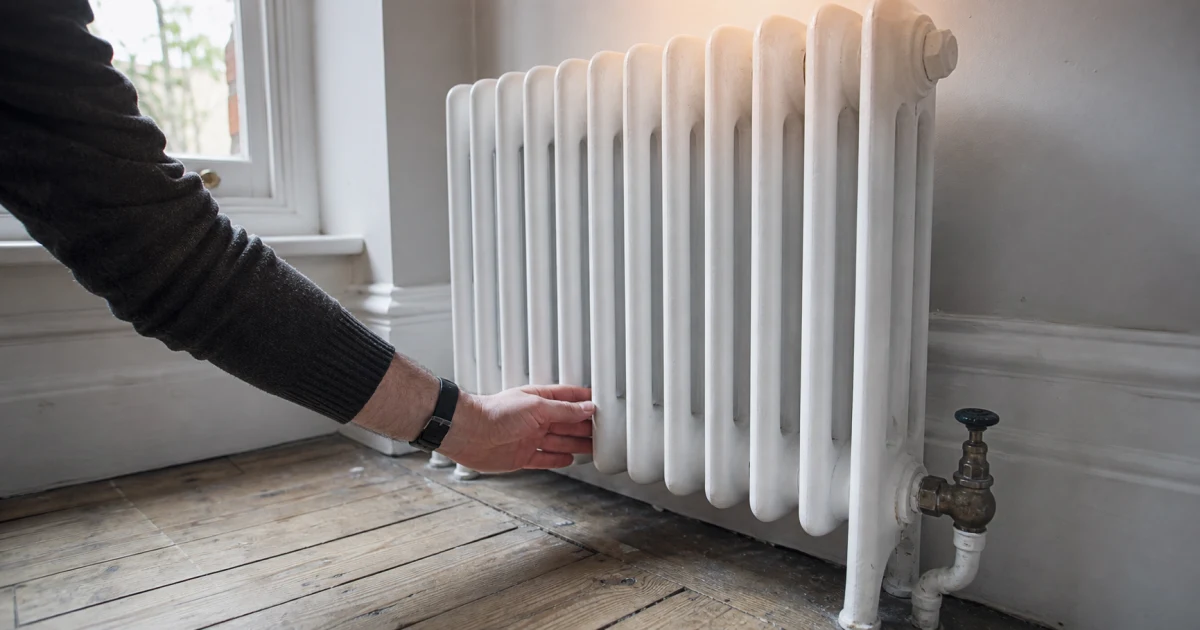
The second driver is sludge severity. Black magnetite sludge forms as steel radiators corrode internally. In London, hard water and older heating systems make the problem more common. If several radiators are cold at the bottom, if dark water comes out when bleeding, or if the pump is noisy, the engineer may need longer circulation time and stronger cleaning chemicals.
Access also changes the quote. Flats above ground level, converted houses, narrow staircases, difficult boiler cupboards, and radiators boxed behind furniture all slow the work down. Most London properties are manageable, but the engineer still needs safe access to the boiler, radiator valves, drain point, and water supply.
Boiler and system condition matter too. A very old or corroded system may need a gentler approach, a filter clean, replacement valves, or advice before machine flushing. The right engineer will not force pressure through a fragile system without checking it first.
What should be included?
- A short system assessment before work starts
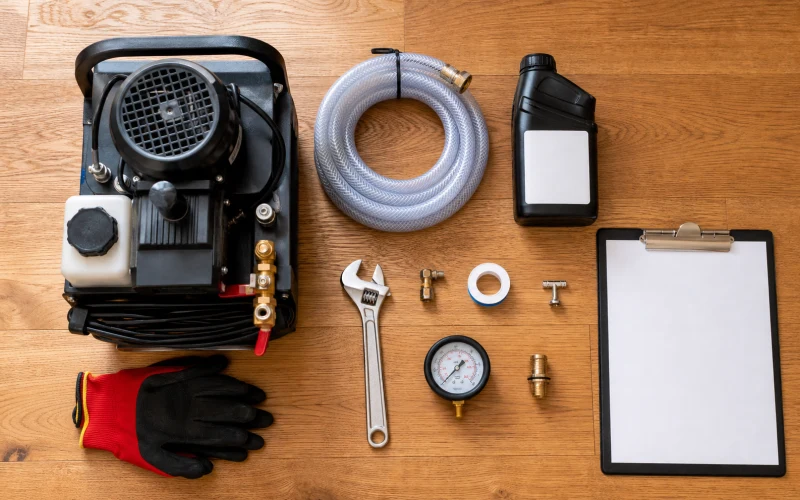
- Connection of specialist power flushing equipment
- Cleaning chemical circulated through the central heating system
- Each radiator flushed and checked individually
- Dirty water discharged safely
- Corrosion inhibitor added after cleaning
- Basic balancing and heat-up checks
- Written report or notes on water condition and follow-up recommendations
If those items are missing, the price is not directly comparable. A proper central heating flush is not just a hose attached to a drain point. It is a controlled clean of the whole system, with checks before and after so the customer can see what changed.
Is a power flush worth the cost?
A radiator power flush is usually worth it when circulation is the problem. Signs include radiators cold at the bottom, radiators taking much longer than others to heat, dirty water when bleeding, gurgling, repeated boiler lockouts, or a boiler engineer recommending a flush before fitting a new boiler. If the issue is one stuck thermostatic valve, trapped air in one radiator, or a badly balanced system, a full flush may not be necessary. That is why diagnosis comes first.
For an older London home, the value is often twofold. First, the rooms heat more evenly, so you stop turning the thermostat higher just to compensate for one cold radiator. Second, the boiler and pump work with cleaner water, which reduces strain on expensive parts. It is not a guaranteed energy-saving cure, but a badly sludged system wastes heat and makes comfort harder to control.
London price examples
A Hackney two-bedroom flat with six radiators and two cold downstairs units is likely to sit around the 6-10 radiator band. A Wandsworth three-bedroom terrace with nine radiators, a towel rail, and black bleed water will usually be in the same band but may take longer. A four-storey Islington townhouse with fourteen radiators is a larger job because the engineer needs to manage several floors and rebalance more carefully.
The price should not change just because the postcode is fashionable. What matters is system size, access, radiator count, and condition. Travel within the normal London coverage area should be built into the quote rather than added as a surprise call-out fee.
When to delay or avoid a power flush
There are cases where a central heating power flush is not the first step. If a radiator is leaking, a valve is visibly corroded, the boiler has a fault unrelated to circulation, or the system loses pressure every day, repairs may need to happen first. Very old open-vented systems can sometimes be cleaned more carefully with a mains flush or chemical clean if the pipework looks fragile.
You should also avoid using a power flush as a guess. For example, one cold radiator upstairs may simply need bleeding. A single radiator cold from top to bottom may have a stuck valve. Our guide to cold radiators and heating sludge explains the difference between those symptoms.
How to get a fair quote
Count the radiators, including towel rails. Note which ones are cold at the top, cold at the bottom, or slow to heat. Check whether dirty water comes out when you bleed one radiator. Then ask for a fixed quote that includes chemicals, inhibitor, and reporting. If you are comparing two quotes, compare the scope, not just the headline figure.
For DIY background, our guide on how to flush a central heating system explains what homeowners can do safely and where professional equipment becomes the better option.
Book a fixed-price London power flush
If you want a fixed radiator flush price for your London property, use our radiator power flush London page or request a quote online via our contact form. We cover all 32 London boroughs, confirm the price before work starts, and do not charge a separate call-out fee.