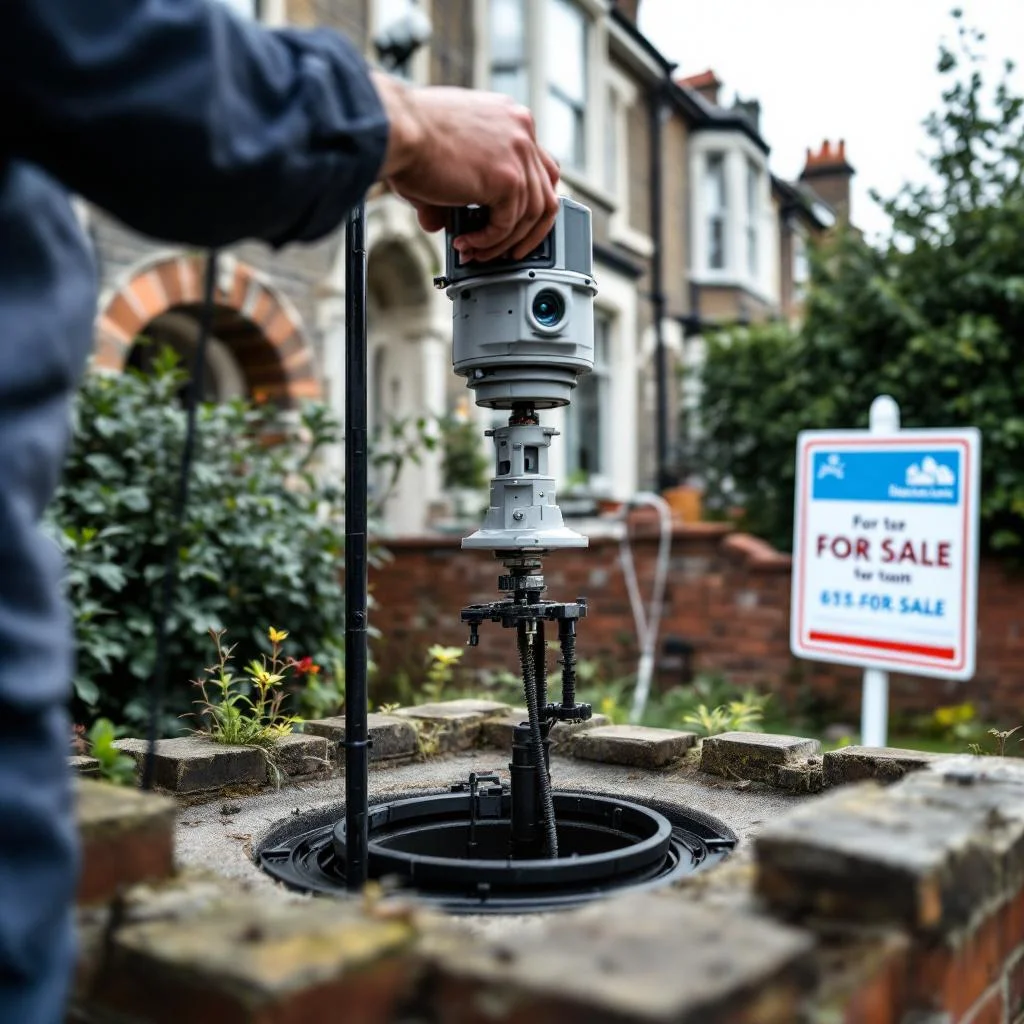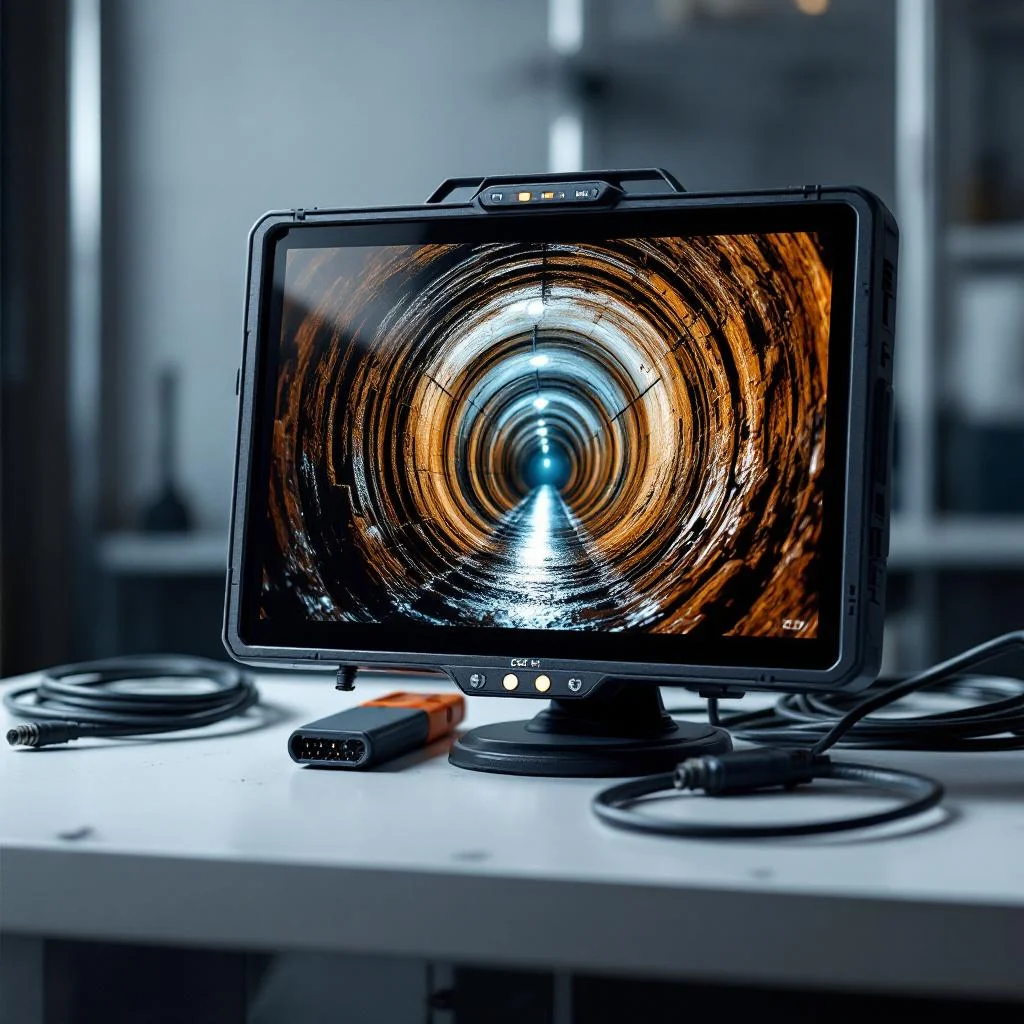
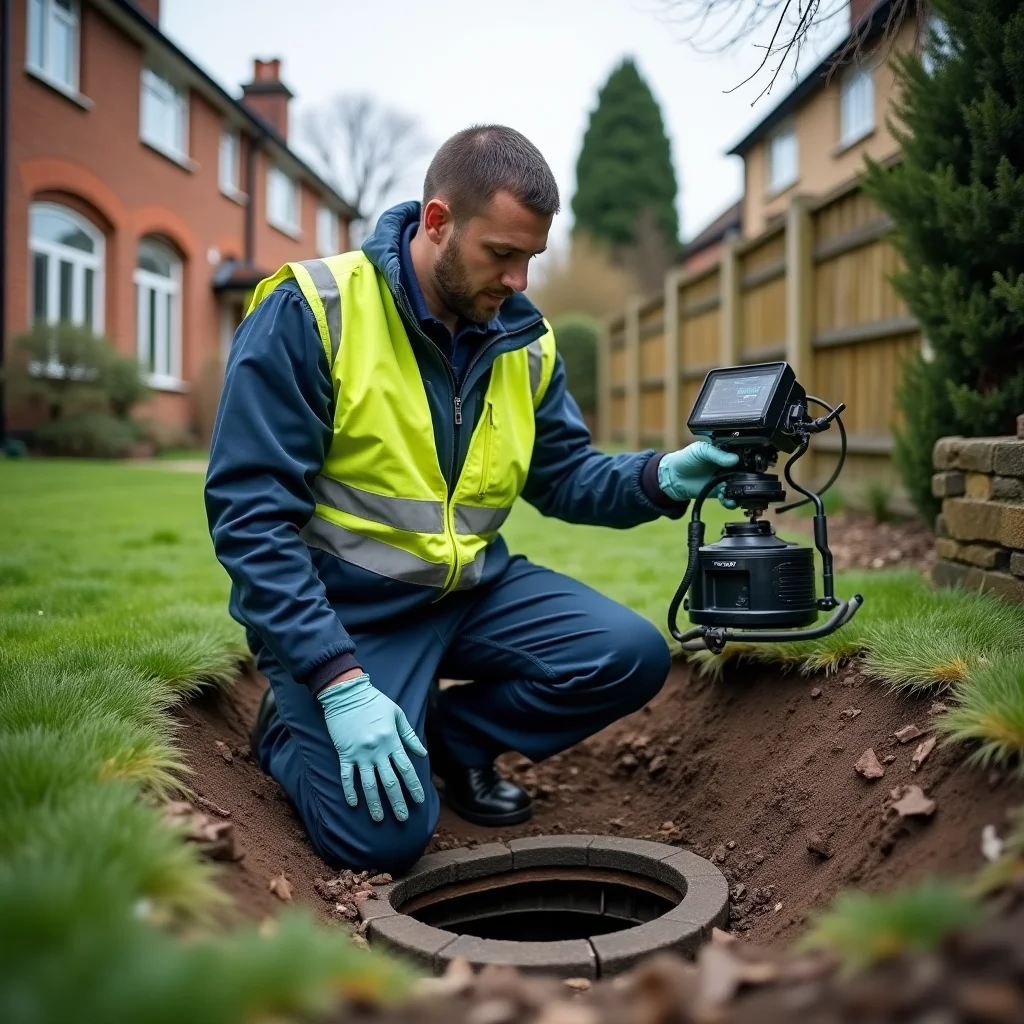
A CCTV drain survey is the definitive diagnostic tool for any drain problem that isn't resolved by straightforward rodding or jetting. If you have a recurring blockage, slow drainage that returns within weeks, a property you are buying, or a neighbour dispute about drain responsibility, a CCTV survey provides documented, timestamped evidence of the exact condition of every metre of your pipework. Here is exactly what happens, from the engineer's arrival to the report you receive.
What Is a CCTV Drain Survey?
A CCTV drain survey sends a remotely controlled camera along your drain pipes and records the footage in high definition. The camera head — typically 75–100mm in diameter — travels on a motorised crawler or is pushed on a flexible rod, transmitting live footage to a monitor at the surface. Engineers can pan and tilt the camera head to examine specific features, measure pipe diameter and condition, and identify the precise location of any defects.
Unlike a general inspection, a CCTV survey produces a permanent video record you can share with insurers, Thames Water, solicitors, or a building surveyor. It is not a visual estimate — it is documented evidence.
Step 1: Setting Up at the Inspection Chamber
The engineer begins by locating the nearest accessible inspection chamber, also called a manhole. For most London properties, this is either in the back garden or, for shared drains, in the pavement or shared passageway. The chamber is opened, any standing water is cleared, and the camera is prepared.
Where no accessible chamber exists — common in some Victorian terraced properties — the camera may be entered through an internal access point such as the soil stack, or a temporary access point may be created.
Step 2: Camera Insertion and Live Monitoring
The camera is fed into the pipe and the engineer watches the live feed on a surface monitor. Every metre of pipe is recorded. The engineer narrates what the camera is showing, noting defects, their position from the access point, and their estimated severity. Modern survey equipment also uses distance measurement to map the precise position of pipe sections.
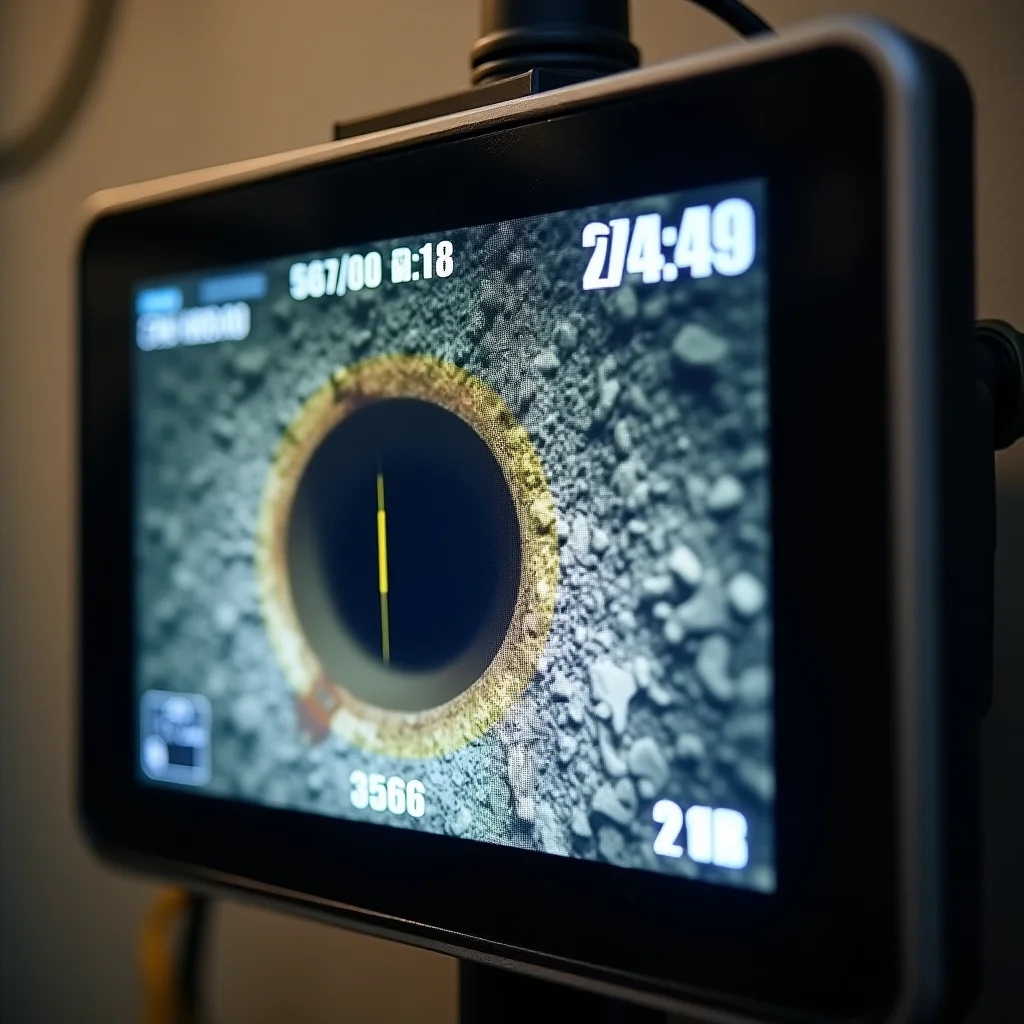
Step 3: What the Camera Looks For
A systematic CCTV survey checks for:
- Root intrusions — roots entering through cracked joints or damaged pipe walls
- Displaced or open joints — sections of pipe that have moved out of alignment due to ground movement
- Cracks and fractures — particularly common in clay pipes after decades of shrink-swell cycling in London Clay
- Collapsed pipe sections — sections where the pipe wall has caved in, often requiring excavation
- Grease and fat deposits — visible as a yellowish coating on pipe walls, reducing bore
- Silt accumulation — particularly common at the base of gradients and in low-flow sections
- Illegal connections — surface water pipes incorrectly connected to foul drains
- Pipe deformation — ovality in flexible plastic pipes under heavy loading
Step 4: Recording Footage and Noting Defect Positions
All footage is recorded to video with timestamps and distance markers. When a defect is identified, the engineer notes its position — for example, "displaced joint at 7.4 metres from the chamber, at approximately 1.2 metres depth." This precision allows any future repair to be targeted without exploratory excavation.
For pre-purchase surveys, the standard format is a written condition report graded by defect severity. For diagnostic surveys, the report focuses on the cause of the reported problem and recommended remediation.
What the Survey Can Find
The most common findings on London drain surveys, particularly in properties built before 1960:
- Root intrusions from street trees — plane trees and limes are the most common offenders in central London
- Displaced joints in clay pipe runs, caused by decades of London Clay movement
- Cracked pipe sections, often at bends and junctions
- Fat and grease deposits in kitchen drain runs, particularly beneath older properties with limited gradient
When Do You Need a CCTV Drain Survey?
A survey is warranted in six specific situations:
- A blockage that returns within weeks of being cleared
- Multiple drains in the property backing up simultaneously — suggesting a fault in the shared drain rather than a single-point blockage
- Before buying any London property built before 1960
- Before carrying out building works near existing drains
- A neighbour dispute about drain responsibility
- After any ground movement, tree removal, or major excavation near your property
What You Will Receive
Following the survey, you receive:
- Full video footage of the camera run, timestamped
- A written condition report noting each defect with its position and severity grading
- Recommended next steps: jetting, pipe relining, or excavation and replacement
- A site plan showing the drain route and defect locations for more detailed surveys
For full pricing across survey types, see our CCTV drain survey cost guide. Our surveys cover all Greater London boroughs — see our London drainage service area for full coverage. For urgent surveys and diagnosis, request a quote online via our contact form.
Frequently Asked Questions
How long does a CCTV drain survey take?
Most residential surveys take 45–90 minutes on site. The written report is typically provided the same day. Complex surveys covering long pipe runs or multiple branches may take longer.
Do I need to be present during the survey?
You do not need to be present throughout, but it is useful to be available at the start so the engineer can discuss access and any symptoms you have observed. Watching the live footage with the engineer helps you understand what is found.
Will the camera damage my pipes?
CCTV drain cameras are designed for use in drain pipes and do not damage sound pipework. In severely deteriorated pipes, the camera may cause small sections of loose material to fall, but it cannot cause structural damage.
Can a CCTV survey see under my house?
Yes. The camera can travel the full length of any accessible drain run, including sections running under the building footprint. The depth and horizontal position are recorded throughout.
Is a CCTV survey the same as a drain inspection?
Not quite. A basic drain inspection is a visual check of accessible parts of the system — inspection chamber condition, gully condition, obvious blockages. A CCTV survey cameras the full underground pipe run and produces a video record. For pre-purchase surveys and recurring problems, a full CCTV survey is required.