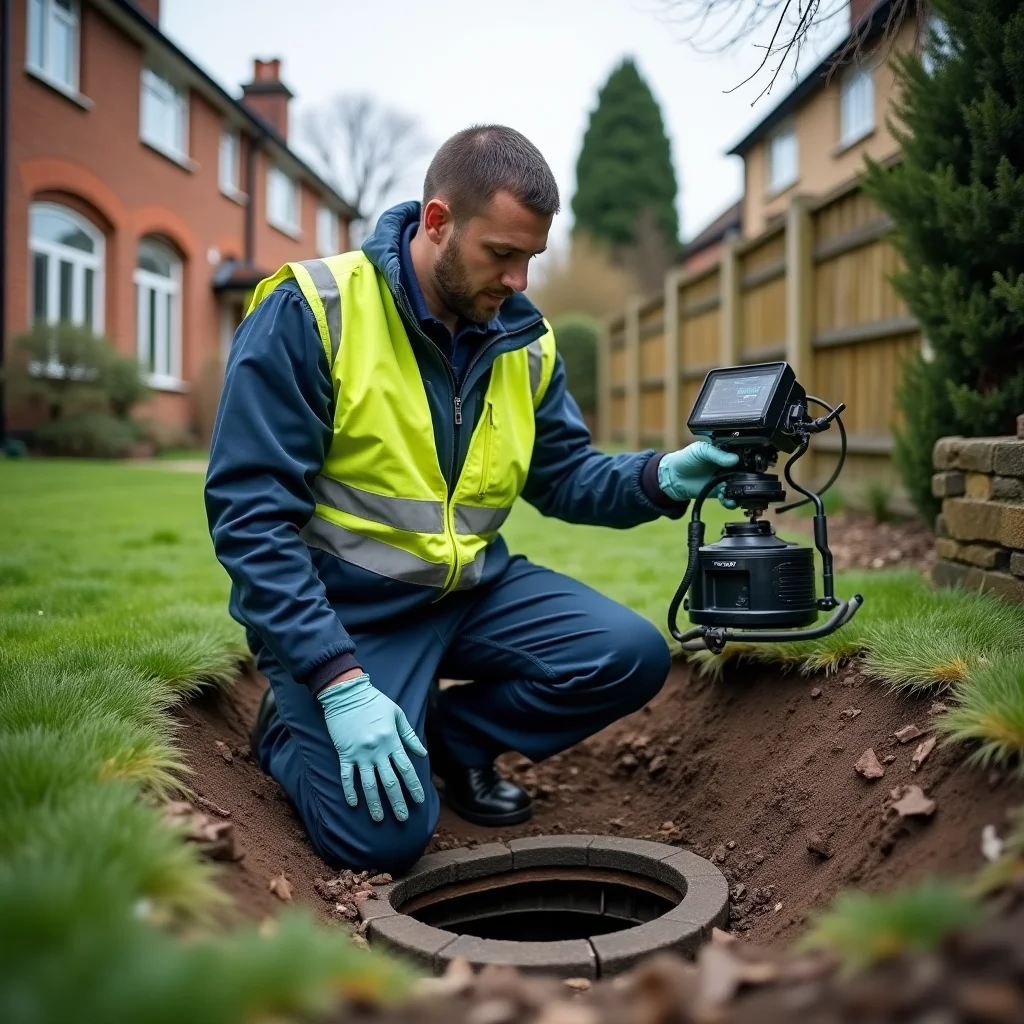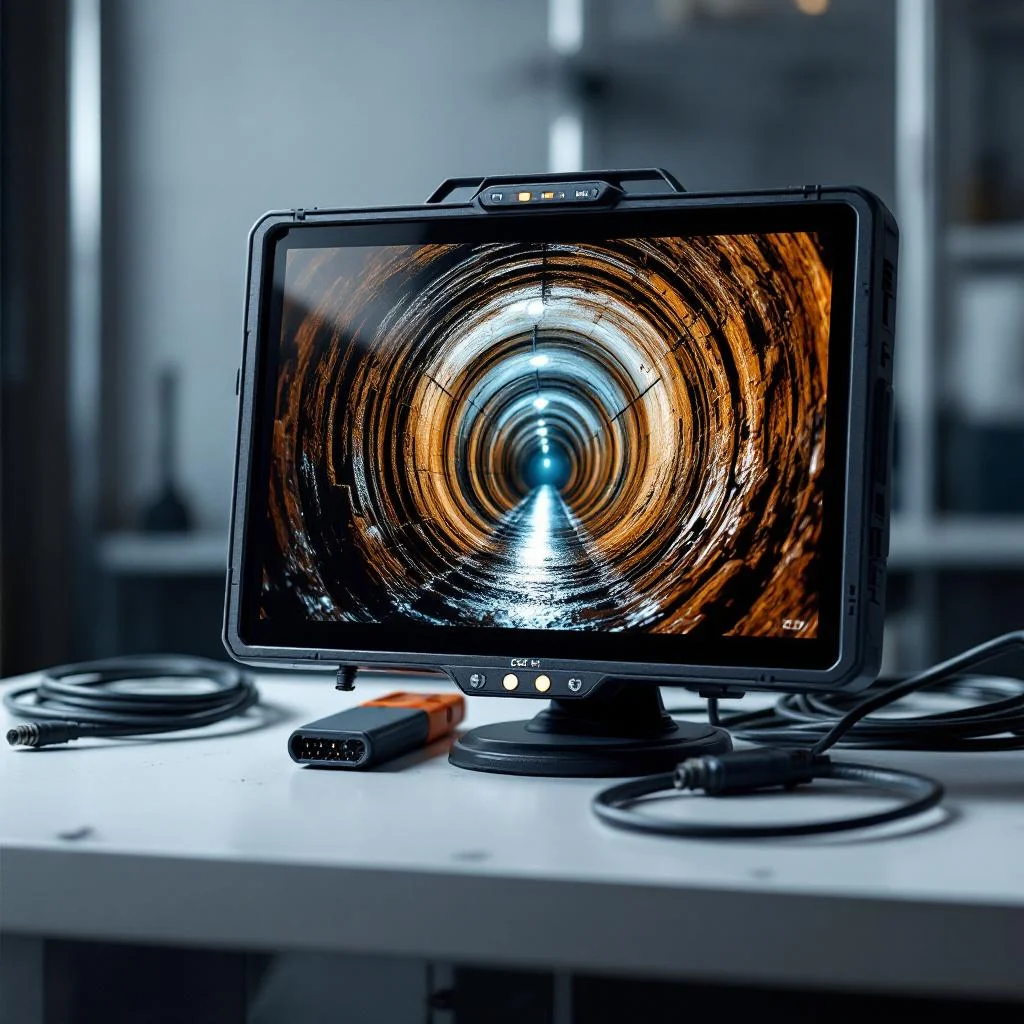
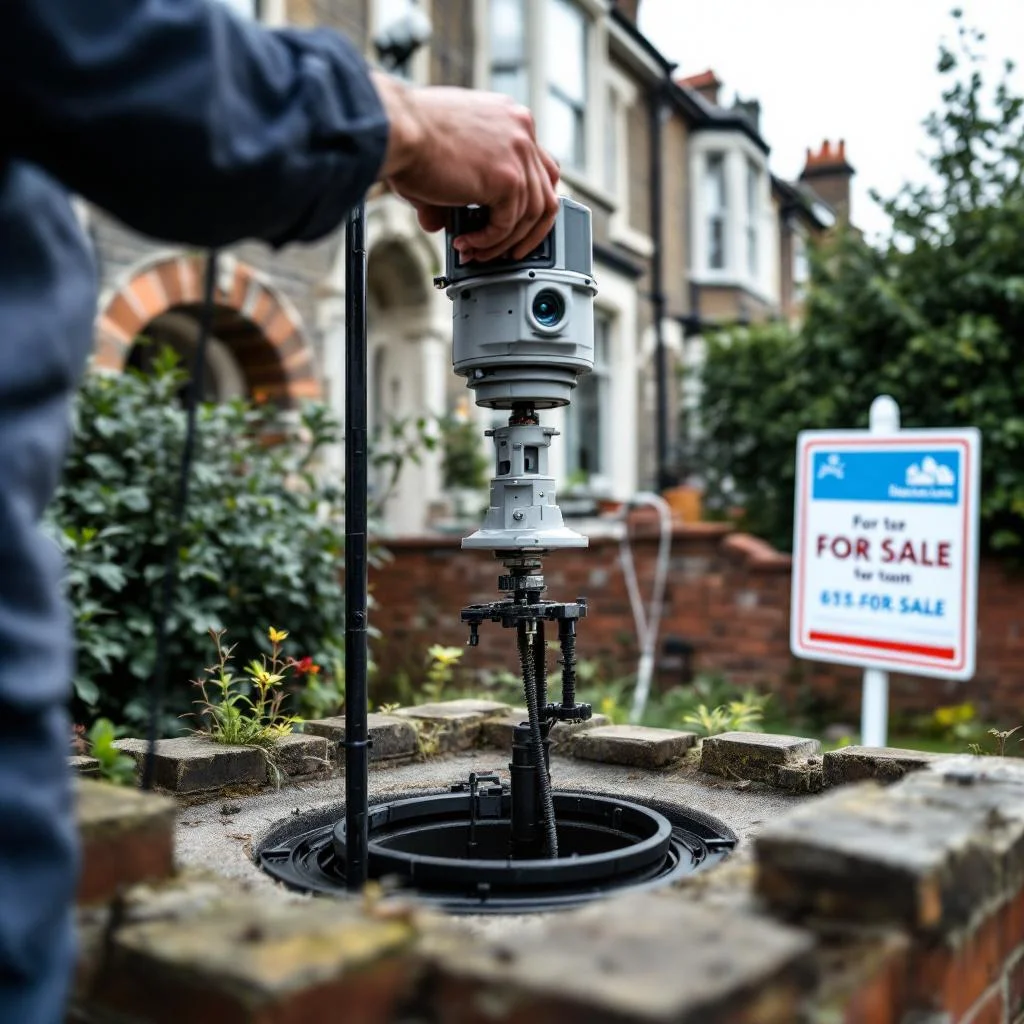
A standard residential survey almost never inspects the drains. A homebuyer's survey, a Level 2 RICS HomeBuyer Report, even most Level 3 Building Surveys stop at the manhole cover and note "drainage not inspected — specialist report recommended". In a city where roughly half the housing stock predates 1914, that gap is where some of the most expensive post-purchase surprises live. A pre-purchase CCTV drain survey is a modest cost that almost always returns its value many times over — sometimes within days of completion. The five benefits below are the ones our customers consistently say they wish they had understood before exchange. To book a same-week survey before a deadline, request a quote online via our contact form.
1. You See the Real Condition of 100-Year-Old Pipework Before You Buy It
Most London residential drainage is original Victorian or Edwardian clay, with cast-iron stacks of similar age. Both materials can last well beyond their nominal design life, but after 100-150 years they routinely develop cracks, joint displacement, root intrusion and partial collapse. None of this is visible from above; some of it is not even obvious from a smoke or dye test. A camera in the pipe is the only practical way to see it.
In our experience across Hackney, Islington and Camden, roughly two-thirds of pre-purchase surveys on Victorian terraces find at least one defect significant enough to mention in the buyer's survey report. Not all are deal-breakers — many are minor and informational. But a meaningful minority reveal the kind of structural issues that cost thousands to put right and would not have been flagged otherwise. Our companion piece on what to expect from a pre-purchase CCTV survey walks through the typical defect categories.
The Victorian clay pipes themselves are not the only issue. Clay sits on London Clay, and the shrink-swell cycle of London Clay damages drains over decades — often more aggressively in the past 20 years as summers have lengthened. The combination of brittle pipework and active ground movement means the pre-purchase snapshot of pipe condition is genuinely useful information, not box-ticking.
2. You Get Negotiating Leverage Before Exchange
A CCTV survey produces a written report and video footage. Both are evidence. If the survey identifies defects — root intrusion, displaced joints, partial collapse, defective lateral connections — you have three options before exchange that you do not have afterwards. You can ask the seller to remediate the defects before completion. You can negotiate a price reduction equivalent to the repair cost. You can withdraw without penalty if the cost is too high relative to the property value.
In a typical London transaction, even moderate drain repairs — patch lining, root cutting, a short replacement section — can add a significant sum to your costs. Major work involving excavation across a paved front garden in inner London can run substantially higher again. These figures have a real place in price negotiation, and surveyors and solicitors are well used to handling them.
The key is timing. Once contracts exchange, the negotiation window closes and the cost transfers to you regardless of who knew what. A modestly priced survey commissioned at the right point in the process can comfortably move a purchase price by a meaningful sum if the findings warrant it. The leverage is in the report; the report only exists if the survey is done.
3. You Find Out Whether Defects Are Yours or Thames Water's
This benefit is specific to London and badly underrated. Since the October 2011 private sewer transfer, shared drains and lateral runs serving more than one property became Thames Water's responsibility. A pre-purchase CCTV survey that maps the drain run through to the public sewer connection establishes — on the record, with footage — exactly where the boundary lies on this specific property.
That matters in two directions. If a defect is found beyond the boundary of responsibility, the future homeowner (you) can pursue Thames Water for the repair rather than paying for it personally. If a defect is found inside the boundary, you know now what is yours, can negotiate accordingly, and can plan the work without later discovering a Thames Water angle that nobody mentioned.
In dense terraced boroughs — Southwark, Lambeth, Wandsworth and similar — the shared-drain layout is the rule rather than the exception. A camera survey is the only economical way to establish where one property's responsibility ends and the next one begins. Survey reports that include a sketch of the drain layout with the responsibility boundary marked are particularly useful and worth asking for explicitly.
4. You Identify Hidden Modifications, Bodge Repairs and Illegal Connections
London's housing stock has been modified, extended, sub-divided and repaired over many decades. A surprising number of those changes involved drainage work that is either substandard or, in some cases, technically illegal. Common findings on pre-purchase surveys include: surface water downpipes connected into foul drain runs (or vice versa), kitchen extensions where the new waste pipe enters the existing drain at a flat or back-falling angle, and "repairs" consisting of cement smeared into a fractured joint that is now hidden under landscaping.
Each of these has cost implications. An incorrectly connected surface water run can flood the property in heavy rain — increasingly common as London's storms intensify against an ageing combined sewer designed in the 1860s. A back-falling extension waste pipe means the kitchen will block recurrently for as long as it remains in service. A cemented Victorian joint will fail again within a few years and is often the precursor to a full pipe collapse.
The survey identifies all of this before you commit. In some cases the seller will agree to put the work right; in others the price negotiation absorbs it; in a small number of cases the findings are the reason a buyer walks away with the deposit intact rather than inheriting somebody else's twenty-year-old plumbing decisions. Our broader explainer on why London drains block so often gives more context on the modification patterns common across the capital.
5. You Get a Baseline for Insurance, Maintenance and Future Resale
A CCTV survey at the point of purchase is the single best baseline document a London homeowner can hold. It establishes the condition of the drains on a known date with documented evidence. That baseline supports three later use cases that buyers rarely think about until they need them.
For insurance, many home policies now include "underground services" cover for drain repair, and many require evidence of the condition of drains at the start of the policy. A pre-purchase CCTV report in the file makes claims faster, smoother and less likely to be challenged. For maintenance, the report identifies where future inspections should focus — the sections at the early stage of root intrusion or joint movement that benefit from proactive high-pressure jetting every few years rather than emergency clearance once they fail.
For resale, the same report — particularly if updated five or ten years later — is genuinely valuable to your eventual buyer. A documented drainage history on a Victorian terrace in Westminster or Kensington gives the next buyer the same confidence the report gave you, and removes one of the most common areas of late-stage transaction friction. Many estate agents in inner London now mention "drainage report available" in property listings precisely because it accelerates sales.
CCTV Drain Survey London: Pre-Purchase Buyer Considerations
Three things make London pre-purchase surveys different from those elsewhere in the UK. First, the age and material of the housing stock. Roughly 19% of London housing was built before 1900 (per the English Housing Survey), against a national average of around 16%. In central boroughs the proportion is far higher. Older pipes mean more findings and more useful surveys, and a RICS-qualified building surveyor will routinely flag drainage as a specialist follow-up.
Second, the trees. Mature London plane trees, lime trees and sycamores line many residential streets and have aggressive root systems that find every joint defect in nearby clay drainage. A survey on a property within 10 to 15 metres of a mature street tree should specifically look for root intrusion, and findings are common enough to plan for.
Third, the cost asymmetry. Repairing a drain run beneath an open garden costs a fraction of repairing the same run beneath a paved front garden, a tiled patio or a kitchen extension. A pre-purchase survey that establishes the drain layout against the property layout helps you understand the access cost, not just the repair cost. In some London properties the access cost is the larger number by a wide margin.
A pre-purchase survey is most useful when commissioned early in the conveyancing process — typically after the offer is accepted and before the formal mortgage valuation. That timing leaves room for negotiation if findings emerge, and gives you (and your solicitor) something concrete to refer to in subsequent enquiries to the seller. Our published CCTV drain survey cost guide sets out the typical price range for London buyers, and our pre-purchase survey service page covers what is included.
Frequently Asked Questions
How much does a pre-purchase CCTV drain survey cost in London?
London pricing for a residential survey depends on the property size, the number of chambers to inspect and access conditions. The output should include a written report, a CCTV recording on USB or download link, and clear annotations identifying any defects and their location relative to the property boundary. Out-of-area or large multi-property surveys are quoted separately.
How long does a pre-purchase CCTV drain survey take?
Most London residential surveys take between 60 and 120 minutes on site. Larger properties or those with multiple inspection chambers can take longer. The written report typically follows within 24 to 48 hours by email, with the CCTV footage either attached or available on a download link. Same-day reports are possible for buyers working to a tight exchange deadline.
Can I use the survey findings to renegotiate the purchase price?
Yes, and this is one of the main reasons to commission the survey before exchange. A clear written report quantifying the defects gives your solicitor a basis to either ask the seller to remediate the work before completion or reduce the price by the cost of the repairs. Once contracts have exchanged, that leverage is gone.
Will the survey identify whether problems are Thames Water's responsibility?
A good pre-purchase survey maps the drain run through to the public sewer connection and identifies where the responsibility boundary sits. Defects beyond the boundary are Thames Water's to repair, not the homeowner's. This information matters for both negotiation and future planning, and it is worth specifically asking your survey provider to mark the boundary on the report.
Do I need a CCTV survey if the property is a modern build?
Less commonly, but it is still worth considering for properties built before about 1990. Modern PVC drainage is generally robust, but new-build defects (back-falling pipes, poorly bedded joints, debris left in the system after construction) do occur and can lead to recurrent blockages. For Victorian, Edwardian and inter-war properties, a survey is strongly advisable in nearly all cases.