London's kitchen drains were not designed for modern cooking habits. The 100mm clay and cast-iron pipework beneath most of the city's housing stock was installed when households cooked far less fat, owned no dishwashers, and threw nothing down the sink that did not dissolve in cold water. The mismatch between Victorian infrastructure and contemporary kitchens explains why kitchen-side blockages account for the majority of residential drain emergencies across the capital, and why Thames Water spends millions of pounds each year clearing fatbergs from the public sewer. The good news is that prevention is straightforward: five everyday substances cause the overwhelming majority of avoidable kitchen blockages, and eliminating them from the sink is something every household can do tonight. This guide covers each one in turn, with London-specific context for why it matters and practical disposal alternatives.
1. Cooking Fats, Oils, and Grease
Cooking fat is the single most damaging substance routinely poured down London kitchen drains. The mechanism is straightforward and brutal: warm fat is liquid as it leaves the pan, but it cools rapidly inside the cold underground pipe. Within a few metres of the sink, it has solidified onto the pipe wall in a thin coating. Each subsequent pour adds another layer, gradually narrowing the 100mm bore until the pipe is half-blocked or worse. At that point, anything else passing through — wet wipes, food debris, hair from the bathroom — catches on the fat and the blockage becomes total.
This is the same process that produces street-level fatbergs in the public sewer. The famous 2017 Whitechapel fatberg weighed 130 tonnes and stretched 250 metres, requiring nine weeks and a specialist team from Thames Water to remove. That scale of incident is only the visible end of a much larger ongoing problem: every London street has fat accumulating in its sewer, and every London household contributes if it pours fat down the sink. For more detail on why London is uniquely vulnerable, see our overview of why London drains block so often.
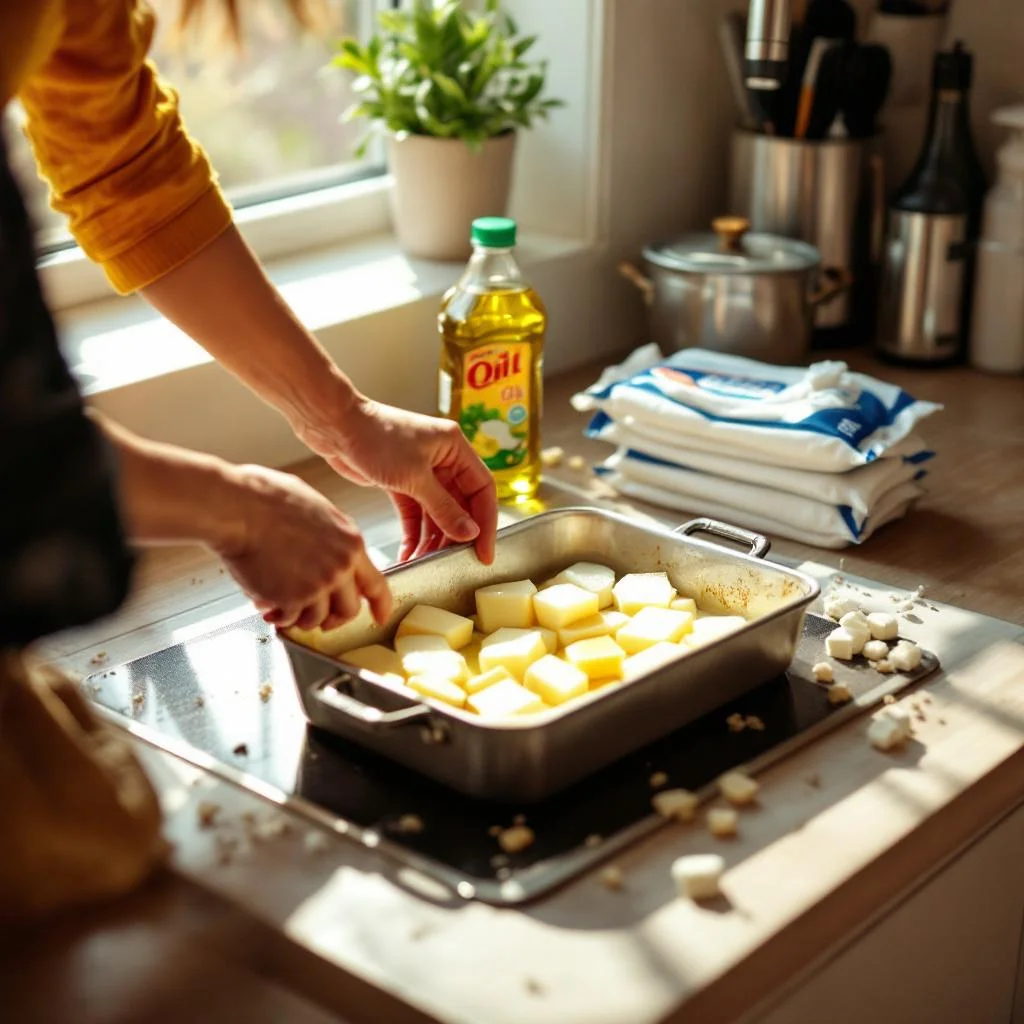
The disposal alternative is simple. Pour cooled fat into an empty jar or carton, let it solidify, and put it in your household waste. Wipe greasy pans with kitchen paper before washing. Restaurants and busier households can use a fat trap container kept under the sink and emptied weekly. Once a kitchen lateral has been damaged by years of fat build-up, high-pressure jetting will clear the blockage but will not restore the pipe's original bore — prevention is significantly cheaper than cure.
2. Coffee Grounds
Coffee grounds look harmless. They are small, granular, and appear to wash easily down the sink with running water. In practice, they are one of the most reliable causes of kitchen drain blockages in London, and the mechanism is different from fat-based blockages. Coffee grounds do not dissolve. They settle out wherever the flow slows down — at trap U-bends, at horizontal sections of branch pipe, at any joint where the pipe changes direction — and they accumulate into a dense, compacted sediment that water cannot wash through.
In London terraces and converted Victorian flats, kitchen waste pipes often run for several metres horizontally before reaching the soil stack, and the falls are frequently shallow because the kitchen has been moved or extended over the years. As a result, coffee grounds settle within the first metre or two of pipe and combine with cooking fat to form a particularly stubborn blockage. This is a common diagnosis on jobs in Hackney, Islington, and Camden, where original Victorian kitchens have been re-plumbed multiple times.
Dispose of coffee grounds in a food waste caddy or compost bin — they are excellent compost material and break down quickly. If your borough provides food waste collection (most inner London boroughs do), use it. If not, the grounds can go in general household waste. Our kitchen drain blockages page covers the typical clearance approach when coffee grounds have already caused a problem.
3. Rice, Pasta, and Other Starchy Foods
Rice and pasta cause blockages through a mechanism that surprises most homeowners: they continue to absorb water and swell after they have entered the drain. A small amount of leftover rice scraped off a plate can swell to several times its volume inside the trap or branch pipe, where it forms a soft, expanding paste that obstructs flow. Combined with the starchy water it released during cooking, the result is a glue-like deposit that sticks to pipe walls and catches everything else passing through.
Bread, flour, and any starch-rich food behaves similarly. In London's older drainage, where pipe interiors are rough from decades of corrosion (cast-iron) or limescale (clay), starch deposits have plenty of surface area to bond to. Furthermore, the slow falls common in re-plumbed Victorian kitchens give starches time to settle before the water reaches the soil stack. The result is a blockage that responds poorly to chemical drain cleaners and often requires mechanical clearance or jetting.
Scrape food waste — rice, pasta, bread, pastry — into a food waste caddy, compost bin, or general waste. Use a sink strainer to catch loose grains and crumbs that escape during washing-up. The combination of strainer plus careful scraping eliminates the vast majority of starch-based blockages and costs nothing to implement.
4. Eggshells, Bones, Vegetable Peelings, and Other Solids
Anything genuinely solid is the wrong shape for a kitchen drain. Eggshells fragment into small, sharp pieces that catch fat and starch as they pass through, building composite blockages that are particularly hard to jet clear. Bones, fruit pits, and large vegetable peelings (onion skins, potato skins, corn husks) all settle out at the trap or in horizontal pipe sections and obstruct flow even before they have a chance to combine with anything else. Stringy vegetables — celery, leek tops, asparagus stalks — are particularly bad because the fibres tangle together and form a mat that water cannot pass through.
Waste disposal units, popular in newer London kitchens, do not solve this problem — they make it worse. The unit grinds solids into a slurry that travels further into the pipework before settling out, meaning blockages occur deeper in the lateral where they are harder to clear. Furthermore, ground food waste combines aggressively with cooking fat to form a dense, cement-like material in 100mm clay laterals. Many of the worst kitchen blockages we attend across the capital are in homes with waste disposal units and a habit of "putting everything down the sink."
The disposal alternative is conventional and effective: a food waste caddy in the kitchen, emptied into the borough's food waste collection or a garden compost bin. Inner London boroughs including Hackney, Islington, Camden, Southwark, Lambeth, and Westminster all provide food waste collection. If you have a recurring kitchen blockage, reviewing what goes down the sink is the first step before paying for repeated clearances.
5. Wet Wipes, Cotton Wool, Sanitary Products, and Anything Labelled "Flushable"
Wet wipes are technically a bathroom problem, but they end up in kitchen drains surprisingly often — flushed down the toilet, accumulated in the lateral, and contributing to blockages that affect every appliance in the property including the kitchen sink. The label "flushable" on most wipe products is misleading: while the wipe will pass through the toilet trap, it does not disintegrate the way toilet paper does and will accumulate at the first bend or restriction in the soil pipe.
Once wipes meet kitchen fat in the lateral drain, the result is the material that forms fatbergs. Thames Water has consistently identified the combination of wet wipes and cooking fat as the leading cause of sewer blockages across London, and the company spends an estimated £18 million each year clearing fatbergs from the public network. Every "flushable" wipe added to that mix worsens the problem at street level and increases the chance of a backup at property level. Cotton buds, dental floss, sanitary products, nappies, and kitchen paper towels all behave the same way — they do not disintegrate in cold water and they accumulate downstream.
The rule is simple: only the three Ps belong in a toilet — pee, poo, and (toilet) paper. Everything else goes in a bin, including products labelled "flushable." For more on what happens once these items reach the sewer, see our piece on the October 2011 transfer of private sewers to Thames Water, which covers who pays when the inevitable blockage occurs.
London Kitchen Drain Care: Borough-Specific Considerations
London's drainage is older, narrower, and more fragile than the average UK city. The vast majority of residential pipework is glazed clay or cast iron, installed when Sir Joseph Bazalgette designed the city's sewer system in the 1860s and progressively extended over the following century. Lateral pipes are typically 100mm in diameter — adequate for Victorian water usage but under significant pressure from modern dishwashers, washing machines, and high-volume food preparation. Furthermore, Greater London sits on London Clay, which expands and shrinks seasonally and routinely cracks joints in older laterals.
The combined effect is that London kitchen drains are intolerant of substances that would cause minor problems elsewhere. A small amount of cooking fat that would dissipate in modern PVC pipework with a steeper fall solidifies on a 150-year-old clay pipe with a shallow fall and a corroded interior. Coffee grounds that would wash through a 110mm modern lateral settle in a 100mm Victorian one. Therefore, the prevention measures in this guide are not optional best practice — they are necessary maintenance for the city's specific infrastructure.
There are also borough-level considerations. Inner-city boroughs with the densest Victorian housing — Hackney, Islington, Camden, Westminster, Kensington — have the oldest and most fragile drainage and benefit most from strict kitchen prevention. Outer boroughs like Bromley and Greenwich have a mix of pipework ages, and post-war housing stock with newer 110mm pipework tolerates more — but not unlimited — kitchen waste. Properties built before 1900 anywhere in London should treat the five rules above as absolute, and any history of recurring kitchen blockages warrants a CCTV survey to identify whether structural damage has already occurred.
If you want to know the condition of your existing kitchen lateral before changing habits — particularly worth considering for older properties or recent house purchases — a CCTV inspection is the only reliable way. Our CCTV survey cost page covers pricing, and the recording shows precisely how much fat coating, scale, or root intrusion has accumulated. For active kitchen blockages now, request a quote online via our contact form for same-day attendance across all 32 London boroughs.
Frequently Asked Questions
Can I pour boiling water down the sink to clear cooking fat?
Boiling water briefly liquefies the fat at the trap, but as it cools further down the pipe the fat re-solidifies — often forming a worse blockage further from the property where it is harder to clear. The technique is at best a temporary kitchen-side fix and at worst makes the underlying problem more expensive to address. Capturing fat before it enters the drain is the only reliable approach.
Are biological drain treatments safe to use regularly?
Enzyme-based biological treatments are significantly safer than caustic chemical cleaners, particularly on Victorian London clay and cast-iron pipework. They work slowly by digesting organic deposits and are best used as monthly maintenance rather than emergency clearance. They will not clear an existing blockage, and they have no effect on inorganic debris like wipes or coffee grounds.
Does using a dishwasher reduce the risk of kitchen drain blockages?
Modern dishwashers actually filter food debris before it reaches the drain and use less water at higher pressure than handwashing. Properties with dishwashers tend to have cleaner kitchen waste pipes — provided the dishwasher filter is emptied regularly and food waste is scraped off plates before loading. Combined with the five rules above, dishwasher use is generally beneficial for drain longevity.
How often should I clean my kitchen sink trap?
For the average household, lifting and cleaning the trap every three to six months removes accumulated fat, debris, and limescale before it builds up enough to slow drainage. Properties that cook frequently, or older London homes with shallow pipe falls, benefit from cleaning every two months. The job takes ten minutes and prevents most fixture-level blockages.
What does it cost to clear a fat-based kitchen blockage in London?
The cost of standard kitchen drain clearance depends on access and whether jetting is required. Fat blockages that have built up over several years frequently require high-pressure jetting and may need a CCTV inspection to confirm the pipe is structurally intact afterwards. Prevention costs nothing and saves both the callout fee and the long-term damage to the lateral.