The question I'm asked most often by homeowners with older London properties is some version of this: "My house is Victorian — will the jetting damage the pipes?" It's a reasonable concern and the answer is more nuanced than either "yes" or "no". The short version: domestic drain jetting is safe on most Victorian clay pipe, but there are specific situations where you should survey first. Here's how to tell the difference.
What Victorian Drains Are Actually Made Of
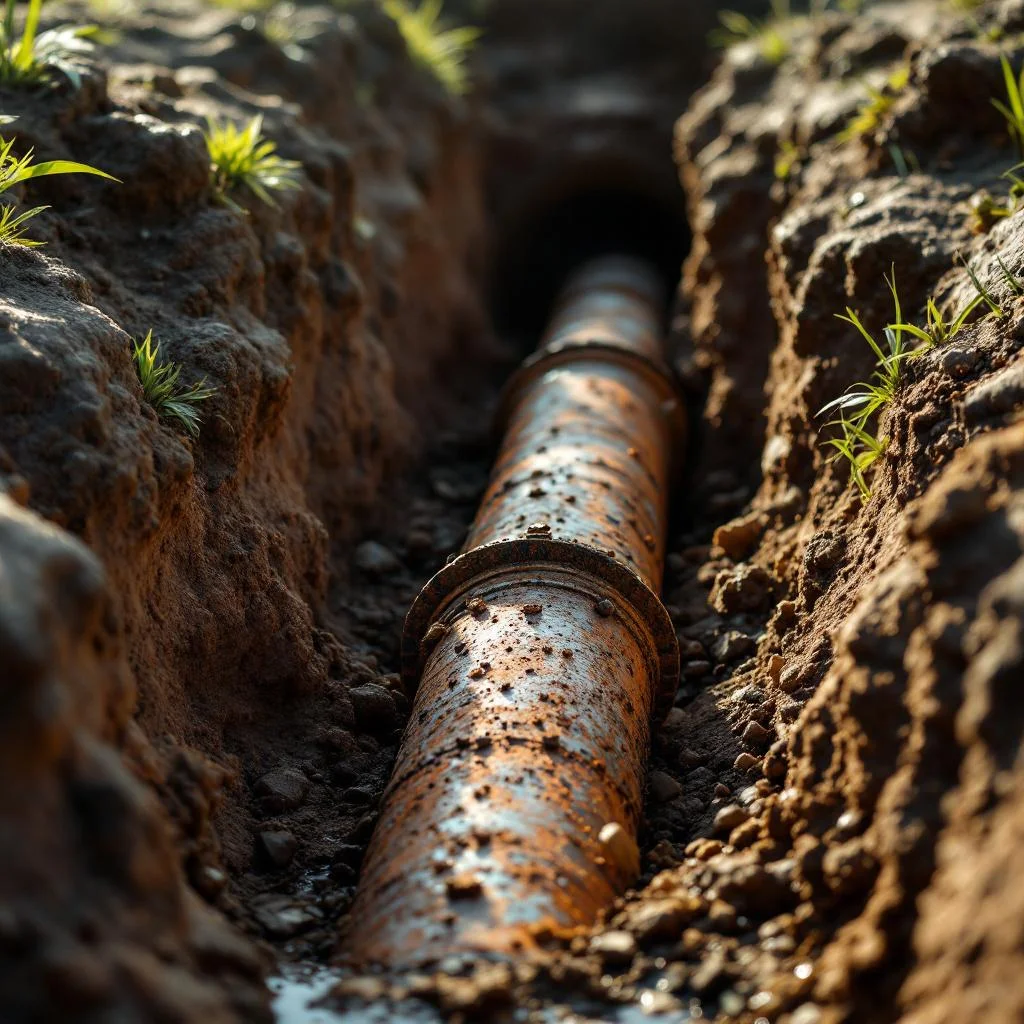
London properties built before 1940 almost universally have clay drainage pipes. Glazed vitrified clay is one of the most durable pipe materials ever used — properly installed Victorian clay pipe can last 150 years and beyond. The clay itself is not vulnerable to high-pressure water; what matters is the condition of the joints and whether the pipe wall has cracked.
Properties built between 1945 and 1975 present a different picture. This period saw widespread use of pitch fibre pipe — a composite of bitumen and cellulose fibres that was cheap, lightweight, and easy to work with. Pitch fibre seemed to perform well initially but has since proved problematic: it absorbs water, deforms, loses its circular profile, and in many cases has partially or fully collapsed. Pitch fibre is the pipe type where jetting caution is most warranted.
Properties built from the 1970s onwards typically have uPVC drainage pipe, which is robust and entirely compatible with standard jetting pressures.
Risks of Domestic Drain Jetting on Old Pipes
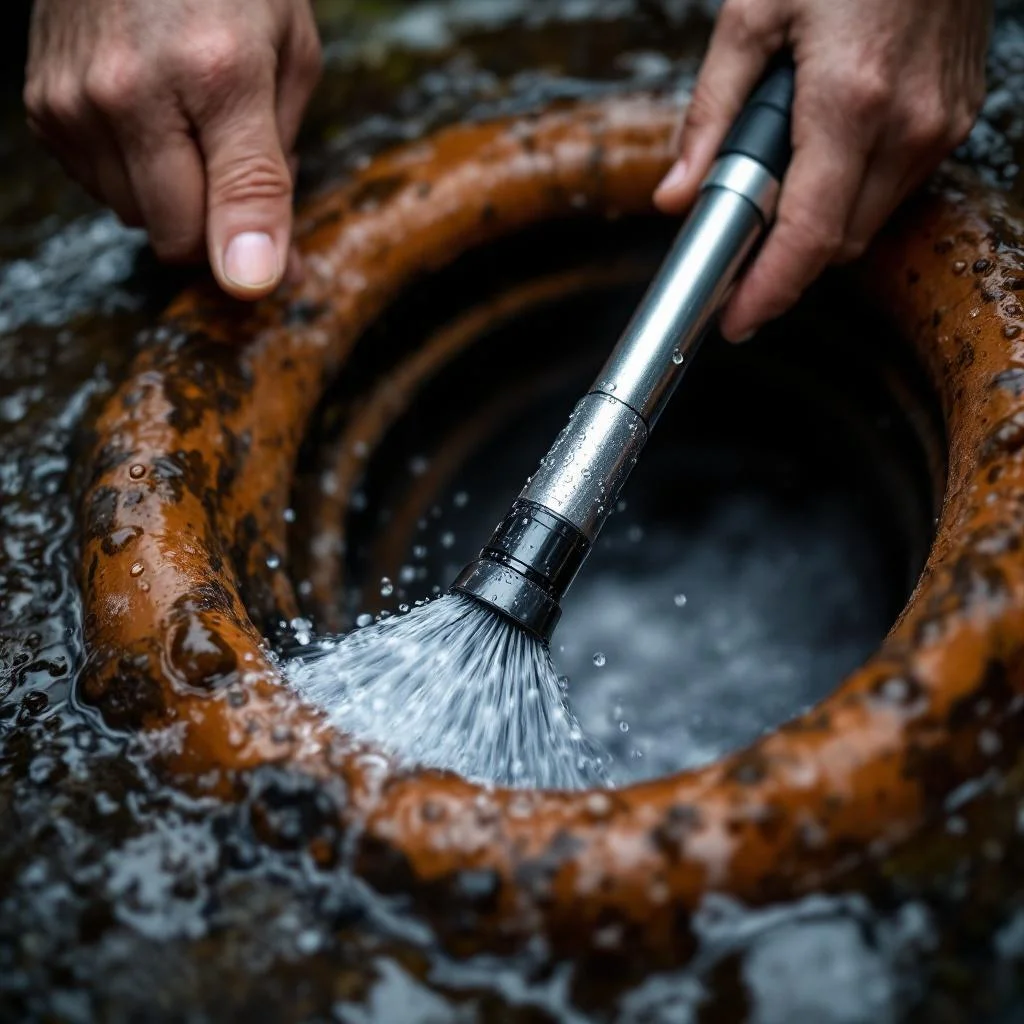
High-pressure water does not damage structurally sound clay pipe. The pressure required to fracture intact clay pipe is far beyond what any commercial jetting unit produces. The risk is different: if the clay pipe has an existing crack, displaced joint, or missing section, directing a high-pressure jet at that defect can widen the crack, dislodge a fractured section, or push debris through a gap into the surrounding soil.
The risk hierarchy, from lowest to highest:
Intact clay pipe with intact joints. Standard jetting at 80–150 bar. No structural risk. This is the vast majority of Victorian drainage in good condition.
Clay pipe with hairline cracks or slightly displaced joints. Moderate risk. Jetting may widen existing defects. CCTV survey first is advisable to understand the extent and severity of defects before deciding on jetting pressure.
Clay pipe with significant offset joints or missing sections. High risk. Jetting at these locations can cause further collapse. CCTV survey first, followed by a repair decision — reline or patch the defect before jetting.
Pitch fibre pipe. Always survey before jetting. Deformed pitch fibre has reduced bore and irregular walls; directing high pressure into a deformed section can cause further collapse. If the pitch fibre is in poor condition, jetting is likely to be contraindicated and replacement is the correct approach.
When to Survey Before Jetting
For most residential jetting jobs — a blocked kitchen drain, a slow-running soil stack — a survey first is not necessary if the pipe material is known to be clay and there's no history of structural problems. A competent jetting operator will also adjust their approach if they feel unexpected resistance or if the camera on their equipment (many modern jetting units carry a CCTV head on the hose) shows a defect ahead.
Survey before jetting is recommended when:
- The property has a history of drain collapse or repair
- The property is post-war and pre-1975 (probable pitch fibre)
- There's been a period of tree root activity and the drain has root damage
- The previous rodding attempt felt unusual — significant resistance in unexpected places, or debris emerging that looked like pipe material rather than blockage material
- The drain has never been jetted before and the property is more than 80 years old
Our CCTV drain survey service can be carried out as a precursor to jetting on the same visit. If the survey is clean, we jet immediately. If there are defects to address first, we advise before proceeding.
The Appropriate Pressure for Old Pipes
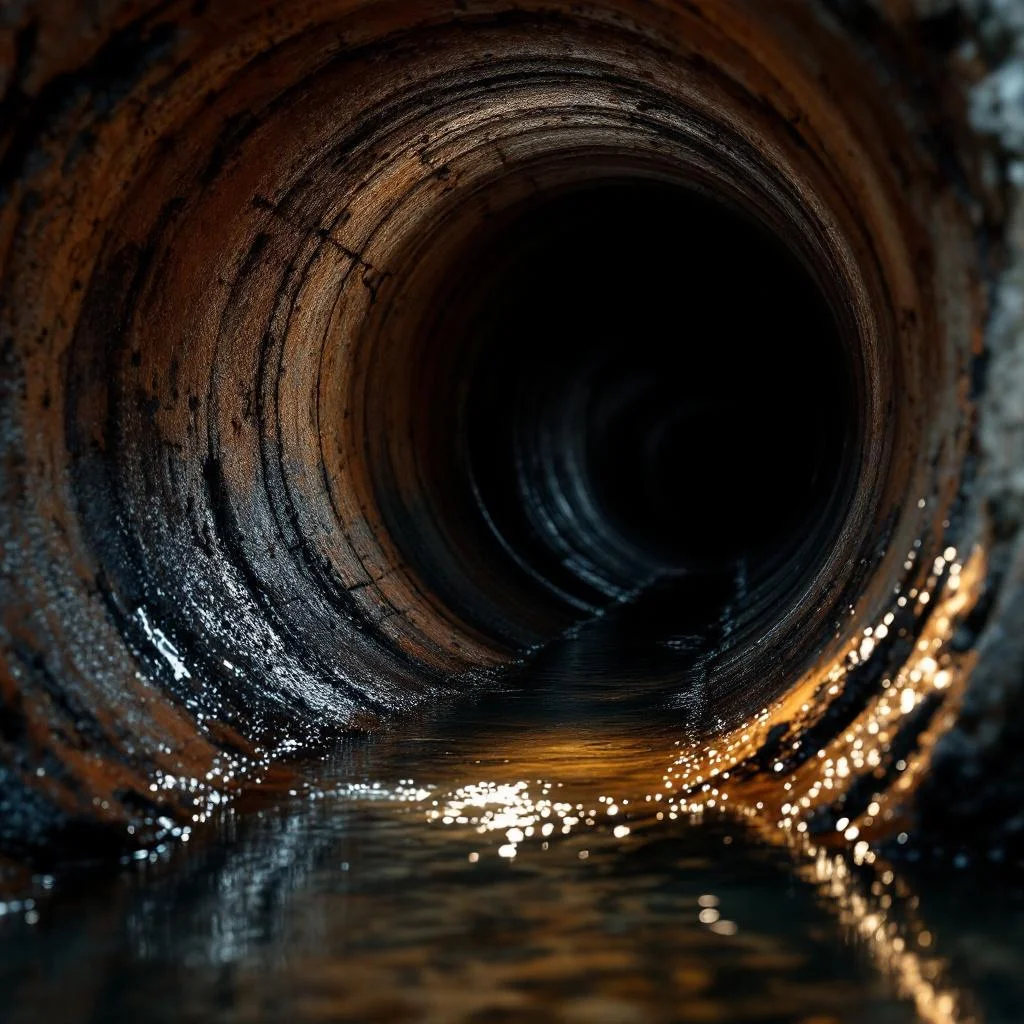
Professional jetting equipment allows pressure and flow rate to be adjusted. For old clay pipes in unknown condition, experienced operators start at lower pressures — around 80 bar — and increase only if the blockage requires it. The nozzle choice also matters: a penetrating forward-cutting nozzle is used for initial blockage attack, while a rotating chain-flail or descaling nozzle is used for scale removal and wall cleaning.
What you want to avoid is an operator who connects to the inspection chamber and immediately runs the jet at maximum pressure because "that's what the machine does." For a Victorian property with unknown pipe condition, pressure calibration matters.
Does Jetting Void a Drain Warranty?
If your property has a recently installed liner or a pipe with a manufacturer's warranty, check the warranty terms before jetting. Most liner warranties specify that jetting at standard domestic pressures is permitted — but some specify maximum pressure limits. Your drainage contractor should have this information for any liner they've installed.
After Jetting — What to Check
After a jetting job on older pipes, a post-jetting CCTV inspection is good practice if the pipe was heavily blocked or if roots had intruded. The post-jetting survey confirms that the pipe walls remain intact, that the liner (if any) shows no damage, and that the jetting flushed all debris clear rather than redistributing it further along the run.
Our domestic drain jetting service includes post-jetting checks as standard on older properties.
FAQ
Is jetting more powerful than rodding — can it cause damage rodding wouldn't?
Yes. A rod applies mechanical force at the rod end; jetting applies hydraulic force throughout the pipe, including at defect points. A rod that passes through an offset joint does no further damage; a jet directed at the same joint applies significant force to the displaced section. This is why jetting carries more risk on defective old pipes than rodding does.
Can jetting clear root intrusion from Victorian clay pipes?
Yes — specialist rotating cutting nozzles are designed for this purpose. After cutting, the root mass is flushed clear. The crack or joint that allowed root entry remains, however, and relining is needed to prevent recurrence.
What happens if jetting dislodges a section of pipe?
If a pipe section collapses during jetting, the drainage run becomes blocked and the situation requires excavation and repair. This is the worst-case scenario for jetting on compromised pipe. A pre-jetting CCTV survey is the way to avoid it.
How do I know if my drains are pitch fibre?
Pitch fibre is typically black or dark brown, feels slightly soft or fibrous if you can access a cut end, and often shows characteristic oval deformation or longitudinal cracking when viewed on CCTV. If you're unsure, a CCTV survey will confirm the pipe material.
How much does domestic drain jetting cost in London?
Priced by scope for a standard residential blockage clearance. See our drain jetting cost page for a full breakdown. Request a quote online via our contact form to arrange a visit.
What does Thames Water say about jetting on its lateral drains?
Since the 2011 transfer of private sewers and lateral drains, the section of your drain that runs beneath the pavement and road is owned by Thames Water. If a blockage is in that section, Thames Water carries out the clearance — and they use the same high-pressure jetting equipment that private contractors use, calibrated for the specific pipe condition. They do not, however, accept responsibility for damage to private clay pipework that arises during their jetting if the pipe was already in poor structural condition. Documenting your private drainage condition with a CCTV survey before a Thames Water visit, where time permits, is the only way to evidence the pre-existing condition and protect against later disputes.
Are modern jetting nozzles different from those used a decade ago?
Yes — the most significant change in domestic drain jetting over the past ten years has been the move to lower-flow, higher-precision nozzles that allow effective cleaning at reduced pressures. Modern penetrating nozzles can clear a fat blockage at 80-100 bar that would once have required 150 bar to shift, and rotating chain-flail descalers now exist in sizes appropriate for residential 100mm pipework rather than only commercial 150mm runs. The practical effect for older London pipework is that a competent operator with current equipment can do the same job at a much lower risk of damage to vulnerable joints than was possible in 2015.