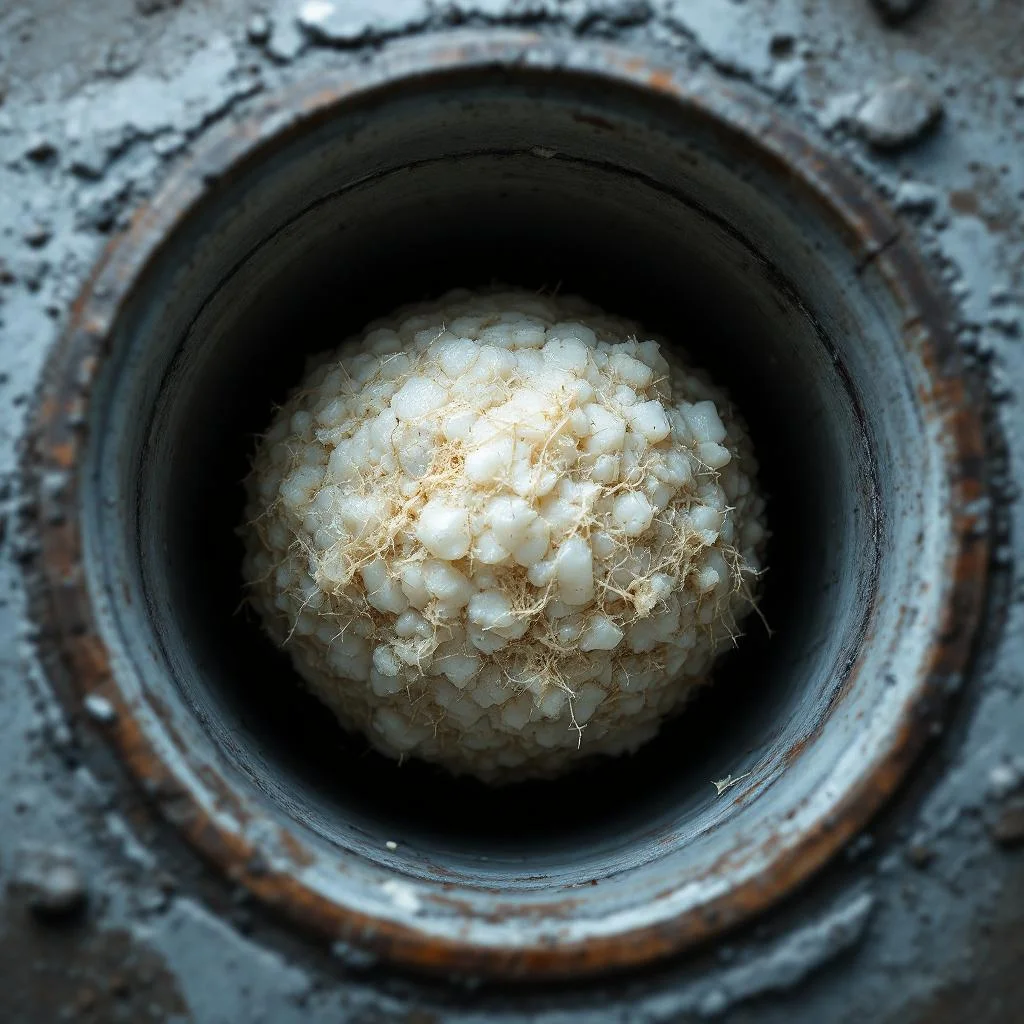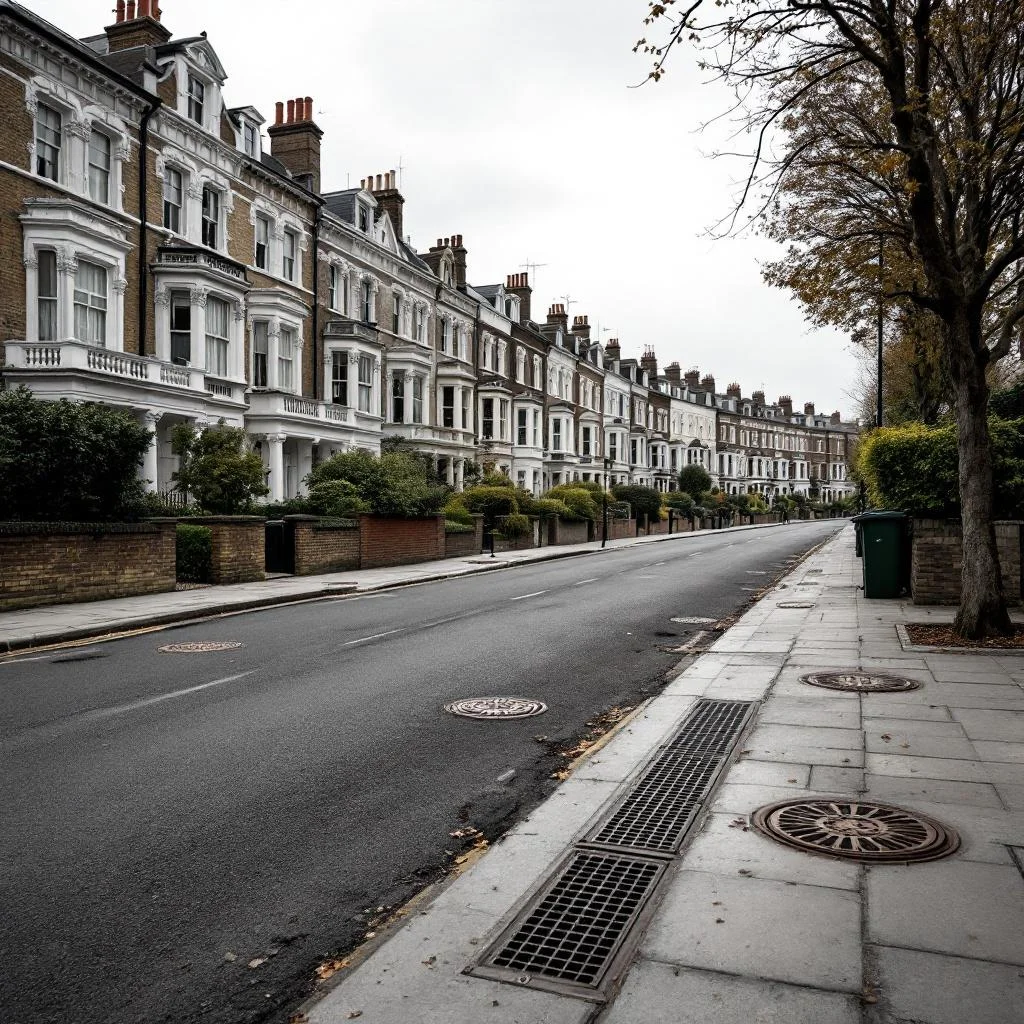
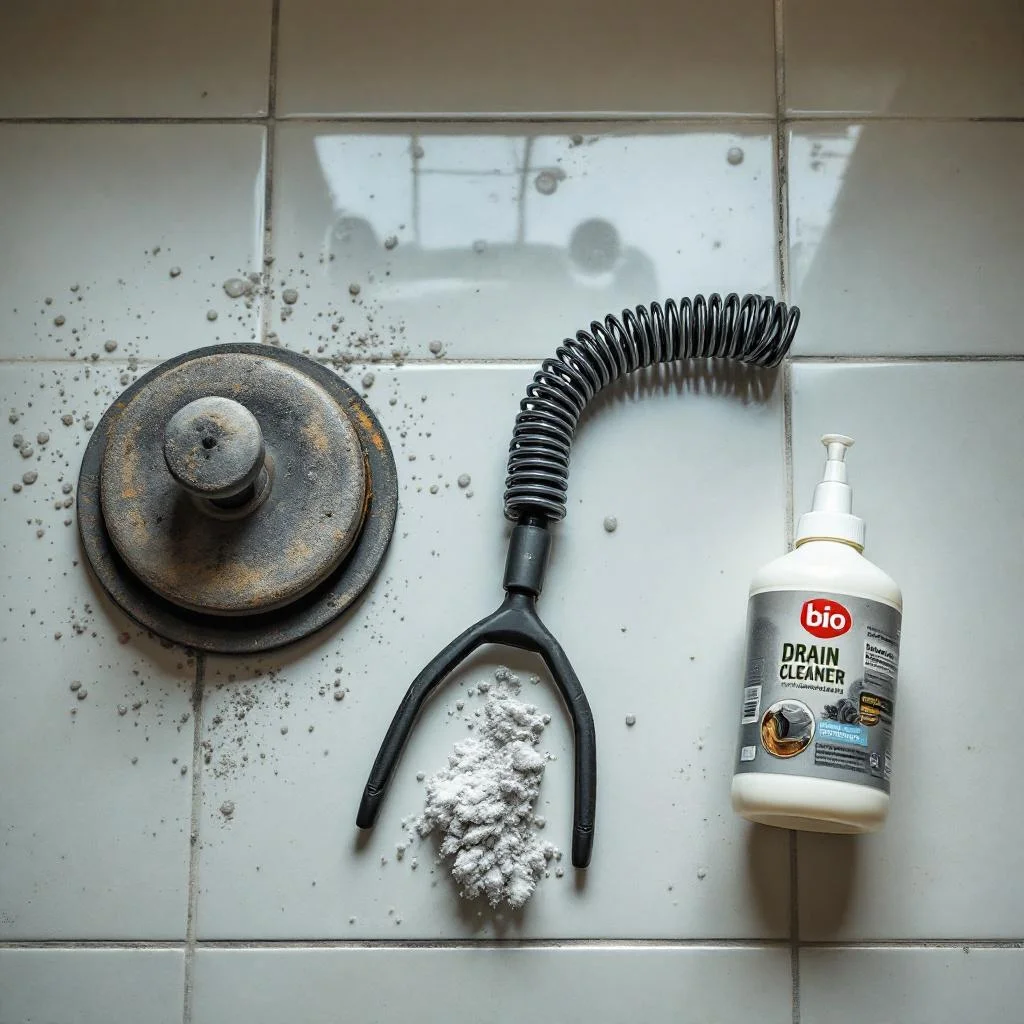
Most slow or blocked drains in a London home can be cleared with simple kitchen-cupboard methods, provided the pipework behind the wall is sound. After 26 years working on Victorian terraces, post-war semis, and modern flats across the capital, the same six DIY techniques resolve the majority of nuisance blockages we see — boiling water with washing-up liquid, a properly used plunger, baking soda and vinegar, a hand-turned drain auger, hand-rodding through an inspection chamber, and enzymatic maintenance cleaners. What follows is an honest guide to each, including the limits of what a homeowner should attempt before the cost of trying outweighs the cost of calling someone in. London's old clay pipework punishes the wrong technique very quickly, and a kettle of boiling water in the wrong place can crack a 130-year-old joint that was previously holding together perfectly well.
1. Boiling Water and Washing-Up Liquid
For a slow kitchen sink that has not yet stopped completely, the simplest fix is also one of the most effective. Boil a full kettle, squirt a generous tablespoon of washing-up liquid directly into the drain, then pour the boiling water down in two or three steady stages, leaving thirty seconds between each. The detergent breaks the surface tension of the congealed fat coating the pipe walls, and the heat softens it enough to wash through to the main drain.
This works well in London for one specific reason: the most common kitchen blockage in the capital is fat, not solids. Decades of cooking grease cooled inside a 100mm clay or cast-iron pipe form a waxy lining that gradually narrows the bore. Hot soapy water lifts the freshly deposited layer before it sets.
There is one important limit. Do not pour boiling water into a porcelain WC — the thermal shock can crack the pan. And avoid boiling water on a drain that has standing water sitting in it, because the water dissipates the heat before it reaches the blockage. If your sink has not drained at all overnight, skip this method and move to the plunger. For more on kitchen-specific blockages in London, see our guide to kitchen drain blockages.
2. Plunger Technique (Done Properly)
A plunger is the most underused tool in a London kitchen. Most people press it down once or twice, give up, and assume it does not work. In reality, the plunger relies on rapid pressure cycling, not brute downward force, and the seal matters more than the strength of the push.
For a sink: block the overflow with a damp cloth. Fill the basin with enough warm water to cover the plunger cup completely — air-only plunging does almost nothing, because air compresses and water does not. Seat the cup over the plug hole, push down to expel the air under it, then pump vigorously twenty to thirty times without breaking the seal. Pull sharply on the final stroke. The pressure changes shift loose blockages within a metre of the trap.
For a WC, use a flange plunger (the bell-shaped one with a rubber lip), not a flat sink plunger. Make sure there is enough water in the pan to cover the rubber. The same rapid-cycle pumping applies.
What this will not fix: anything more than two or three metres into the run, anything wedged in the soil stack, or any blockage caused by a structural pipe defect. If twenty firm pumps produce no movement, escalate. If you have already tried it on a blocked toilet and it has not budged, do not keep going — repeated failed plunging on a Victorian WC pan can loosen the wax seal at the base.
3. Baking Soda and White Vinegar
This old standby works on light biological build-up — soap scum, hair grease, food film — particularly in bathroom basins and shower trays. Pour half a cup of bicarbonate of soda down the drain, follow it with half a cup of white vinegar, and cover the opening with a damp cloth to keep the reaction below the surface for ten to fifteen minutes. Flush with hot (not boiling) tap water.
The fizz is mildly mechanical and the alkali-acid reaction breaks down some organic deposits, but the real value of this method is what it does not do: it does not damage Victorian-era cast-iron pipes, lead joints, or old clay sections the way a caustic chemical drain cleaner can. London has a great many properties where the soil stack is original cast iron and the underground lateral is glazed clay, and we have lifted a number of pipes that failed within months of repeated caustic-soda use. Bicarbonate is gentle.
Do not expect baking soda and vinegar to clear a fully stopped drain — it is a maintenance technique, not a rescue one. Used monthly on bathroom drains it can keep them flowing freely. Used on an emergency blockage it will mostly disappoint.
4. A Hand-Turned Drain Auger (Plumber's Snake)
If a plunger has not shifted a sink or basin blockage, a 3- to 7.5-metre hand auger is the next sensible escalation and the most useful piece of DIY kit a London homeowner can own. You can buy a manual one cheaply from any builder's merchant.
Remove the trap under the sink (have a bucket ready), feed the auger cable into the pipe, and crank the handle slowly while pushing forward. When you feel resistance, do not force it — keep cranking and apply steady pressure. The cable is designed to either break the blockage up or hook into it so you can withdraw it. Once the cable moves freely, withdraw it slowly, refit the trap, and run hot water for two minutes.
Be honest with yourself about the limits. A hand auger reaches the first bend in the soil stack at most. It will not reach the underground drain, the inspection chamber, or anything past about 7 metres from the appliance. If your blockage is further than that — and recurring blockages in multiple appliances at once almost always are — an auger will simply stop, and forcing it can punch a hole through a corroded cast-iron section. Stop, and contact us via our contact form before you make a small problem into a structural one.
5. Hand-Rodding Through an Inspection Chamber
If you have a manhole cover in your garden, side return, or front path — and most London terraces do — and you can see standing water in the chamber when you lift it, you have already learned more about the blockage than most callouts begin with. The blockage is downstream of that chamber. If the chamber is dry but the next one along is full, the blockage is between the two.
Drain rods are sold as a 10-rod set with brass screw fittings and a plunger or worm head. Always — always — turn them clockwise as you push and pull. Anti-clockwise rotation unscrews the rods and leaves a metre of brass and timber stuck in your pipe, which is an expensive recovery job. Push from the upstream chamber towards the blockage with steady pressure. If you feel a sudden release and the water level drops in the chamber, you have cleared it. Run a hose for five minutes to flush the line.
The honest limits: hand-rodding clears soft blockages — wet wipes, fat lumps, leaves, silt — within about 12 metres of the chamber. It will not cut through tree roots, will not lift a collapsed pipe section, and will not fix a displaced joint caused by London Clay shrink-swell movement. If you rod the line, the water clears, and the same blockage returns within a fortnight, the cause is structural and you need a CCTV drain survey to see what is actually happening underground.
6. Enzymatic Drain Maintainers
Enzymatic and bacterial drain treatments are not a fix for an existing blockage, but they are the single best preventive measure for a London home with old pipework. The bacteria and enzymes digest organic build-up — fat, hair, food residue, soap scum — without harming the pipe material. A monthly dose, poured down the kitchen sink and bathroom drains last thing at night so it can sit overnight, keeps the pipe walls clear of the slimy biofilm that catches everything else.
Brands vary. Look for one that lists actual enzyme or bacterial cultures on the label, not a "biological-action" marketing claim with a caustic ingredients list on the back. A bottle typically lasts six months in a typical household.
This matters more in London than elsewhere because the typical residential lateral is a 100mm Victorian clay pipe with a slightly rough internal surface. Modern smooth plastic pipework is largely self-cleaning at normal flows; old clay is not. An enzymatic maintainer is the closest you will get to extending the service life of a Victorian drain by housekeeping alone. Combined with sensible habits — no fat down the sink, no wipes down the WC, sink strainers in every plug hole — it is the most effective long-term prevention strategy a homeowner can implement.
When DIY Drain Fixes Stop Working in London Homes
Knowing when to stop is more valuable than knowing what to try. There are five clear signals that the problem is past DIY and continuing will cost you more than calling someone in.
First, multiple appliances are slow at the same time — sinks, baths, and WC all draining sluggishly indicates a blockage in the shared run beneath the property, not at any single trap. Second, water backs up into a different appliance when you flush the WC or run the bath; this means the line has surcharged and the blockage is downstream of where multiple branches join. Third, you can hear gurgling from drains other than the one you are using, which signals air being drawn through traps as the line struggles to clear. Fourth, foul smells from the garden, around the manhole cover, or from the soil stack indicate the blockage is venting outside the building. Fifth, the same blockage returns within days or weeks of clearing — almost always caused by an underlying defect that rodding cannot fix.
In any of these scenarios, escalating the DIY effort tends to make things worse. Caustic chemicals poured into a corroded cast-iron stack can cause pinhole leaks behind the wall. Repeated forceful plunging on a WC can break the bowl seal. Pushing rods past resistance can punch through a fragile clay section. The cheapest outcome is to stop, call a professional, and let someone with the right equipment diagnose the cause. A standard drain unblocking visit is priced by severity and access, and if the cause is structural, a CCTV survey will identify it without any further damage to the pipe. We cover all London boroughs including Hackney, Islington, and Camden, and our emergency drain service operates around the clock.
Frequently Asked Questions
Are chemical drain unblockers like caustic soda safe to use in London homes?
Generally no, particularly in older properties. Caustic-soda-based products generate heat and can damage cast-iron soil stacks, lead joints, and the gaskets in plastic pipework. In Victorian terraces with mixed material runs, the chemical attack tends to find the weakest section first. For most kitchen and bathroom blockages, hot water with washing-up liquid, a plunger, or a hand auger will achieve the same result without the risk.
Can I rent a high-pressure jetter for DIY drain clearance?
We strongly recommend against it. Industrial drain jetters operate at 3,000-4,000 psi and require specific nozzle selection for the pipe diameter and material — the Water Jetting Association publishes ticketed safety standards for a reason. Used incorrectly on a 100mm Victorian clay pipe, a jetter will blow joints apart and turn a simple unblocking job into a costly excavation, and may even damage the public sewer that Thames Water maintains downstream. Professional jetting is best left to engineers who know how to read the pipe before they pull the trigger.
How do I know if I have an inspection chamber in my garden?
Look for a square or round metal cover, typically 450mm or 600mm across, set flush with the path, garden, or driveway. Most London terraces have at least one chamber per property — usually in the side return or front garden. If you cannot find one, your property may share a chamber with the neighbour, or the cover may have been paved or decked over during a previous renovation. A CCTV survey can map your drainage layout without lifting any paving.
Is it worth calling a plumber for a single slow drain that is not fully blocked?
If you have tried hot soapy water and a plunger and the drain is still slow, yes — particularly if the slow drainage has developed gradually over weeks or months. Slow drainage that worsens over time almost always indicates a developing structural issue or a build-up that DIY cannot reach. Catching it early is cheaper than waiting for the full blockage and the inevitable overflow.
What is the most common DIY mistake on London drains?
Pouring boiling water into a WC pan, or pouring caustic chemicals into a cast-iron stack. Both can cause damage that costs hundreds of pounds to repair. The second most common is pulling a drain rod anti-clockwise and unscrewing it inside the pipe. If you remember nothing else from this guide, remember those three.