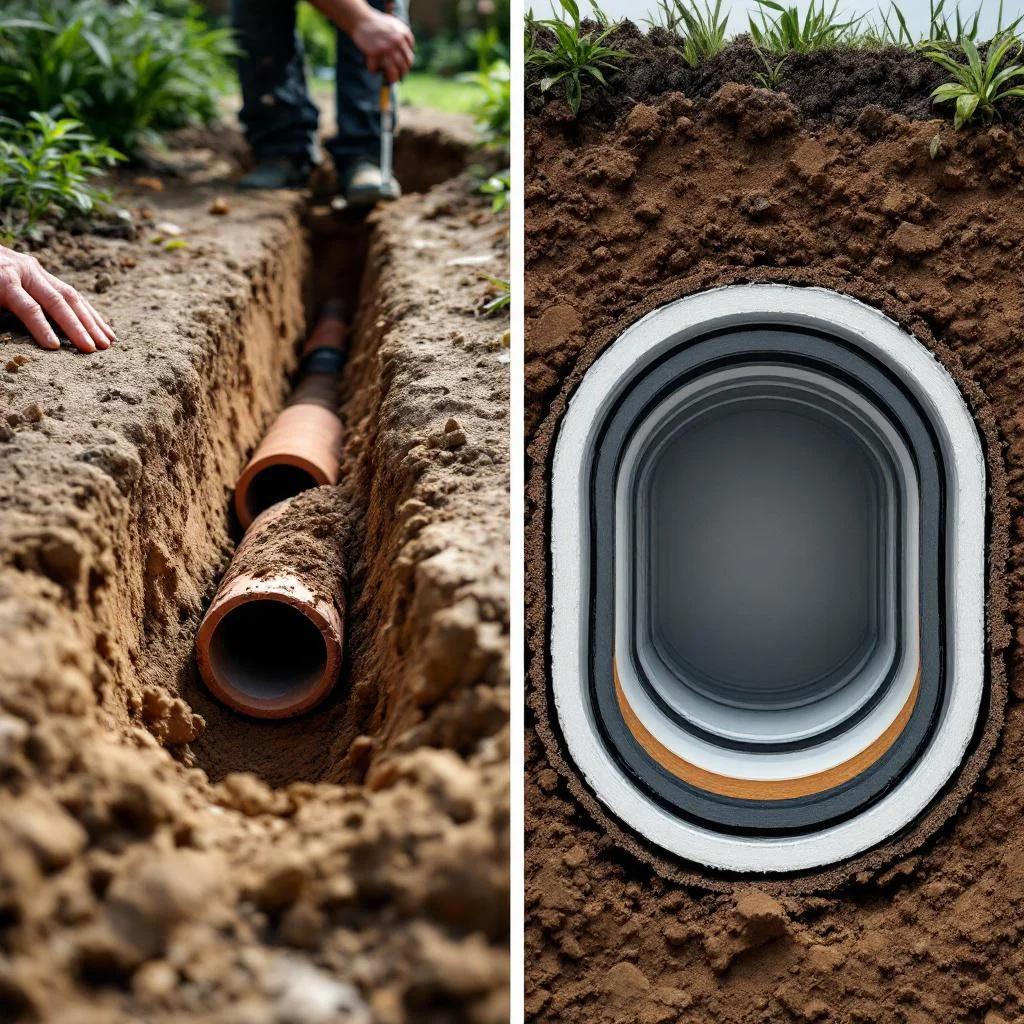
London's home drainage is largely Victorian. Engineers laid it in glazed clay in the 1860s and later, and it still serves millions of people. In south and north London, and across the inner boroughs, the drains under back gardens and shared passages do a job they were never built for.
They fail in predictable ways, because the pipes are old. Understanding those failures helps you choose the right repair, and it helps you avoid paying for work that will not fix the cause.
Why London Has So Many Victorian Drains
Victorian engineers built London's main sewer network in the second half of the 1800s, while the home drains came with the terraces. The home drains that feed it came at the same time or in the decades after, as terraced housing spread across inner London. These pipes are typically 100mm glazed clay with spigot-and-socket joints sealed with cement mortar.
At the time, this was advanced civil engineering. The problem is that over 150 years, London Clay movement, roots and changing use have worked on pipes that were never meant to last so long.
Problem 1: Cracked and Fractured Pipe Sections
Clay pipes are rigid, so unlike modern plastic pipes they cannot flex with ground movement, yet the ground moves all the time. London Clay lies under most of Greater London. It swells when wet and shrinks when dry.
That seasonal cycle has repeated about 150 times in the life of a Victorian drain, and the pipe cannot bend. In the end it cracks the pipe walls and shifts the joints.
Cracks let in two things, because they open the pipe. One is tree roots that seek moisture. The other is groundwater, which adds to the load on the system.
Once a clay pipe is cracked, jetting alone cannot restore it, since the damage is structural. The crack is a structural fault, so it needs patch lining or full relining.

Problem 2: Displaced and Open Joints
Builders sealed clay joints with rigid cement mortar, although mortar cannot flex either. As the ground moves, the joint moves, so the rigid mortar cracks and falls away. That leaves a gap, an open joint, through which roots enter and groundwater seeps in.
Displaced joints are the most common finding on CCTV surveys of London homes built before 1960. A displaced joint may not cause a blockage at once. Yet it gives roots a reliable way in, and it gets worse as the ground keeps moving. In some cases, a joint shifts enough to catch debris and cause a repeat blockage.
Problem 3: Root Intrusions
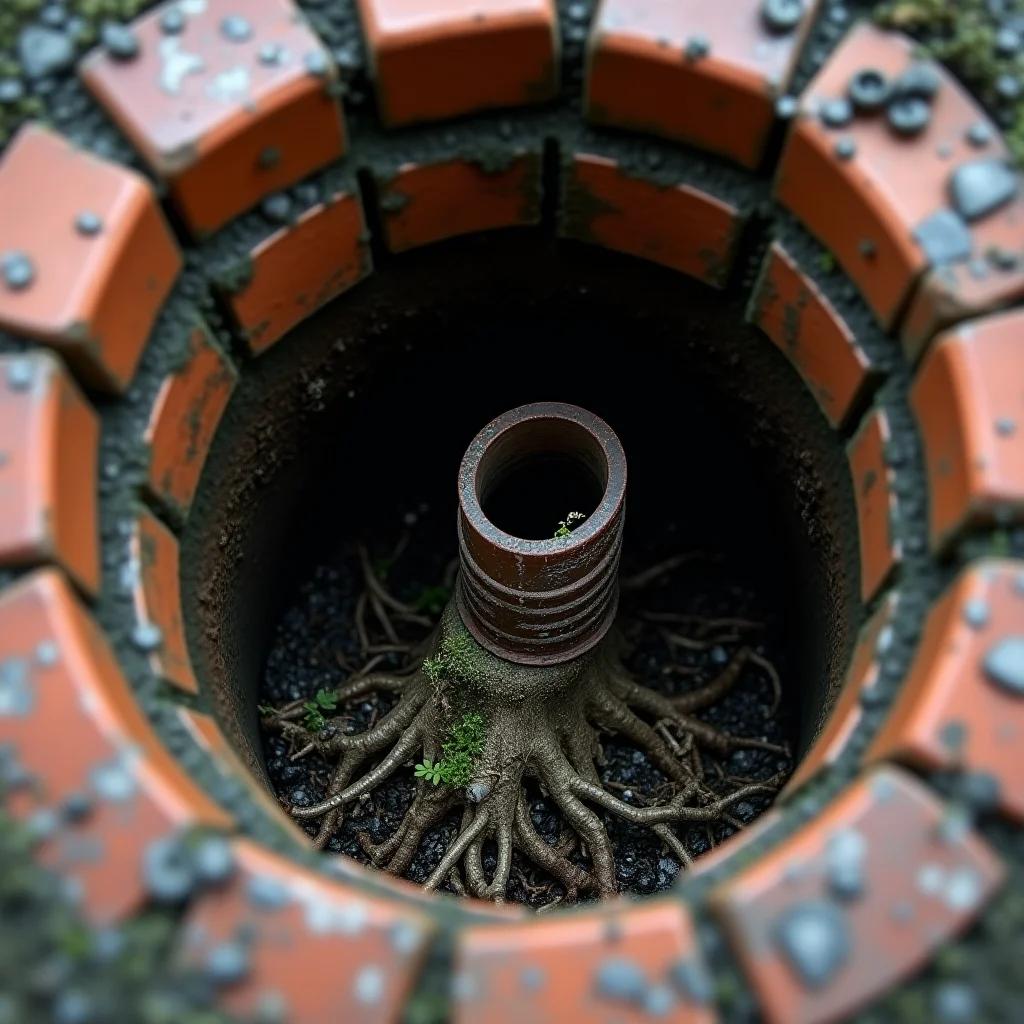
London's streets have many mature plane and lime trees, while other large species grow there too. Councils and builders planted them from the 1880s to the 1950s. Their roots reach deep into the clay in search of moisture. When they meet a cracked clay pipe, they follow the water through the crack and grow to fill the space.
High-pressure drain jetting cuts and flushes roots from the pipe. However, the roots will regrow if the crack or joint that let them in stays open. The lasting answer is to seal the entry point with a patch liner or full CIPP pipe relining.
Problem 4: Silt and Grease Accumulation
Victorian drain runs in London tend to be long, so silt has room to settle. They run from the back of the house through the garden to the street, and the garden may be fairly flat. Low-gradient runs collect silt at the base. The rough inside of aged clay has also lost its smooth glaze, so it catches grease and debris easily.
Shared runs serve several terraced homes, so the combined waste load is large. Fat from many kitchens builds up fast. Regular jetting on older shared runs is maintenance, not emergency response, since it stops problems before they start.
Problem 5: Shared Drain Disputes
Victorian terraces typically have a shared drain under the back gardens or the alley between two rows. Since the October 2011 private sewer transfer, Thames Water is responsible for these shared drains once they are confirmed to serve more than one home. However, the boundary between private and shared drain is not always where owners expect it.
If you have paid to repair a drain that Thames Water should own, you may be able to ask for a contribution, since the duty is theirs. A CCTV survey with a condition report is the evidence you need to make that case.
Modern Solutions for Victorian Drain Problems
Four main repair options exist, in rising order of cost and disruption:
- High-pressure drain jetting clears blockages and roots and cleans pipe walls. It does not repair structural faults. It suits maintenance and temporary clearance.
- CCTV drain survey finds the exact location and nature of every defect. You need it before any structural repair decision.
- CIPP pipe relining inserts a resin-soaked liner and cures it in place. It creates a smooth new bore inside the old clay pipe, with no dig. It suits cracks and displaced joints that a camera can reach.
- Excavation and replacement is needed for collapsed sections and for root balls too severe for relining. It is more disruptive, yet it gives a new pipe with a full design life.
For most Victorian London homes, a CCTV survey followed by relining solves most structural issues without a dig, because the pipe is often still in line. Our drain repairs service covers full relining and patch repair across Greater London.
Frequently Asked Questions
How do I know if my drain is Victorian clay?
If your home was built before 1960 and sits in inner London, the underground drain is almost certainly clay, since plastic came later. A CCTV drain survey will confirm this and show the exact condition of the pipe.
Can a Victorian clay drain last another 50 years?
A sound clay pipe, with no major cracks, displaced joints or roots, can keep working for a very long time, although most are not sound. The problem is finding out whether the pipe is sound. A CCTV survey every few years is a sensible way to monitor Victorian drainage.
Who is responsible for my shared Victorian drain?
Since October 2011, private sewers and lateral drains that serve more than one property have belonged to Thames Water. If your drain serves only your property, you are responsible. If it serves two or more, Thames Water is responsible. A CCTV survey gives the evidence to show which applies.
Is pipe relining a permanent fix?
CIPP relining has a long design life when fitted correctly. It removes the joint gaps and cracks that let roots in. It creates a structurally independent pipe inside the old clay shell.
Request a quote online via our contact form for CCTV surveys, drain repairs and jetting across London. Our locations page covers our full Greater London service area.
Because every property is different, start with our guides to drain repairs & relining and drain excavation advice. We also cover drain repairs & relining in Brent and drain repairs & relining in Bromley, so you can see how the work runs near you.