High-pressure jetting clears blockages that rodding cannot. It tackles hard fat, roots and scale, and it scours the pipe wall clean with water. Rodding pokes a hole through a blockage, while jetting removes it. The price depends on the scope of the job and the length of the run.
Jetting is sometimes called hydro-jetting. Since it uses water alone, it is one of the strongest tools for stubborn blockages. Rods can punch through an obstruction but leave a film on the pipe wall. A jet cuts through the blockage and cleans the pipe at the same time.
How High-Pressure Jetting Works
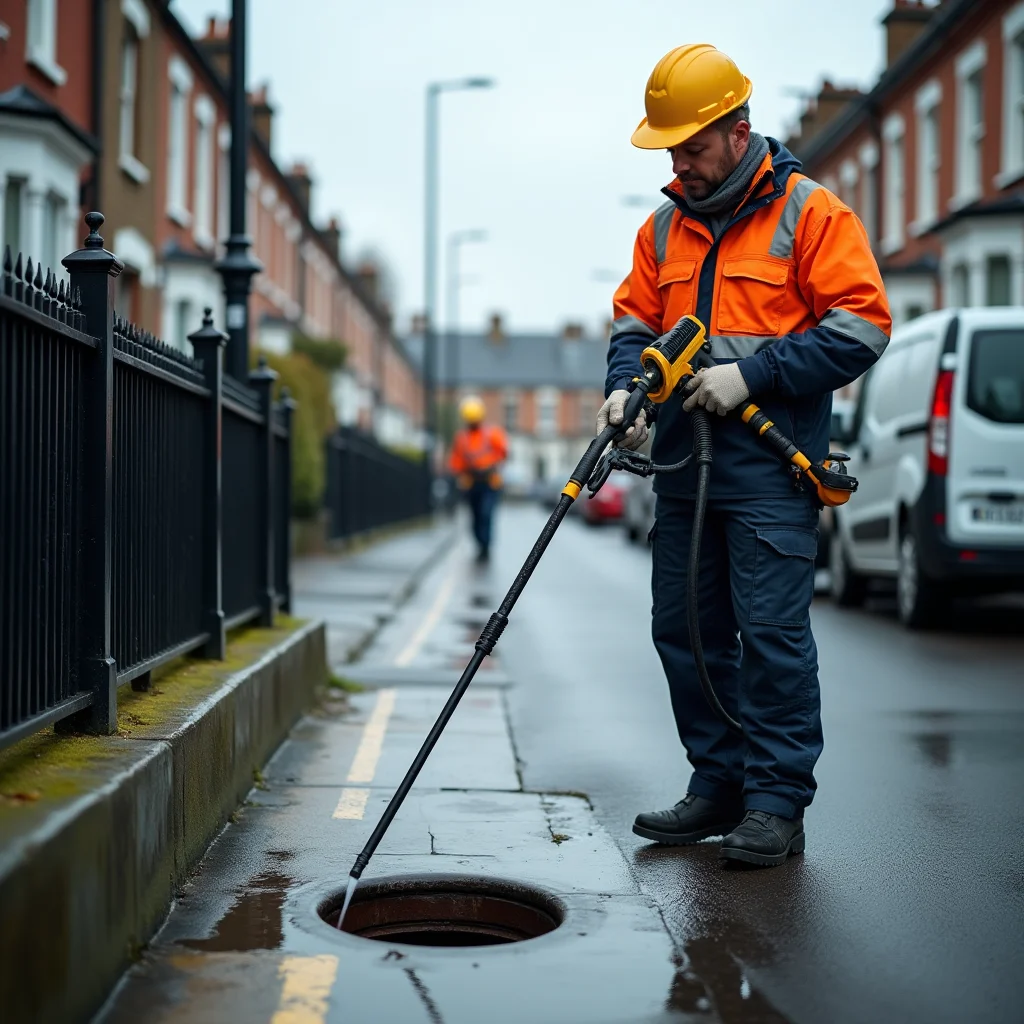
A jetting unit has a water tank, a pump and a flexible hose with a special nozzle. The engineer feeds the hose into the drain through a manhole or access point. Jets on the back of the nozzle push the hose along the pipe, while the front jets cut through the blockage.
The nozzle depends on the blockage, because each type does a different job. Chain flails break up hard scale and roots. Grease-cutting nozzles blast fat into small pieces. Rotating nozzles spin as they go and scrub the pipe walls.
The result is a pipe that is clean, not just clear. While rodding leaves a film, jetting strips it. That is why jetting works better than rodding for repeat blockages. It removes the build-up that makes the blockage form again.
When Is Jetting the Right Solution?
Recurring blockages. If a drain blocks every few months, rodding probably clears the plug but not the cause, because the build-up stays. Jetting usually solves repeat blockages from grease or light roots.
Slow-running drains. A drain that runs slowly may have a thick layer of grease or scale. Jetting restores the full flow, since it strips the layer away.
Before a CCTV survey. On an older London home, we jet first so the camera gets a clear view. Grease can hide defects, while a clean pipe shows them.
Commercial kitchens. Restaurants and pubs need regular jetting of grease traps and kitchen drains. It stops the fat build-up that leads to fatbergs, which still form in busy kitchens.
After building work. Mortar and concrete often end up in new drains. Jetting clears them before they cause a blockage, because they set hard if left.
What Jetting Cannot Fix
Jetting is a cleaning tool, not a repair tool. It cannot mend a cracked pipe or a slipped joint. It cannot clear roots that have filled a section completely. The blockage will clear, yet the fault will still be there.
For this reason, since a pipe can look fine, we often suggest a CCTV survey with or after jetting on older homes. The survey shows whether the problem is a clearance issue, which jetting can solve, or a structural one, which needs repair.
Is Jetting Safe for Old London Pipes?
Owners of Victorian homes often ask this, and the answer depends on the pipe condition and the skill of the engineer.
A good engineer checks the pipe first and sets the pressure to suit. Sound clay pipes can take jetting at a lower pressure. However, pipes that are already cracked or out of line may not suit it, because the water can make the cracks worse. In that case, a CCTV survey comes first.
Cost in London
The cost depends on the length of the run, because longer runs take longer. It also depends on the type of blockage and the equipment needed. Commercial jobs are priced one by one, based on the size of the system.
For homes with repeat blockages, while it costs money, regular preventive jetting can cost less than repeated emergency call-outs. A CCTV survey helps you decide how often it is worth doing.
Frequently Asked Questions
How much does drain jetting cost in London?
The price depends on the length of the run, because longer runs take longer. It also depends on how bad the blockage is and the kit needed. Commercial jobs are quoted individually. Request a quote online and we confirm the price before any work starts.
Is high-pressure jetting safe for Victorian clay pipes?
Yes, although only when an experienced engineer checks the pipe first. Sound clay pipes can take jetting at reduced pressure. Pipes that are badly cracked may not suit it. In that case, a CCTV survey first avoids making the cracks worse.
How often should London drains be jetted as preventive maintenance?
For homes, jetting now and then is usually enough. Commercial kitchens that produce a lot of fat need it more often. Homes near mature trees may gain from regular jetting, since it clears early root growth before it spreads.
What's the difference between drain jetting and drain rodding?
Rods push through a blockage and often leave residue, while jetting cuts through it and cleans the pipe. Rodding is quicker for a simple, fresh blockage. Jetting works better for repeat blockages and for grease or roots.
Can jetting fix a collapsed drain?
No, because jetting cleans, it does not repair. It can clear a blockage in a collapsed section, but the break itself needs excavation or trenchless relining. A CCTV survey confirms whether a structural repair is needed.
Because every property is different, start with our guides to high-pressure drain jetting and drainage investigation advice. We also cover high-pressure drain jetting in Hackney and high-pressure drain jetting in Hammersmith, so you can see how the work runs near you.
Guides worth reading next
- Drain Jetting vs Drain Rodding: Which Method Do You Need?
- High-Pressure Drain Jetting: When Rodding Isn't Enough
- Kingston and the Thames: Why Riverside London Drains Face Extra Pressure
- Calling an Emergency Drain Service in London: What to Expect
- Pipe Relining vs Drain Excavation: Right for Your London Home?