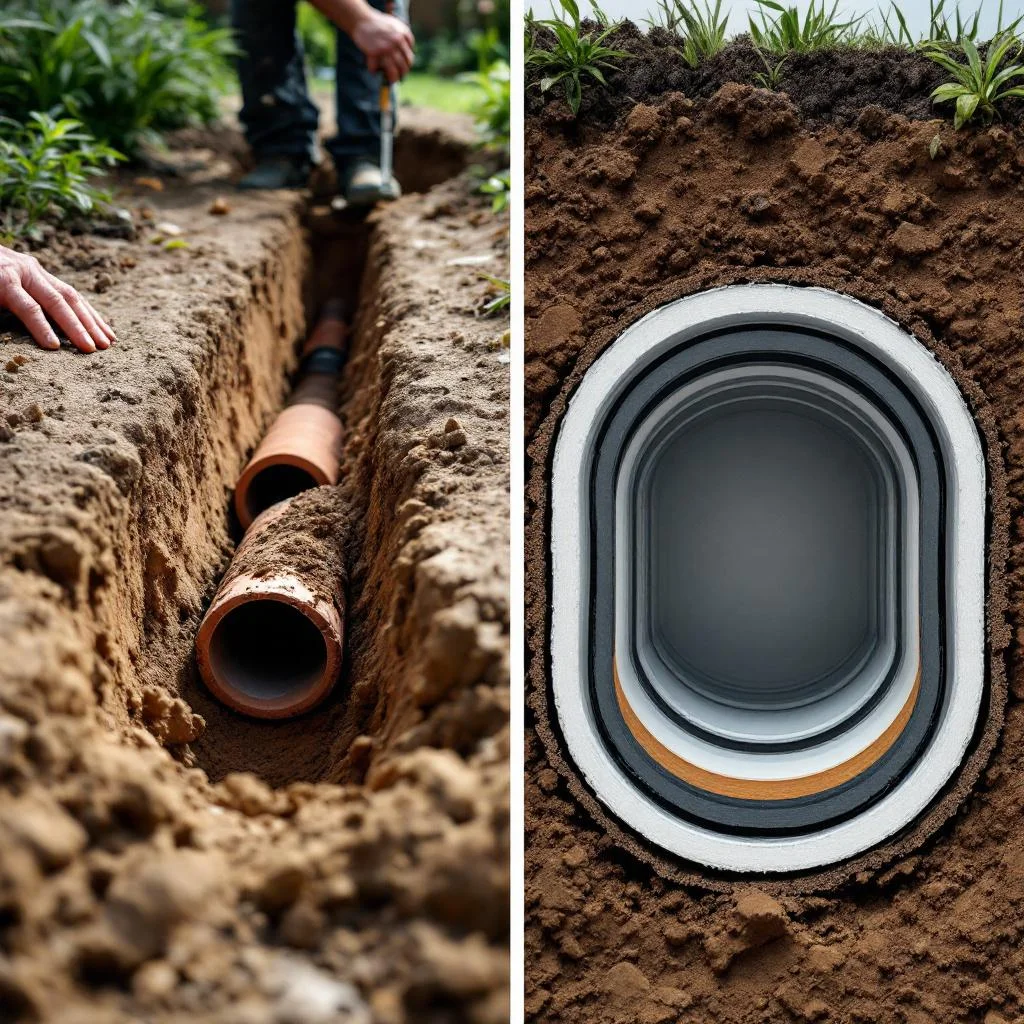
When a drain pipe fails in a London property — whether it's cracked, root-damaged, or collapsed — there are broadly two ways to fix it: dig it up and replace it, or reline it from the inside without excavating. Over the past decade, pipe relining has transformed what's possible without a trench, but it isn't always the right answer. Here's how to choose.
How Pipe Relining Works
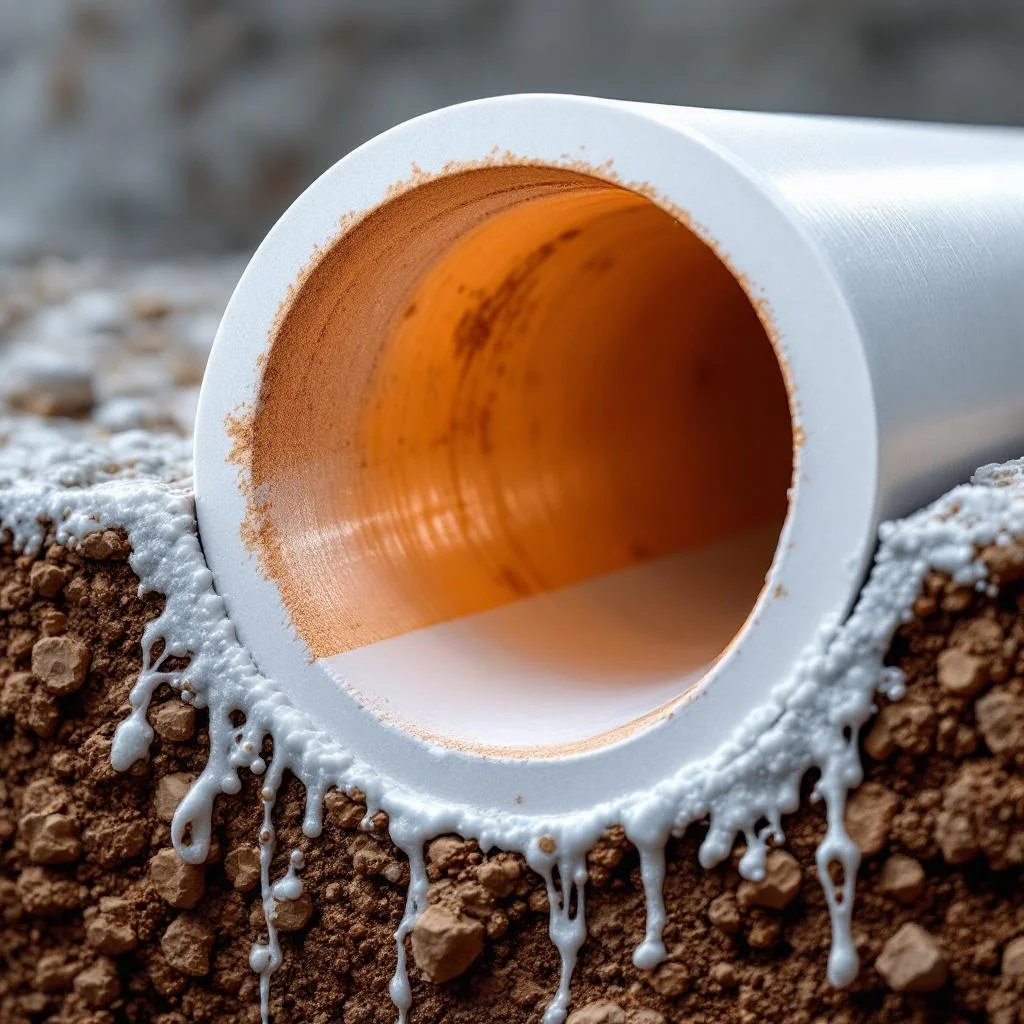
Pipe relining — sometimes called no-dig drain repair or CIPP (cured-in-place pipe) lining — involves inserting a flexible felt or fibreglass liner into the damaged pipe and curing it in place with resin. The cured liner forms a smooth, jointless new pipe within the existing pipe, sealing cracks, bridging offset joints, and blocking root entry points.
The process starts with a CCTV survey to assess the pipe's condition. We then jet the pipe clean, prepare the liner with resin, and insert it — either pulling it through from one end or inverting it with air pressure. Hot water, steam, or UV light cures the resin in place, depending on the system. A post-lining CCTV confirms the liner is correctly positioned and sealed.
The resulting lined pipe has a slightly reduced internal diameter — typically 6–12mm less than the original — but the smooth bore usually compensates for this by reducing friction and improving flow. Relined pipes are warranted for 25–50 years depending on the system.
Our pipe relining service covers the full process from survey through to post-cure inspection.
When Relining Is the Right Choice
Relining works best when the pipe is damaged but still structurally present — cracked, root-infiltrated, or showing offset joints, but not fully collapsed or missing sections. The pipe must also be accessible at both ends (or at one end with a back-exit arrangement), and the existing bore must be sufficient for the liner to pass through.
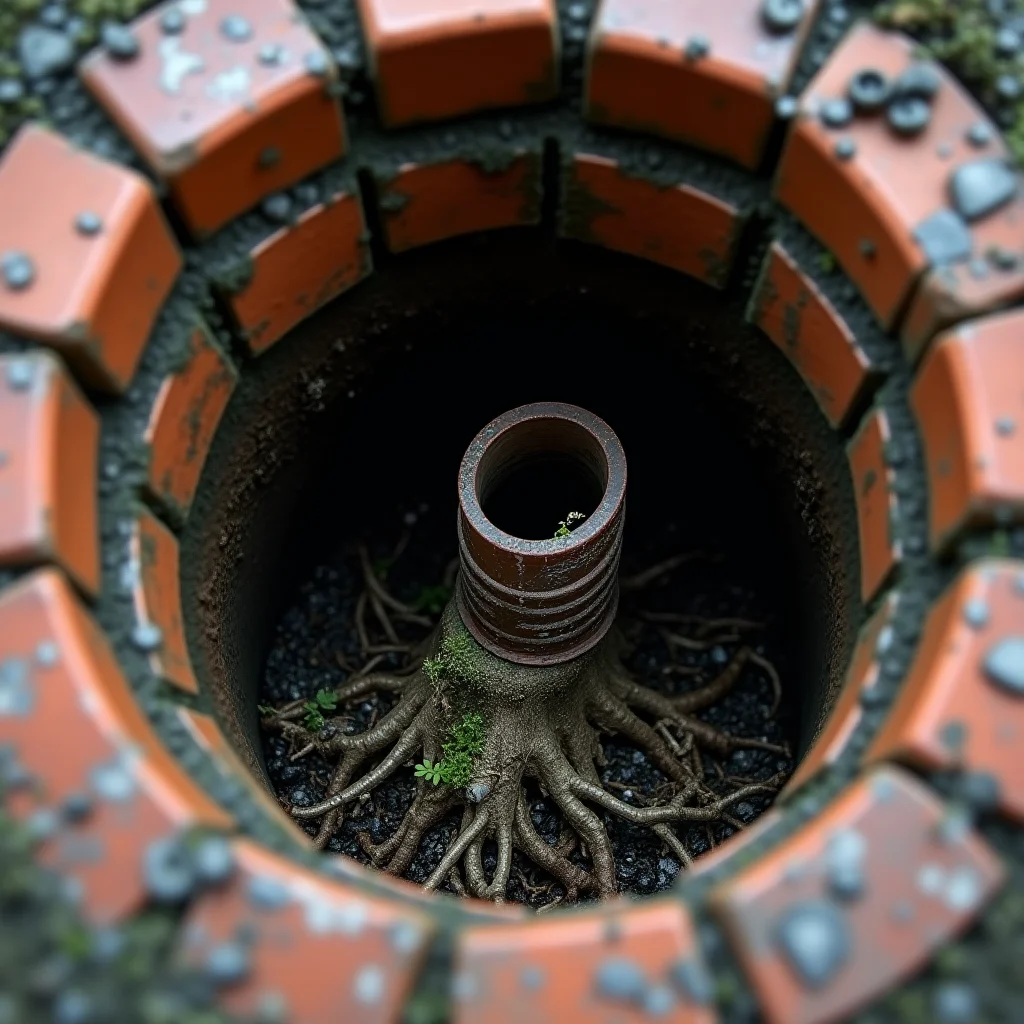
Root intrusion with intact pipe walls. If roots have entered through cracked joints but the pipe walls are otherwise sound, relining seals the cracks and prevents re-entry. Jetting beforehand clears the roots; the liner prevents recurrence.
Cracked clay pipes in London gardens. Victorian clay pipes that have developed longitudinal or circumferential cracks from soil movement are ideal candidates for relining — provided the cracks haven't progressed to full collapse. London Clay movement is the most common cause. See our post on why London clay soil damages drains.
Under-garden runs. If the damaged section runs under a mature garden, patio, driveway, or outbuilding, excavation carries a high collateral cost. Relining avoids disturbing the surface entirely.
Under-floor runs. Victorian terraced houses often have drainage runs beneath the ground floor slab. Excavating under a suspended timber floor is a major and expensive operation; relining the same section from an external access point costs a fraction.
Properties with limited access. Narrow side passages, properties with no rear access, and basement flats where excavation would require working below the water table are all situations where relining's zero-dig footprint is a significant advantage.
When Excavation Is Unavoidable
Relining is not a universal solution. There are situations where excavation is the only option, and attempting to reline will either fail or produce a poor result.
Total collapse. If a pipe has fully collapsed — the section has fallen in on itself — there is no bore for a liner to pass through. Excavation, removal, and replacement is the only option.
Deformed pitch fibre pipe. Pitch fibre pipes deform into oval or collapsed profiles over time. A round liner cannot conform to an oval bore, and the irregular surface prevents a good bond. Excavation and replacement is standard for deformed pitch fibre.
Obstructions that can't be cleared. If concrete, hardened grease, or displaced pipe fragments have created a rigid blockage that jetting cannot shift, excavation is required to physically remove the obstruction before any repair.
Very short sections at connections. Some repairs — particularly at the point where a branch drain connects to a main pipe — are too short or geometrically complex for a liner. A patch repair may be possible, but if not, localised excavation is the most practical approach.
Failed previous lining. If a liner has delaminated or collapsed, it must be removed before a new liner can be inserted. Removing a failed liner sometimes requires excavation.
Comparing the Costs
Pipe relining in London is priced per linear metre, with a minimum charge equivalent to roughly 3–5 metres of pipe.
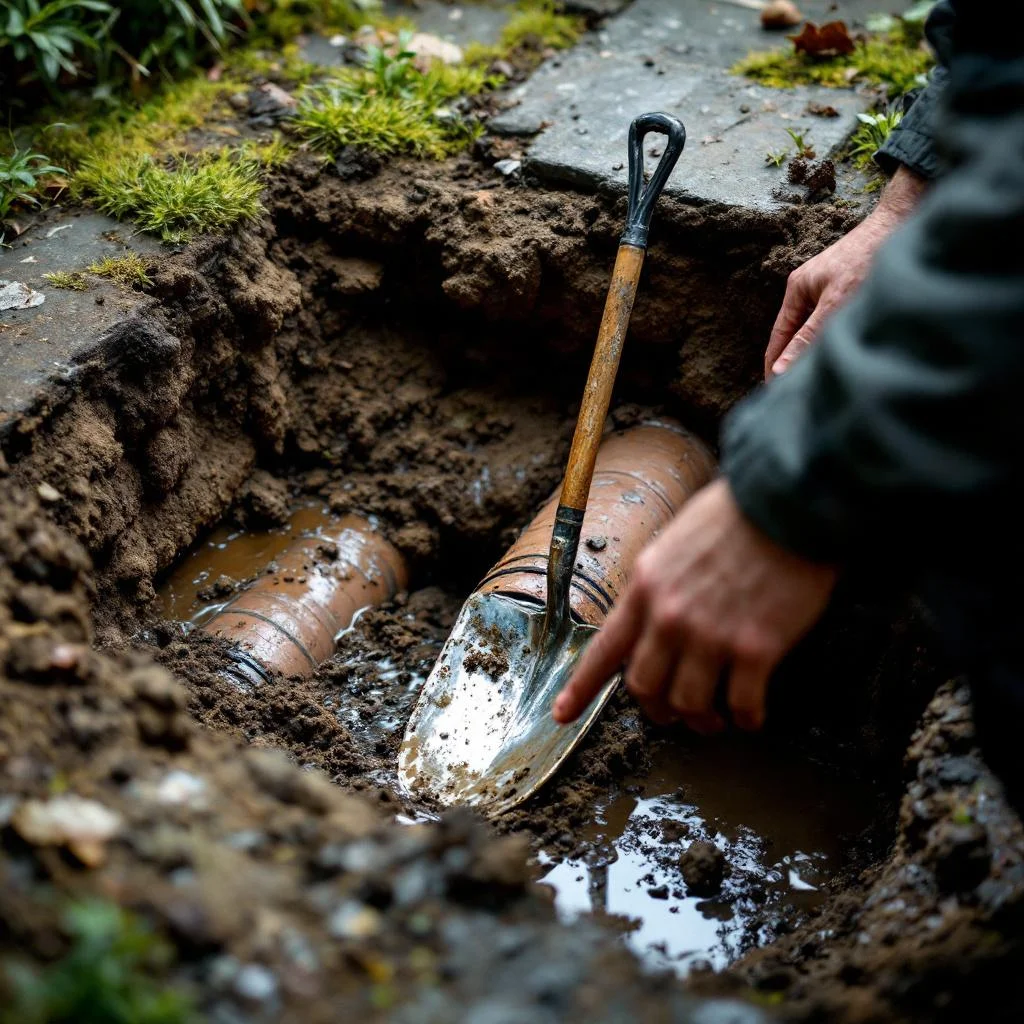
Drain excavation involves breaking up the surface, removing and replacing the damaged pipe, then reinstating the surface. Costs depend on depth, length, and surface type. In London, reinstatement costs are higher than the national average because of the density and quality of paved surfaces.
For a 10-metre run under a tarmac driveway, excavation including reinstatement costs considerably more than relining the same section. The economics of relining are compelling wherever it's technically feasible.
Our drain repair pricing page gives a more detailed breakdown by scenario.
Making the Decision
A CCTV survey is the only reliable basis for deciding between relining and excavation. Without seeing the pipe condition, any contractor advising excavation before conducting a survey should be questioned. Equally, any contractor promising relining without a CCTV survey is guessing.
The survey report should give you a condition grade for each pipe run and a specific recommendation for each defect. If the recommendation is relining, it should state the liner diameter, method (inversion or pull-in), curing method, and warranty. If it's excavation, it should specify depth, length, surface type, and reinstatement specification.
What London Conditions Mean for the Decision
London's underground environment makes the relining-versus-excavation decision sharper than in most other UK cities. The capital sits largely on London Clay, a stiff, low-permeability formation that shrinks and swells dramatically with seasonal moisture changes — typically 10-20mm of annual movement at residential pipe depth, and considerably more in dry summers near mature trees. Victorian and Edwardian clay pipes laid in this ground move with the clay, and the cumulative effect over 100+ years is the displaced joints and circumferential cracks our CCTV surveys document constantly. The good news is that this damage pattern — defects in an otherwise sound clay pipe — is exactly what relining was designed to repair.
Excavation in central and inner-London is also disproportionately expensive compared with other parts of the country. Streets here are paved with high-quality flagstones, granite kerbs, and conservation-area surfaces that local authorities require to be reinstated to the original specification — sometimes by a specific contractor approved by the borough. A trench across a Camden conservation pavement can cost more in reinstatement than the underlying pipe repair itself. Add to that the density of services beneath London streets — Thames Water mains, BT ducts, low-voltage cabling, gas pipes — and excavation at any depth requires careful service searches and often hand-digging in service zones. All of these factors push the relining-versus-excavation calculation toward relining whenever the pipe is structurally suitable.
FAQ
Can relining be used in any size of pipe?
Standard residential CIPP liners are available for pipes from 100mm to 300mm diameter. Larger commercial and sewer liners are available up to 1,200mm. The liner manufacturer specifies the minimum host pipe diameter for each product.
How long does pipe relining last?
Properly installed resin liners are warranted for 25–50 years. Independent studies of early CIPP installations suggest service lives of 50+ years where the host pipe was structurally sound before lining.
Will relining affect my drainage flow?
The reduction in internal diameter is minimal (6–12mm) and the smooth bore of the liner typically improves flow velocity compared to a corroded or root-roughened clay pipe. Flow rates are rarely affected adversely.
Do I need planning permission for drain repair works?
Drain repair — including relining — is not normally a planning matter. However, if the drain is close to a public sewer, a build-over agreement with Thames Water may be required for excavation works. Relining, being entirely within the existing pipe, does not trigger build-over requirements.
How quickly can you assess and repair a drain in London?
We can carry out a CCTV survey with same-day or next-day availability across Greater London. Most relining jobs can be completed within 24–48 hours of the survey. Request a quote online via our contact form to arrange a survey.