TL;DR A large share of the period housing in Fulham and Battersea is exactly that — large Victorian or Edwardian houses built for one household, later converted into two, three, or more self-contained flats. The drain run underneath usually wasn't upgraded to match; it's often still the single lateral that served one kitchen and one bathroom, now carrying waste from several of each. When that shared run blocks, every flat connected to it loses its drain at the same time, which is why converted properties in these areas tend to see more repeat blockages than a similar house still in single occupation. If a shared drain keeps backing up, request a fixed-price quote online for a CCTV survey to find out exactly where the blockage sits — and which section of pipe it's in.
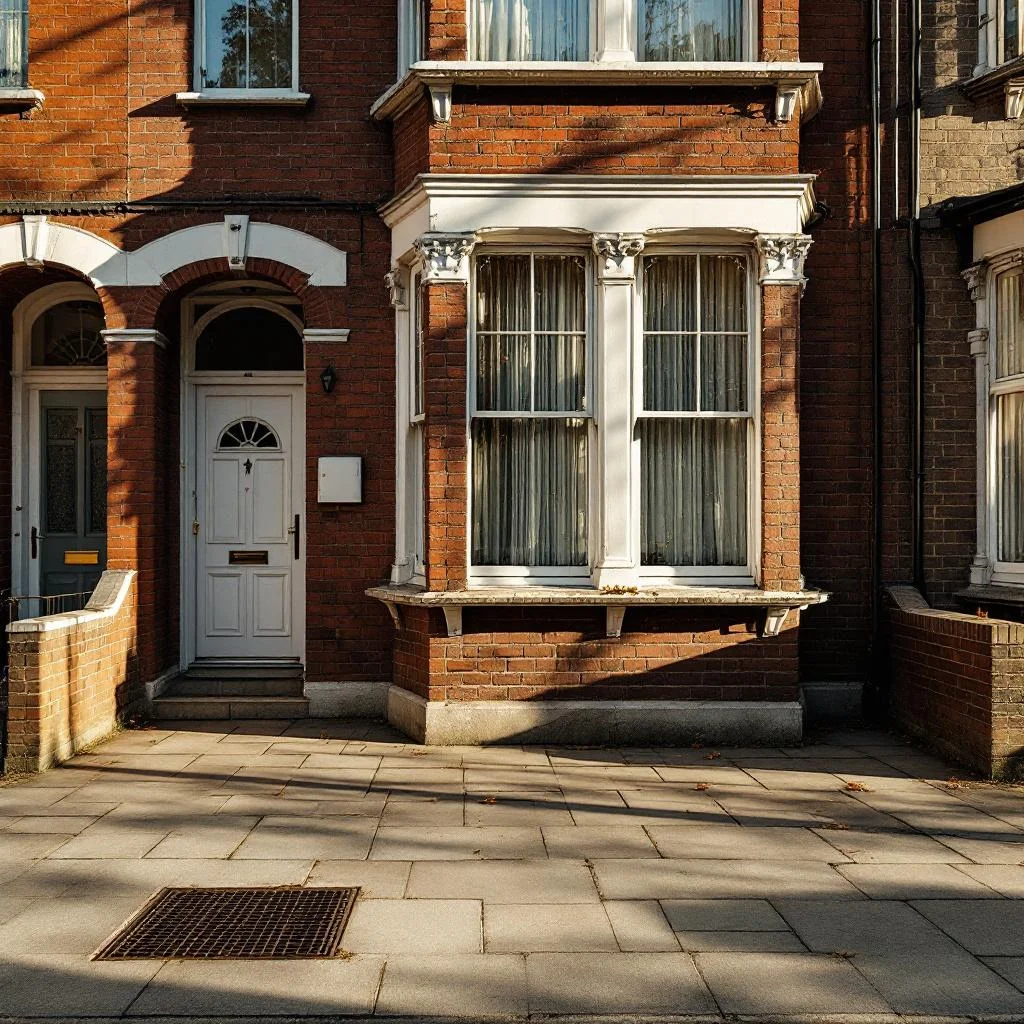
One Pipe, Several Households Walk down almost any residential street in Fulham or Battersea and the pattern repeats: a tall period house, once a single family home, now three doorbells and three separate flats. It's one of the most common conversions in this part of south-west London, and it makes efficient use of housing stock that would otherwise be far too large for most modern households.
What doesn't change during that conversion, in most cases, is the drainage below ground. The original lateral drain — the pipe carrying wastewater from the property out to the public sewer — was sized and laid for a single kitchen, a single bathroom, maybe a scullery. After conversion, that same pipe is often still the only route out for two or three kitchens and two or three bathrooms, now running independently of each other.
Why These Runs Block More Often More outlets feeding into the same pipe means more opportunities for the things that cause blockages in the first place: fat and food debris from multiple kitchens, wet wipes and hygiene products from multiple bathrooms, all converging on a pipe that was never sized with that volume in mind. A single household might get away with the odd bad habit at the sink. Multiply that across three flats sharing one run, and the same pipe reaches its limit far sooner.
It's also common for a shared run in an older conversion to include awkward changes of direction, junctions added when bathrooms were extended or moved, and sections of pipework of different ages and materials spliced together over the years. Every junction and every change of gradient is a place debris can catch, which is one reason these shared runs tend to need clearing more often than a straightforward single-occupancy drain.
Whose Drain Is It, Anyway? Responsibility for shared drains changed for a lot of London properties in October 2011, when many previously private shared drains and sewers were transferred to the local water company. Broadly speaking, the pipe serving only your own flat usually remains a private responsibility, while a shared lateral serving more than one property is more likely to now sit with Thames Water as the sewerage undertaker for the area. Where exactly that boundary falls on any individual property depends on the specific layout, which is another reason a proper survey — rather than a guess — is worth having before anyone agrees to pay for a repair.
This is a genuinely common source of friction in converted properties, particularly where the freeholder, the individual leaseholders, and the water company all have some stake in a single length of pipe. Nobody wants to pay for a repair on a section that turns out to be someone else's responsibility, and without evidence of exactly where the fault sits, that conversation tends to stall.
Finding the Blockage Before Arguing About Whose Job It Is Before any of that gets sorted out, the practical first step is the same either way: find out exactly where the blockage is and what's causing it. A CCTV drain survey traces the run from the property boundary to the sewer connection, recording footage that shows precisely which section is blocked, whether it's a build-up of debris or a structural defect, and where it sits relative to the boundary between private and shared responsibility.
For a repeat blocked drain affecting a converted flat, that footage is often what finally settles who arranges the repair — and prevents the same section blocking again a few months later because the underlying cause was never actually identified.
It's also worth keeping a copy of that report on file once the immediate blockage is dealt with. In a building with several separate households on one shared run, having documentation of where the pipe's weak points are makes the next issue — if there is one — far quicker to resolve, rather than starting the whole investigation from scratch each time.
FAQs
Why does our drain block more than the flat we lived in before? If the previous property was a single-occupancy house and the current one is a converted flat sharing a drain with other units, the answer is often simply volume — more households, more waste, on a pipe that wasn't upsized for the conversion.
Do all the flats on a shared drain have to agree before it's fixed? In practice, whoever discovers the blockage usually needs to arrange access and, depending on where the fault sits, may need to coordinate with the freeholder, managing agent, or other leaseholders on the same run. A survey report showing exactly where the fault is makes that conversation far more straightforward.
Can a CCTV survey tell us if the drain is private or Thames Water's responsibility? A survey shows the physical layout and condition of the pipe, which is the key evidence needed to work out where a fault sits relative to the private/shared boundary — though the final responsibility determination can also depend on the specific transfer records for the property.