
When a named storm is forecast for London — typically announced 24–48 hours in advance by the Met Office — there's a window of time in which simple drain checks can meaningfully reduce your flood risk. Not every London property is vulnerable, but those in low-lying areas, with a history of drain issues, or in boroughs with older combined sewer infrastructure face real risk during intense rainfall events. Here are five checks that take less than an hour and can make a significant difference.
Check 1: Clear Every External Gully and Downpipe Outlet
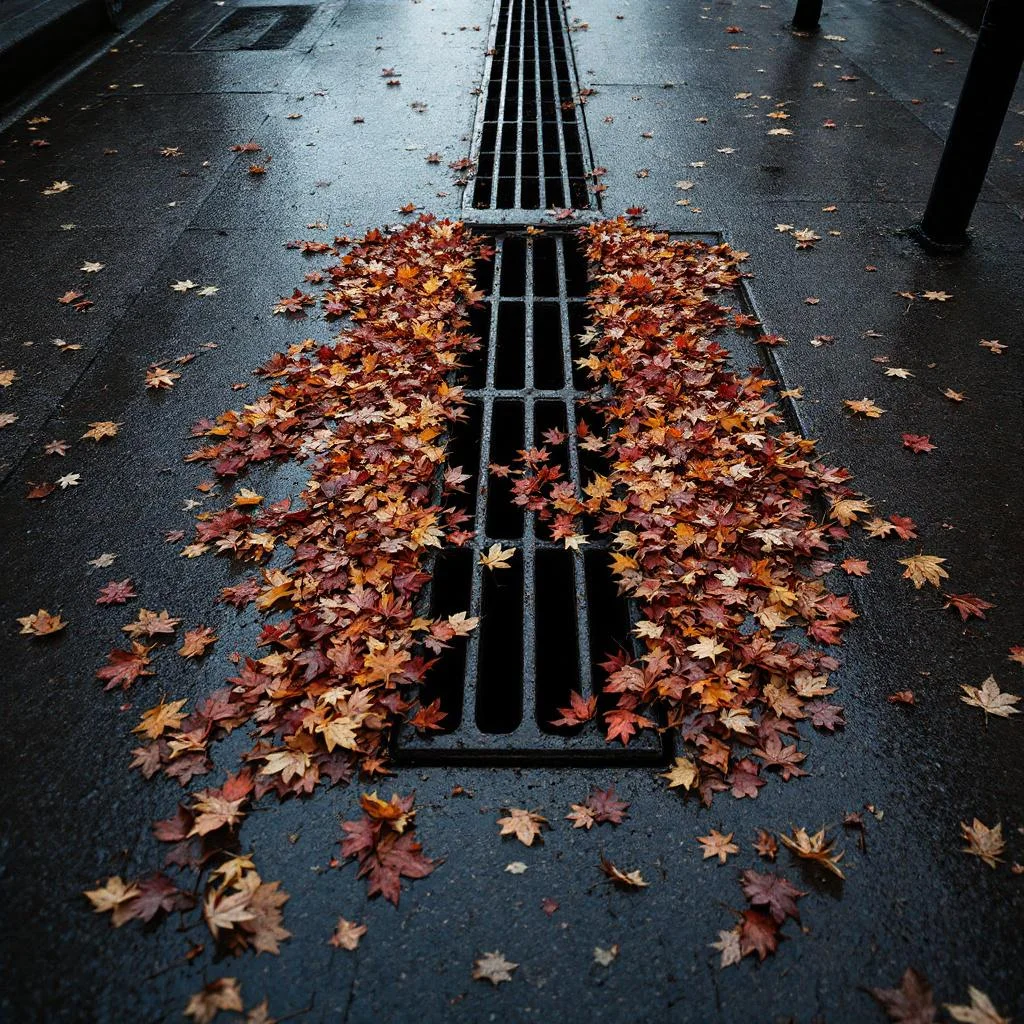
This is the highest-impact check you can do in the shortest time. External gullies — in the rear garden, front path, and any side passage — and downpipe outlets collect debris continuously. Autumn leaves, moss, silt, and small stones gradually reduce the inflow capacity. In normal rainfall this reduced capacity isn't noticed. In a storm delivering 20–30mm of rain in an hour, a half-blocked gully may be the difference between water draining normally and water pooling against your rear door or flooding the side passage.
What to do: Wearing rubber gloves, lift each gully grate and clear debris from the gully pot below. Pour a bucket of water in and confirm it drains freely. Clear the downpipe outlet (where the rainwater pipe discharges) of any leaf accumulation. Check the flat roof outlet if you have a flat roof.
Time required: 15–20 minutes for a standard London house.

Check 2: Check Your Inspection Chamber
If you have an accessible inspection chamber (manhole cover) in your rear garden, courtyard, or front path, open it and look inside. You're checking two things:
Is it flowing freely? In dry weather, you should see a trickle of flow in the invert channel, or no water at all. Any standing water that isn't moving suggests a downstream partial blockage that will worsen under storm flows.
Is it partially silted? Silt accumulation in the invert of an inspection chamber reduces the effective bore of the drain. If there's silt build-up that you can see clearly, this is a candidate for clearing before the storm.
If the chamber is full or overflowing before the storm has arrived, this is a problem requiring immediate professional attention — request a quote online via our contact form.
Check 3: Test All Internal Drain Points
Run cold water from every tap in the property for 30 seconds and observe how quickly it drains. Kitchen sink, bathroom sink, bath, and shower. Flush the toilet and observe.
What you're looking for: slow drainage, gurgling sounds from nearby drains when water is running elsewhere, water backing up briefly before draining. Any of these indicates a partial blockage in the branch pipe or main drain that will worsen in storm conditions.
Gurgling in particular is significant: it indicates the drain is under pressure (from surcharged flow downstream) or from air being drawn through the system as water moves. Under storm conditions, a drain that's gurgling in dry weather may back up completely.
If you find a slow-draining fixture the day before a storm, call an emergency drainage contractor immediately rather than hoping it clears itself. A partial blockage cleared in advance is far less disruptive than a sewage backup during the storm.
Check 4: Know Your Flood Risk Before the Storm
London's flood risk is mapped in detail by the Environment Agency and the Greater London Authority. Understanding your property's specific risk takes five minutes and helps you prioritise the checks above.
- How to check:
- Visit the Environment Agency's flood risk maps (gov.uk/check-flood-risk)
- Enter your postcode to see your property's risk from rivers, sea, and surface water
- Surface water flooding risk is the most relevant for most London homeowners
Properties rated "high" or "medium" risk for surface water flooding are the most vulnerable during storm events. If your property is in this category, the checks above are particularly important.
Knowing whether your risk is primarily from surface water overload (drains can't accept the rainfall fast enough, and water runs overland) or from sewer surcharge (the public sewer backs up into properties) also helps you understand what protective measures are most relevant. Surface water flooding is reduced by clear gullies and drains; sewer surcharge flooding requires a non-return valve to prevent backflow.
Check 5: Prepare Emergency Access to Your Isolation Points
If flooding does occur — despite your preparation — knowing where to turn off the water, electricity, and gas in advance is critical.
Water stopcock: typically under the kitchen sink or in the airing cupboard. Know where yours is and confirm it turns. A seized stopcock in a flooding emergency is a problem.
Fuse board / consumer unit: typically in the hallway, under the stairs, or in a cupboard. Know where it is and confirm you can isolate individual circuits. If flooding reaches any electrical installation, turn off the relevant circuit immediately and do not restore power until an electrician confirms it's safe.
Gas meter and isolation valve: typically in the meter box on the exterior wall or in the basement. If flooding is imminent and you're concerned about the gas supply, turn the isolation valve off.

What to Do During the Storm
If water starts rising during the storm:
- Do not flush toilets or run taps if internal drains are backing up — this adds to the problem
- If surface water is rising toward your threshold, deploy any flood barriers or sandbags you have
- If sewage is backing up, leave the affected area and call for emergency drainage assistance
- Monitor the external inspection chamber — if it fills to the top, the public sewer is surcharging and Thames Water should be notified (0800 316 9800) alongside your drainage contractor
Our emergency drain service operates 24/7. For flooding emergencies during storm events, request a quote online via our contact form.
What We Learn from Each Storm
Every named London storm changes the playbook a little. After the storms of winter 2023–24, we updated our pre-storm advice to put gully clearance ahead of inspection-chamber checks, because the surface-water flooding signature in those events came almost entirely from gullies overwhelmed by accumulated leaf debris from the previous autumn. After the August 2023 thunderstorms, we added the soil-stack vent check to our standard list, because several callouts that week traced back to capped vents during loft conversions — these only fail under the high discharge rates that storms produce. Patterns repeat: properties that flooded once in a Thames Water surcharge event almost always flood again in the next equivalent rainfall unless a non-return valve is fitted.
If your property has a history of storm-related drain issues, the most useful single intervention is an off-season CCTV drain survey to baseline the condition of your laterals and identify any partial blockages before the next storm window. Properties on combined sewers — much of inner London including Camden, Islington, and Lambeth — can also benefit from the patterns documented in our autumn leaf-fall drain guide and the warning signs of a blocked sewer ahead of the next storm cycle.
Frequently Asked Questions
How much rainfall does it take to overwhelm London's drains?
London's drainage infrastructure is designed for a 1-in-30-year storm event — approximately 20mm of rain in an hour for much of London. Named storms increasingly exceed this threshold. Surface water flooding typically begins when rainfall intensity exceeds 10–15mm per hour in areas with high impermeable surface coverage.
Will clearing my gullies prevent flooding if the public sewer surcharges?
Not entirely. Clear gullies reduce surface water flooding risk by ensuring maximum inflow to the sewer. They don't prevent sewer surcharge if the public sewer itself is at capacity. The two failure modes require different solutions: gully clearance for surface water, non-return valves for sewer surcharge.
Is a non-return valve worth installing before a storm?
A non-return valve installation takes 2–4 hours and is priced as a fixed quote. It's not a same-day-before-a-storm fix, but it's a permanent protection worth scheduling if your property has experienced sewer surcharge before.
What is the Thames Water emergency number for public sewer flooding?
Thames Water's 24-hour emergency line is 0800 316 9800. Use this if you believe a public sewer is surcharging into your property. Alongside this, contact our team via our contact form for emergency drainage support at your property.
Can you attend during a named storm event?
We maintain 24/7 emergency coverage. Response times may be extended during peak storm events due to high demand across London, but we prioritise sewage backup emergencies where there is direct risk to health.