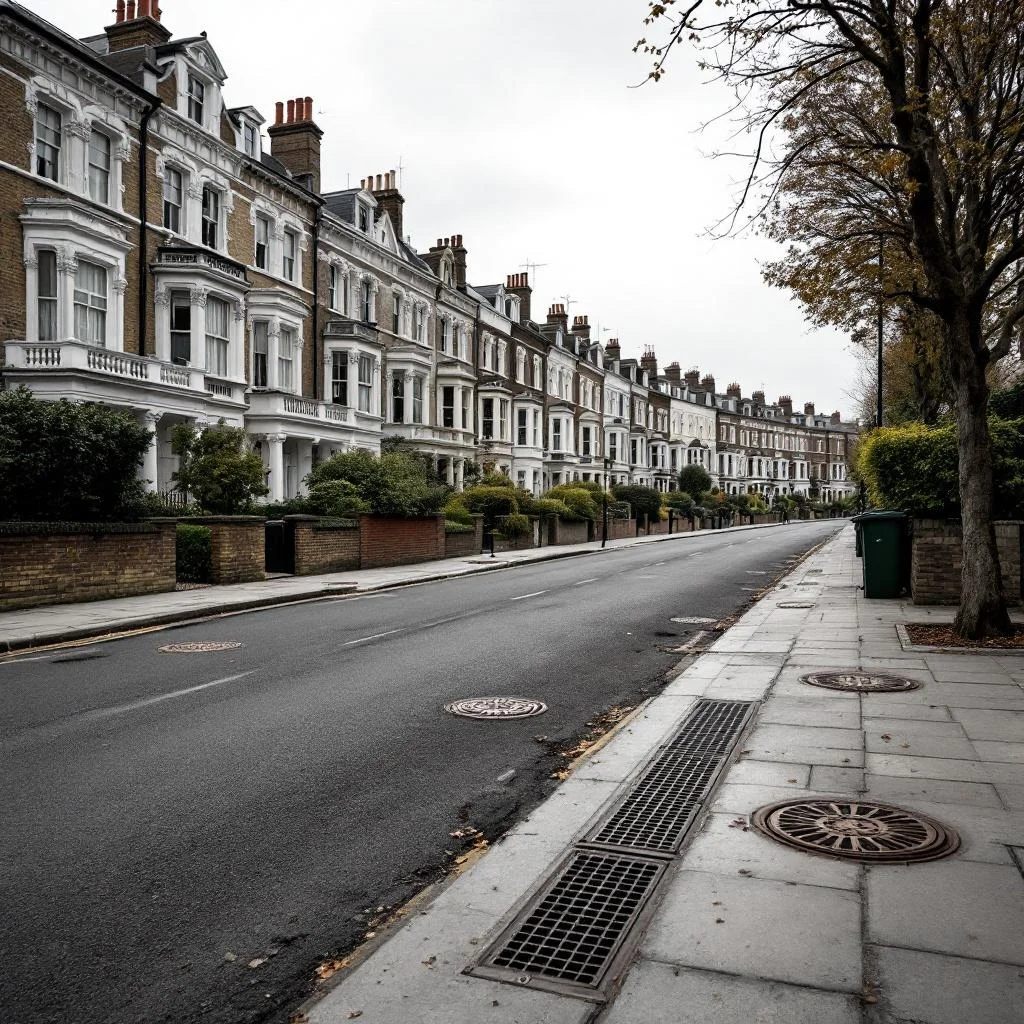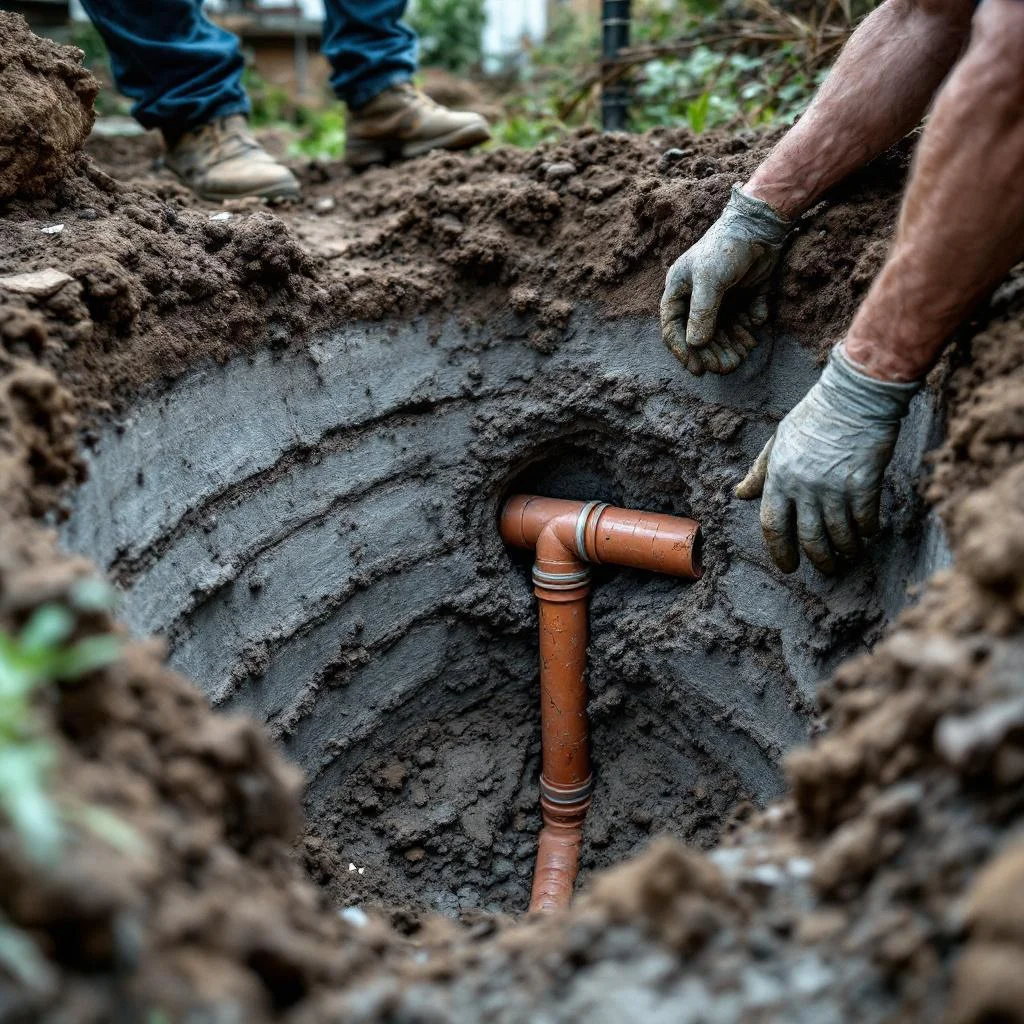

Soakaways fail in North London, and they often fail within a decade of going in. Barnet, Enfield and Haringey sit on deep London Clay, which barely lets water through. A soakaway depends on the soil around it taking in water. In heavy clay, the water does not soak away, so it just sits.
Knowing why soakaways fail, what the signs look like and what the alternatives are can save you money. It can also prevent the garden flooding and foundation problems that a failed soakaway causes.
What London Clay Does to a Soakaway
The permeability problem
A soakaway is a pit filled with rubble or crates. It takes surface water from roofs, patios or drives. While the water fills the pit and then seeps slowly into the soil around it. This works only if the soil can absorb water faster than it arrives.
London Clay absorbs water very slowly, far more slowly than sandy or gravelly soil. Because of this, for practical purposes, it does not drain at a useful rate. So a soakaway in clay is not a drainage system. It is a holding pit that slowly overflows.
Building guidance (BRE Digest 365) calls for a percolation test before a soakaway goes in. In these boroughs, a correct test often shows that a soakaway is not suitable. Yet builders have fitted soakaways in North London gardens for decades. Some tested in dry summer weather, which can give a falsely good result, and some did not test at all.
Seasonal saturation cycle
Wet weather makes it worse, because the clay swells and closes its tiny pores. A soakaway may cope in a dry summer, yet fail completely from October onwards. The clay is then full and cannot take more water. The soakaway works worst when you need it most.

Signs of Soakaway Failure in North London Properties
Because failure builds slowly, watch for these warning signs.
- Lawn waterlogging over or near the pit. Wet patches stay wet between rain events, especially in the cold months
- Patio or driveway pooling. Water that once drained fast now sits for hours or days
- An overflowing gulley or downpipe connection. The pit is full, so water backs up to the surface
- Ground movement near the pit. Constantly wet ground loses its strength
- Damp in a nearby outbuilding or boundary wall. A full pit can raise the local water level
Since damage spreads, if you see any of these signs, get an assessment before the wet ground causes structural damage.
What Replaces a Failed Soakaway in Clay Soil
Connection to the surface water sewer
If a surface water sewer runs close by, connecting to it is the preferred option. You need Thames Water's permission, although the rules are clear, and the connection must meet them. Because it needs excavation and a new lateral drain, the cost depends on distance and depth.
Since our drain repair service in Barnet, Enfield and Haringey includes assessing and fitting surface water connections.
Attenuation and slow release
While a sewer connection is not always possible, an attenuation system is a managed alternative. A large underground crate tank stores the peak rainfall from the roof or paving. It then releases the water slowly, either to a shallow French drain or to a controlled outlet. Unlike a soakaway, it does not rely on the clay. It only manages the timing of the discharge.
French drain to a ditch or watercourse
Some outer Enfield and Barnet homes lie near the Lee Valley or smaller streams. They may be able to send surface water to a watercourse through a French drain. Because this needs consent from the drainage authority, ask first. It must not raise flood risk downstream.
Addressing the cause: reducing impermeable surface area
Often a soakaway fails because the property has added hard surfaces since it was built. A new extension, a paved garden or a bigger drive all add run-off. Permeable paving lets water pass through the surface, so it can ease the load on an existing soakaway.
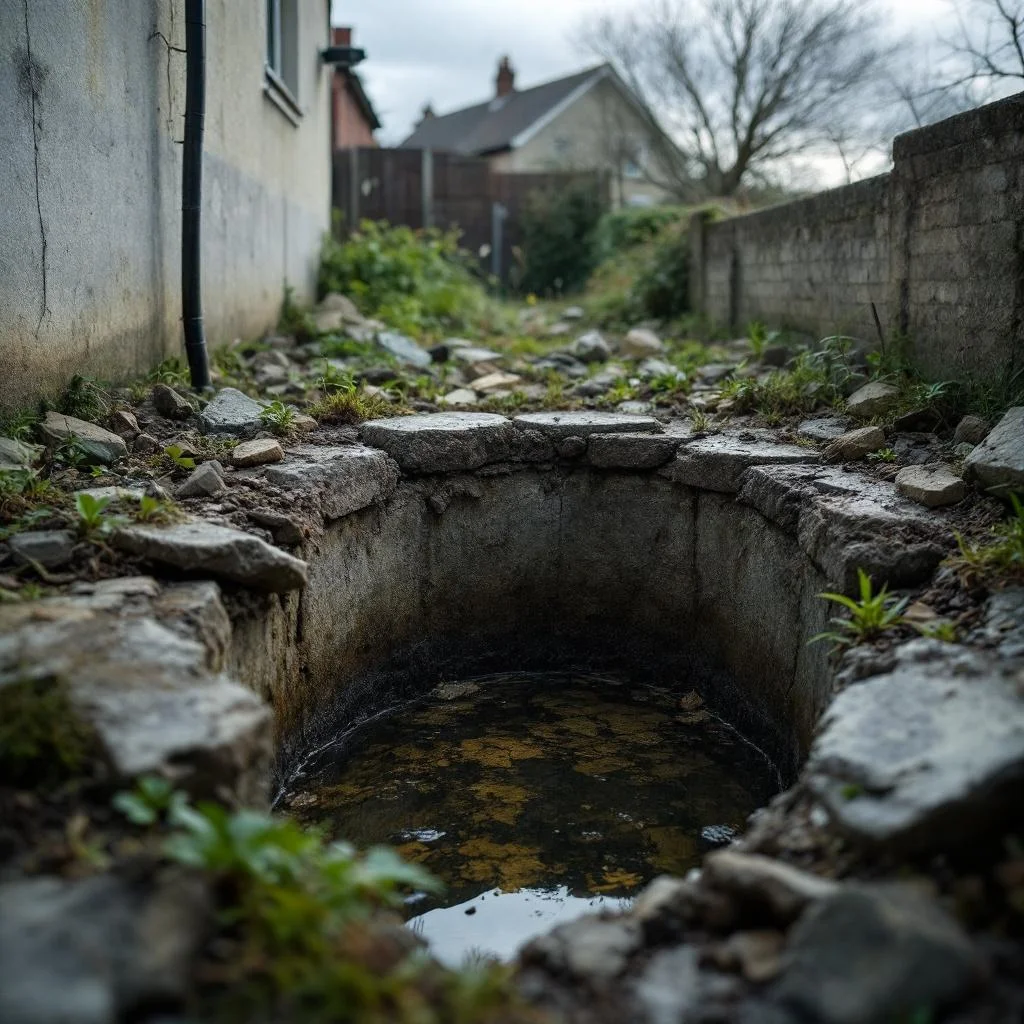
Clay Soil and Drain Pipe Damage in North London
Clay also harms buried drain pipes in these boroughs, so it helps to see both problems together, since they share a cause.
Shrink-swell damage. London Clay shrinks in dry summers and swells when autumn rain arrives. Because buried clay pipes sit in the same soil, the movement cracks them and shifts the joints. Roots and groundwater then get in. See our guide on how London Clay damages drains for the full picture.
Tree root intrusion. Mature limes, chestnuts and planes line many Barnet and Enfield streets. Their roots follow moisture to drain pipes, and roots entering through clay-damaged joints are a common find on CCTV surveys here.
Excavation challenges. Deep, sticky clay makes digging slower, and so drain excavation in these boroughs can cost more than in sandier ground.
Frequently Asked Questions
My soakaway passed a percolation test when it was installed. Why is it failing now?
Test results can differ between summer and winter, while they can also differ between the test pit and the real soakaway. Over time, fine particles can drift into the pit and block what little drainage existed. So an old test result is not reliable years later in North London clay.
Can I apply for a Thames Water connection to the surface water sewer?
Yes, although you usually submit an assessment that shows the soakaway has failed and sets out the connection. Thames Water then checks whether its network can take the extra flow. We handle the technical submission as part of the installation.
How deep is London Clay in North London?
It runs very deep under Barnet, Enfield and Haringey, and there is no practical way to drill through it to reach ground that drains better.
Will a larger soakaway solve the problem?
Only for a while, because a bigger pit still relies on the same clay. It will fail at the same time of year, but a little later in the season. Making the pit bigger does not change the soil.
Can I request help with a soakaway or drain issue in Barnet, Enfield, or Haringey?
Since we cover all three boroughs, for soakaway assessments and drain repairs, request a quote online via our contact form to arrange a site visit.
Because every property is different, start with our guides to drain repairs & relining and drain excavation advice. We also cover drain repairs & relining in Barnet and drain repairs & relining in Enfield, so you can see how the work runs near you.
Guides worth reading next
- How London Clay Soil Damages Your Drains (And What To Do About It)
- Top 5 Drain Problems in London Clay Soil Areas
- Blocked Toilet from Toilet Paper: Why It Happens and How to Clear It
- Blocked Drains in Brent and Wembley: NW10, HA9, and North-West London Drainage
- Build-Over Agreements Explained: Extending a London Terrace Without Drain Trouble