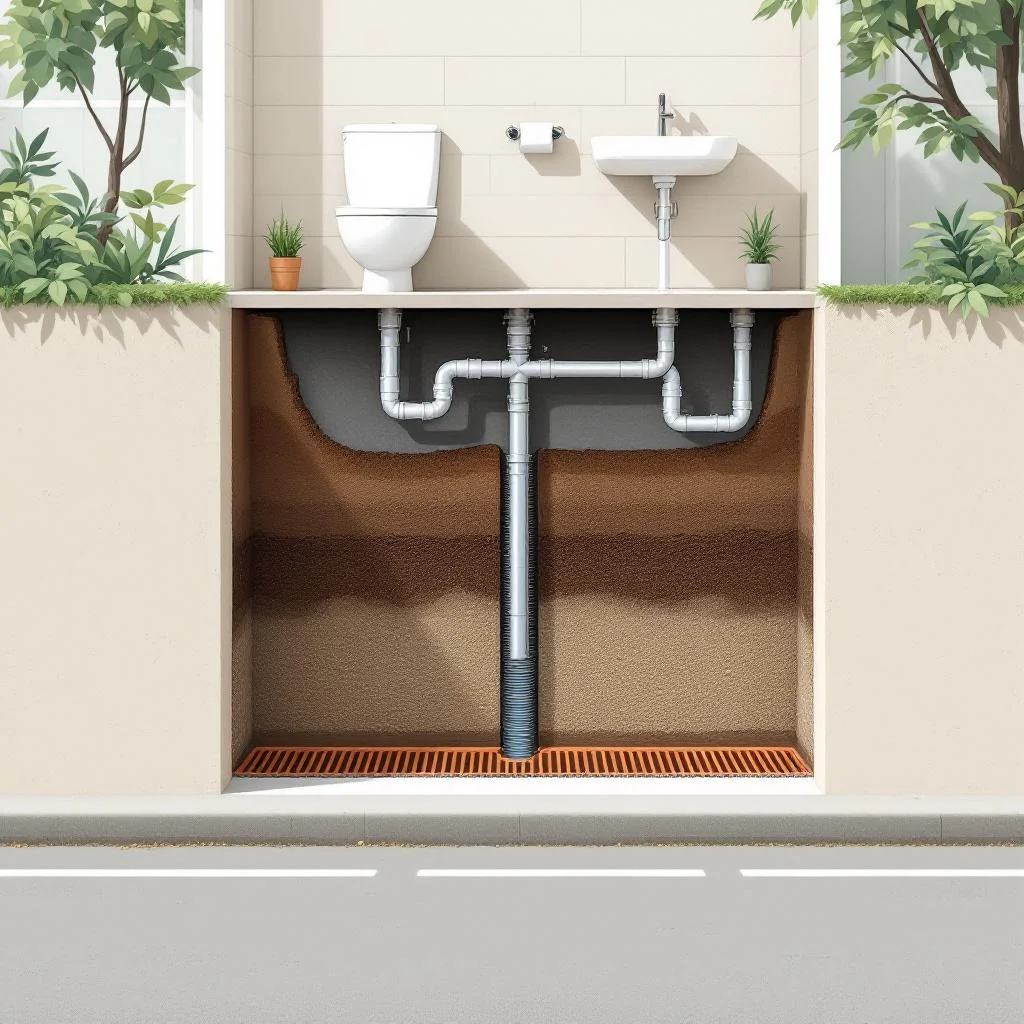
Every time you flush a toilet or run a tap in London, you start a long journey, because the wastewater runs through your private drain, into Thames Water's public sewer, and along Bazalgette's Victorian main sewers. It then reaches a sewage treatment works, and goes back to the Thames once treated. In 2026, the Thames Tideway Tunnel is changing that journey. Here is the full story.
Bazalgette's System: Still the Backbone
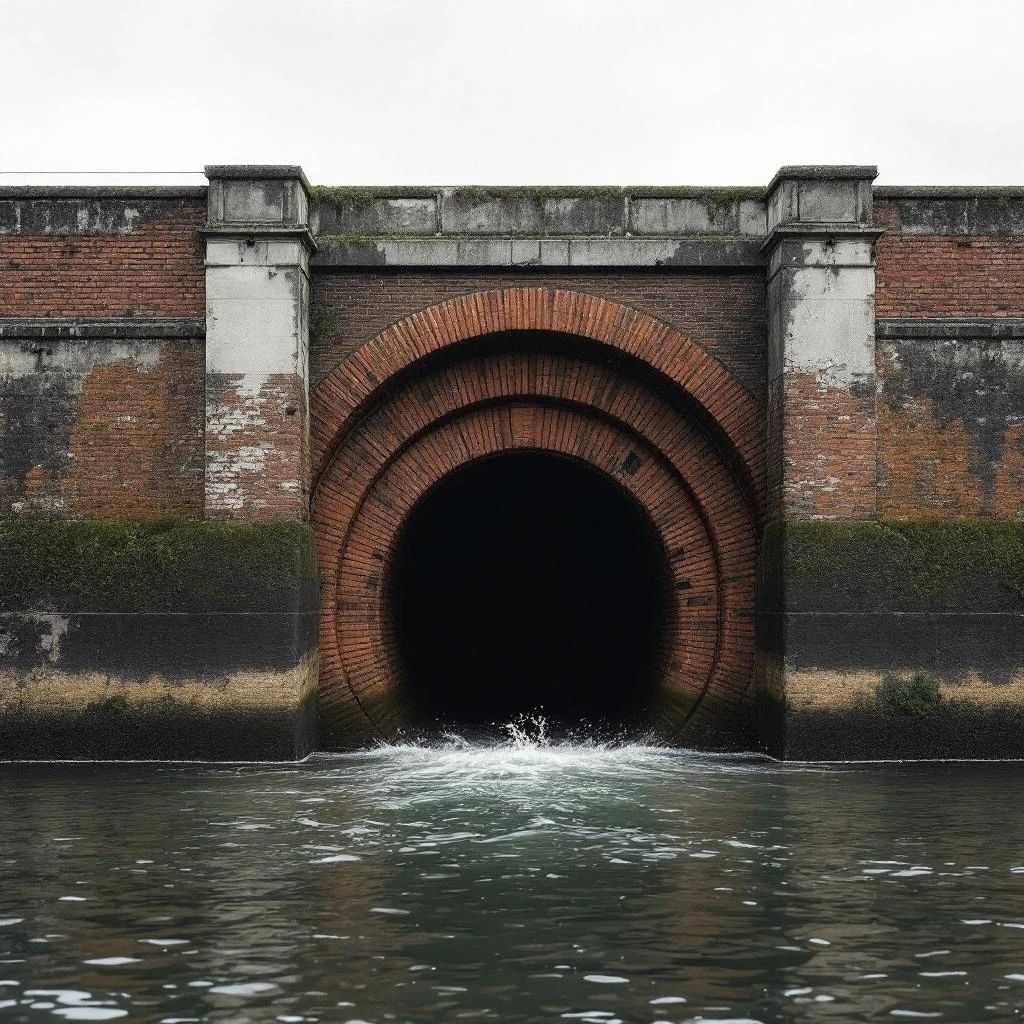
Sir Joseph Bazalgette built London's main sewer system after the Great Stink of 1858. Since untreated sewage in the Thames had made conditions so foul that Parliament thought about moving. His answer was a network of street sewers feeding large interceptor sewers. These run broadly east to west, beside the Thames. They carry the flow to treatment works at Beckton in the north and Crossness in the south.
The system was a marvel. It solved the crisis and cut deaths from cholera and typhoid, and it set the pattern for cities worldwide. Yet it was built for a far smaller London. Today many more people live in Greater London, so the system is under constant pressure.

The Combined Sewer Overflow Problem
Bazalgette's interceptors are combined sewers. They carry foul sewage and rainwater in the same pipe. Victorian engineers chose this on purpose, since they thought rainwater would dilute the sewage enough before it reached the Thames.
Combined sewers cope in dry weather. In heavy rain, however, too much water enters the system. When that happens, combined sewer overflows (CSOs) act as relief valves. They discharge straight into the Thames, which stops the sewers backing up into streets and homes. Before Tideway, these overflows released a huge volume of raw or part-treated sewage into the river each year.
Because the scale was huge, the Thames Tideway Tunnel was built to solve this problem.
The Thames Tideway Tunnel
Work on the main tunnel began in the 2010s and reached substantial completion in the 2020s. While it is a very long tunnel, that runs under the Thames from west London to the east. It lies deep below the river, and it is designed to capture most of the overflows that used to enter the Thames.
The tunnel works as a store and a transfer route. Because of this, during heavy rain, the overflows that once went into the river drain into the tunnel instead. When the rain stops, the treatment works have room again. The stored sewage is then pumped on to Beckton for treatment.
The project cost billions of pounds, and a charge on Thames Water bills pays for it. It is funded through a charge added to Thames Water bills, known as the Tideway levy, which is spread over many years.
From Your Drain to the Treatment Works: The Modern Journey
Since the route has several stages, in 2026 your wastewater travels from sink to river like this.
Step 1: Your property drain. Wastewater leaves your home through the private drain. You are responsible for this section, since it serves you alone. It joins the public sewer network at your boundary, or at the point where your lateral drain was adopted in 2011.
Step 2: The street sewer. Your drain joins a local street sewer that collects flow from every property on your street, and this is Thames Water's asset.
Step 3: The interceptor or combined sewer. Local sewers feed into larger interceptors or combined sewers. In inner London, many of these are Bazalgette's original brick sewers. Some are over 150 years old, and they still do the job they were built for.
Step 4: The Tideway Tunnel (during storms). When rain pushes flow beyond the interceptors' capacity, because the pipes are full, the flow goes into the Tideway Tunnel instead of the Thames.
Step 5: The treatment works. The flow reaches one of several treatment works, including Beckton, Crossness, Mogden and Long Reach. The sewage is screened, settled and treated, while the cleaned water must then meet Environment Agency standards.
Step 6: Return to the Thames. The treated water goes back to the tidal Thames, since tight rules govern its quality. This is one reason the river now supports far more wildlife than it did in the mid-20th century.
What This Means for London Homeowners
The Tideway project does not change who looks after your private drains. Your drain from the property to the public sewer remains your responsibility, while Thames Water maintains the public network.
Because the work affects bills and pipes, it does mean three things.
Less flooding risk in heavy rain. Because the tunnel takes the overflows, peak pressure on the Victorian combined sewers falls during storms. Homes that once saw sewage backup in heavy rain may see an improvement.
Higher water bills. The Tideway levy appears on Thames Water bills, while it will continue for many years. Check your bill for the current amount.
Continued upkeep of Bazalgette's sewers. The main Victorian interceptors still work, and they still need care. Thames Water spends heavily each year on sewer repair. Our drain repair services work alongside Thames Water on jobs where public and private drainage meet. For a guide to the boundary between your drain and the public sewer, see our article on the difference between a drain, lateral drain and sewer. The post on pipe relining vs drain excavation covers the standard repair options.
Frequently Asked Questions
Will the Tideway Tunnel completely stop sewage entering the Thames?
No, but it should cut it a great deal. Some overflow may still occur in extreme weather. The volume should be much lower than before the tunnel.
How deep is the tunnel under London?
It runs deep below the surface, although the depth varies along its route. In places it passes beneath Underground lines, foundations and other utility tunnels.
Who pays for the Thames Tideway Tunnel?
Tideway, a regulated infrastructure company, financed the project, while the cost comes back through the Tideway levy on Thames Water customer bills, spread over many years.
Will my drains be affected by the Tideway Tunnel works?
The tunnel lies mostly beneath the Thames or close to it. Although work at shaft sites around London caused surface disruption during the build. Now that the main work is done, ongoing effects are small for most homeowners.
Where can I find out more about my local drainage infrastructure?
Thames Water publishes sewer maps and information about the public network. However, for your private drains, the pipes from your property to the boundary, a CCTV survey gives the clearest picture. Request a quote online via our contact form to arrange one, or visit our services page for more information.
Because every property is different, start with our guides to blocked drains and drainage mapping survey advice. We also cover blocked drains in Islington and blocked drains in Kingston upon Thames, so you can see how the work runs near you.
Guides worth reading next
- Croydon Flooding 2025-26: Worst-Hit Streets and Homeowner Action
- Pre-Purchase Drain Survey London: The 2026 Checklist
- Blocked Toilet from Toilet Paper: Why It Happens and How to Clear It
- Blocked Drains in Brent and Wembley: NW10, HA9, and North-West London Drainage
- Build-Over Agreements Explained: Extending a London Terrace Without Drain Trouble