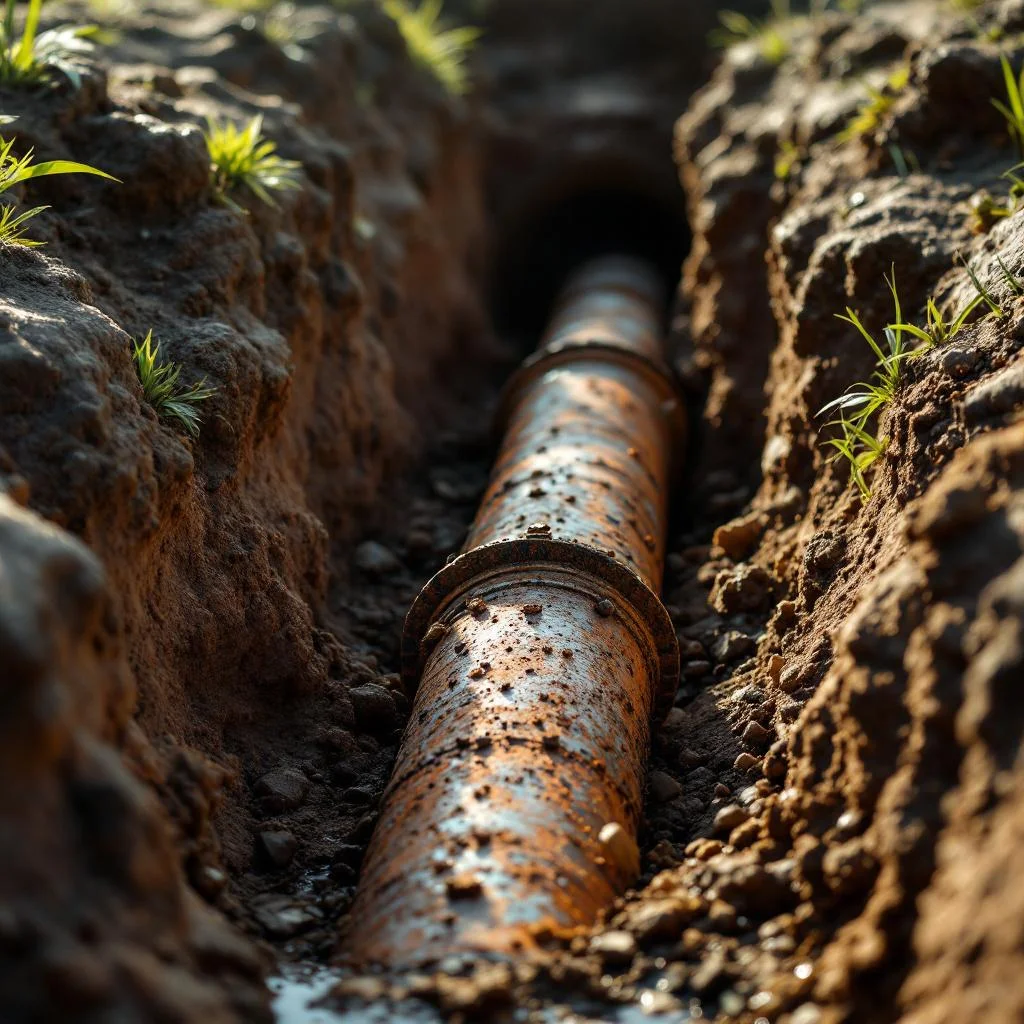
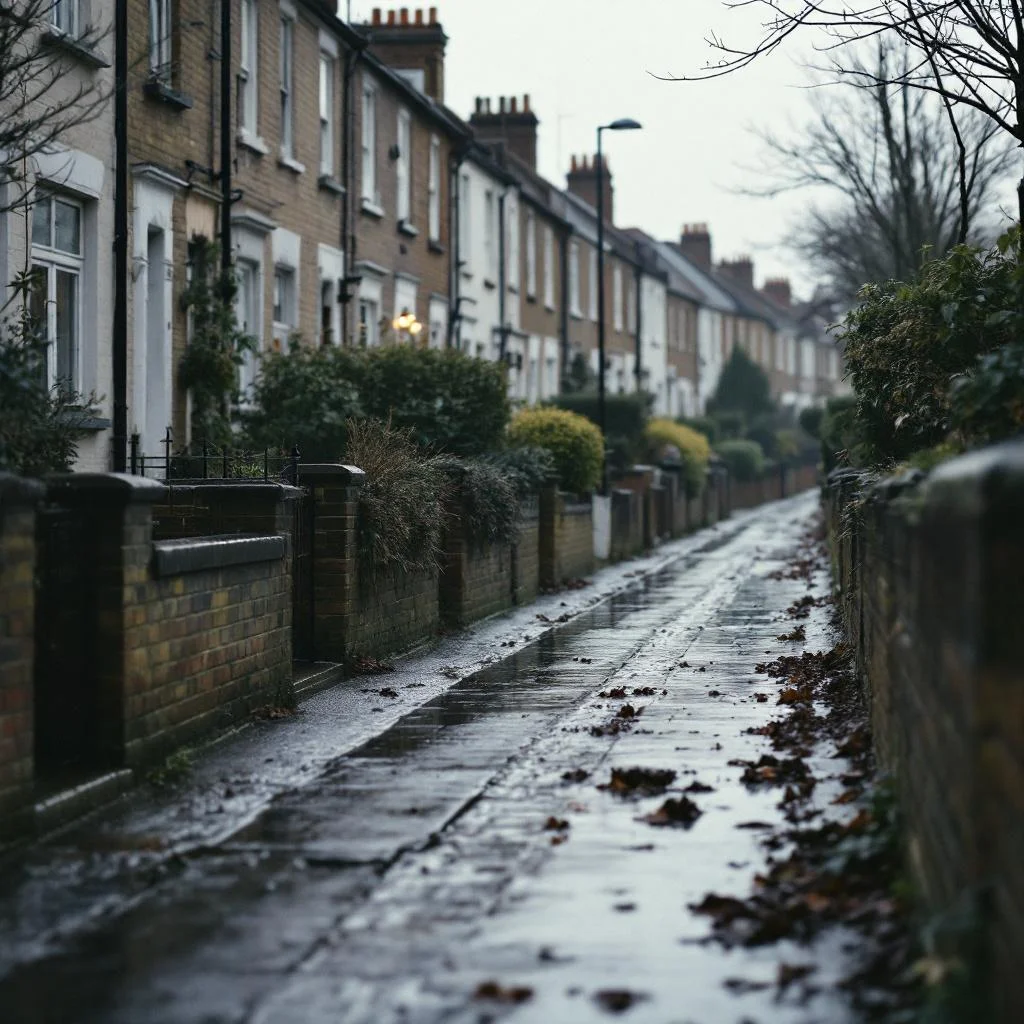
The drain blockage patterns in Greenwich, Lewisham, and Bromley are shaped more by geography than by resident behaviour. These three South-East London boroughs contain London's steepest residential streets — Shooters Hill, Forest Hill, Sydenham Hill, Brockley Rise, Verdant Lane — and the physics of drainage on a slope creates problems that flat-terrain boroughs simply do not experience to the same degree.
Understanding why hillside drains block, and why they block differently from drains in flat areas, helps residents act faster and avoid the worst outcomes when the autumn rain season arrives.
How Gradient Affects Drain Behaviour
Too steep is as bad as too flat
Most people assume that a steep gradient helps drainage — water runs fast, so it clears the pipe. This is true for surface water at the top of a slope. But inside underground drain pipes, the relationship between gradient and performance is more nuanced.
Victorian drain pipes in these boroughs were often laid at gradients steeper than current guidance recommends. At very steep gradients, water runs faster than solids — it "outruns" the suspended particles rather than carrying them through. The particles settle mid-run, while the water flows on. This is the origin of the "self-scouring velocity" concept in drainage design: pipes should be steep enough that water flows quickly, but not so steep that it separates from the solids it is meant to carry.
The practical result in Greenwich, Lewisham, and Bromley steep-street housing: grit, fine debris, and organic material settle in mid-run sections — typically where the gradient levels slightly to follow the contours before the next drop. These settling sections develop progressive blockages that build up gradually and then fail suddenly.
The collection point problem
On a sloping street, every property's drain run feeds downhill to a common collection point — typically a public sewer running along the bottom of the hill. All the surface water from the street, all the gully drainage, and the private lateral drains from multiple properties converge at the lowest point.
This convergence creates a high-load collection point where the public sewer must handle the combined flow from the entire hillside simultaneously during heavy rain. When that sewer is at or near capacity — which it regularly is during October–November rainfall events in South-East London — backpressure travels up into private laterals connected at the bottom of the hill.
Properties at the bottom of a hill in these boroughs are therefore the most vulnerable to drain backup — not from their own drainage failings, but from the hydraulic consequences of being at the lowest collection point.
Seasonal Blockage Patterns in These Boroughs
Autumn: leaf accumulation
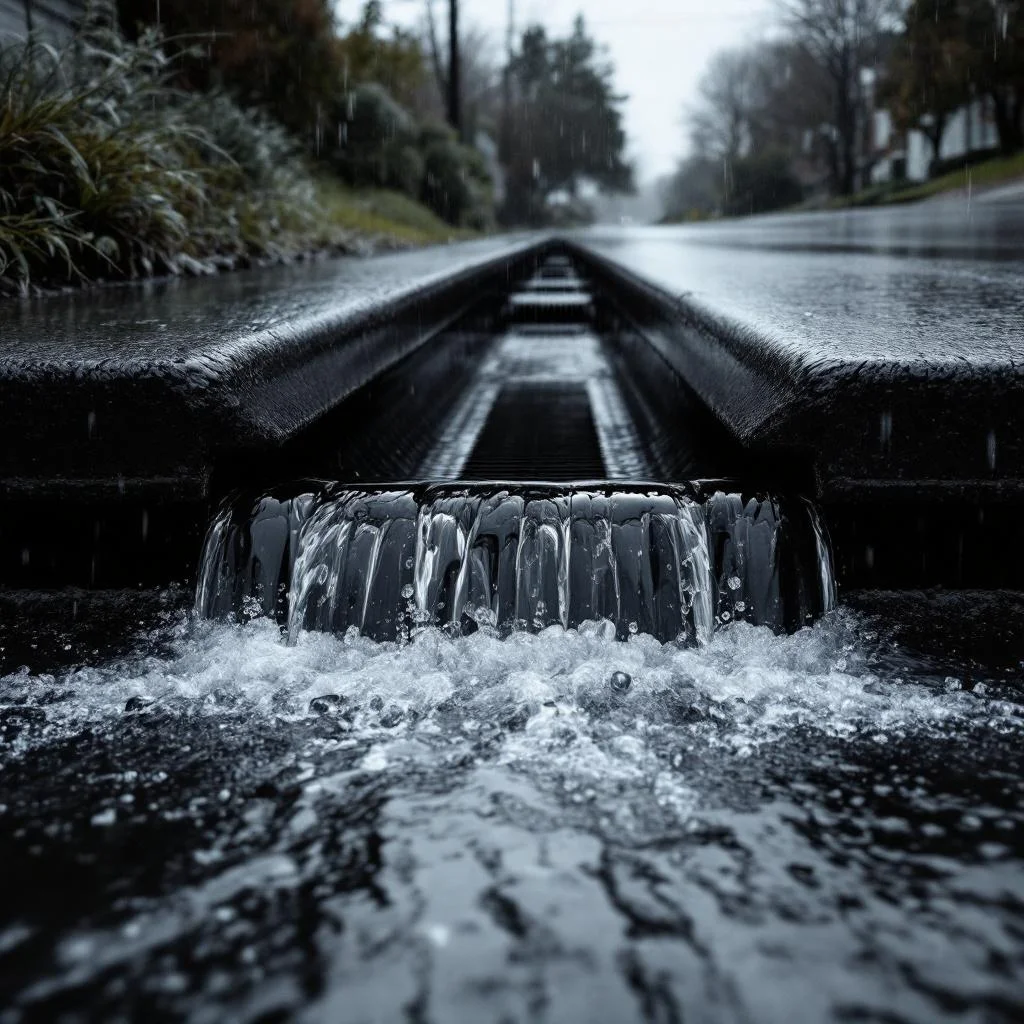
Greenwich, Lewisham, and Bromley have significant street tree coverage — London planes, limes, and chestnuts — on the hillside residential streets. Autumn leaf fall on a steep street creates a specific drainage hazard: leaves accumulate at drain gullies at the base of the hill, partially blocking them during the heaviest rainfall periods. A blocked gully on a steep street means all the surface water that the gully was designed to capture instead continues downhill, accelerating at the bottom and creating localised flooding.
Annual gully clearance in the first week of November — before the leaf-fall accumulation reaches its peak — is the single most cost-effective preventive measure for residents in these boroughs.
Spring: post-winter pipe clearance
The compacted grit and organic material that settled in mid-run pipe sections during the winter accumulates to a point where spring rain events push it into a full blockage. March–April sees a spike in drainage callouts across all three boroughs as the first heavy spring rain mobilises the winter's accumulated debris and pushes partial blockages over the threshold.
Summer: drought-related cracking
London Clay is thickest in south-east London, and in the dry summers that have become more common, the clay under Lewisham, Bromley, and parts of Greenwich shrinks significantly. This shrinkage can crack older clay lateral drains and displace joints — particularly on hillside runs where the soil movement is directional rather than simply vertical. The autumn rain that follows then infiltrates through the new cracks, accelerating the very blockage cycle the summer drought interrupted.
Why Drain Jetting Is the Standard Solution in These Boroughs
High-pressure jetting is particularly well suited to the blockage types found in Greenwich, Lewisham, and Bromley hillside drains:
Grit and debris accumulation in mid-run flat sections — a rotating high-pressure nozzle scours the pipe wall and suspends the settled material, which is flushed downstream by the jetting water. A single jetting pass typically clears this type of blockage completely.
Root infiltration at displaced joints — roots that have entered through a cracked joint or displaced connection are cut back by jetting nozzles. Jetting does not remove roots from outside the pipe, but it eliminates the physical obstruction and restores flow while a longer-term repair (relining or excavation) is planned.
Fat and grease accumulation — hillside properties' kitchen drains have the same fat load as any London terrace, but the intermittent steep-then-flat gradient means fat settles at the same mid-run flat sections as grit and debris. Jetting addresses both simultaneously.
Our drain jetting service in Greenwich, Lewisham, and Bromley uses van-mounted jetting equipment capable of clearing runs up to 80 metres from the access point — covering the full lateral length of even the steepest hillside drain runs in these boroughs.
When Jetting Is Not Enough
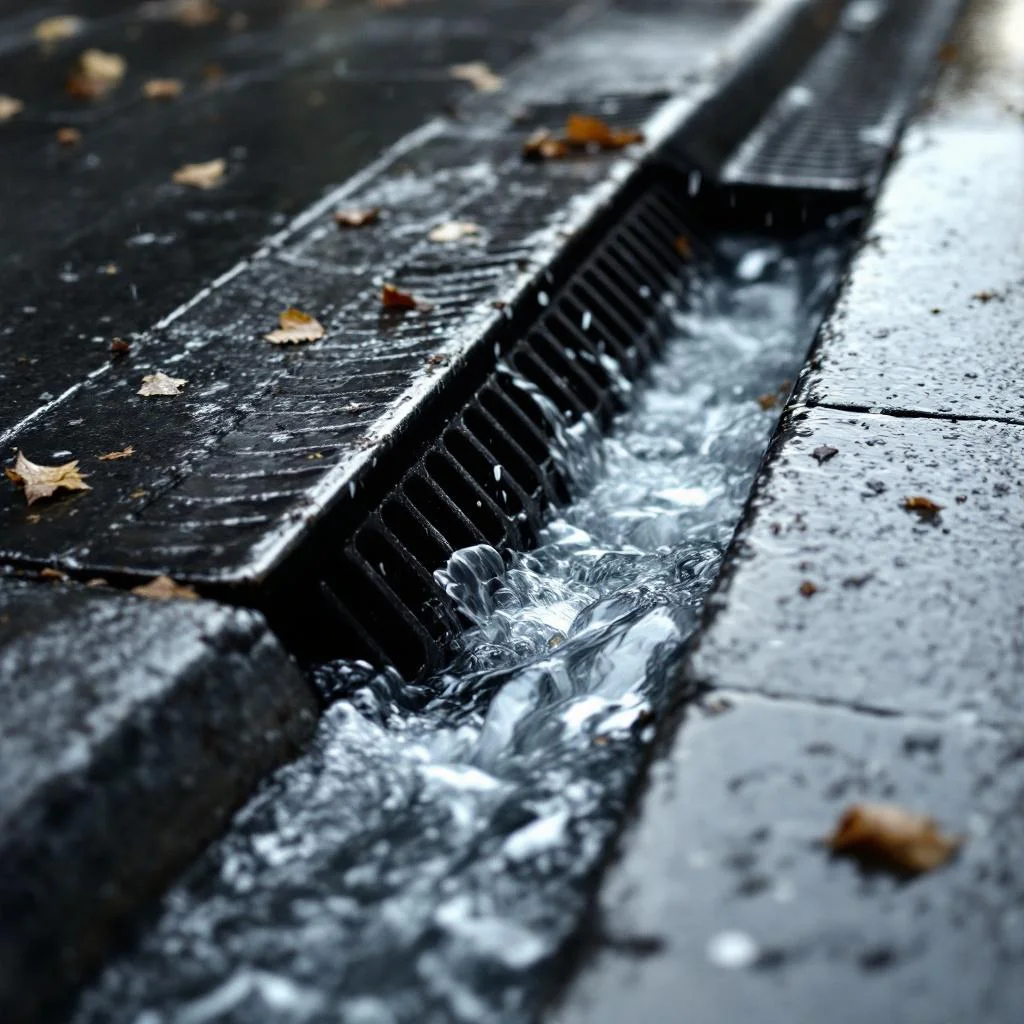
Repeated blockages in the same section of a hillside drain — despite regular jetting — indicate a structural cause. The most common findings in CCTV surveys of Greenwich, Lewisham, and Bromley hillside properties:
Displaced joints at the transition between steep and flat sections — the soil movement from clay shrink-swell is most intense at these gradient change points. The joint displacement creates a physical ledge inside the pipe that catches grit and debris on every post-rain flow.
Root infiltration through joint failures at mid-run — mature street trees on hillside streets have root systems that follow the moisture gradient downhill, and the displaced joints at grade-change points are exactly where root intrusion is most likely.
Collapsed sections in very old clay pipe — where the pipe has been subjected to repeated soil movement over decades, sections can collapse partially or fully. These require excavation and replacement, or in accessible sections, a liner insert.
A CCTV drain survey following a second jetting call in the same section will almost always identify one of these structural causes and allow a permanent solution to be planned. See our guide to why London drains block so often for the broader picture of Victorian infrastructure failure across the capital.
Frequently Asked Questions
Why does my drain in a sloping Lewisham street block at the same point every time?
Recurring blockages in the same section almost always indicate a structural issue — a displaced joint creating a debris-catching ledge, a partial root intrusion, or a reduced-bore section. Jetting clears it but the defect remains. A CCTV survey will identify exactly what is there and what repair is needed.
Are gullies on steep streets a council responsibility or mine?
Street gullies in the public highway are the council's or Thames Water's responsibility. Private gullies within your property boundary — including a rear garden gully or a gully on a private shared access — are your responsibility. If your front garden has a gully that discharges to the highway drain, its maintenance is typically your obligation.
My drain blocks every autumn. Is this normal?
An autumn-specific blockage pattern in a hillside borough like Bromley or Lewisham is consistent with leaf-fall accumulation at gullies and grit mobilisation in mid-run flat sections. Preventive gully clearance in late October and a jetting visit in March effectively breaks the cycle for most affected properties.
Does hill-site drainage affect the cost of clearing a blockage?
Access on steep streets can be more challenging — restricted parking, longer hose runs from the van, and in some cases the need to work uphill against the flow. Most jobs in these boroughs are priced within the standard London range for a residential jetting visit. Request a quote online via our contact form for a fixed price before we attend.
How quickly can you attend a blocked drain in Greenwich, Lewisham, or Bromley?
We cover all three boroughs and prioritise urgent jobs for the fastest possible response, 24 hours a day. Request a quote online via our contact form for immediate attendance.